What Is the Toughest Neighborhood in Brooklyn?
A direct, honest answer to which Brooklyn neighborhood is the toughest, what the crime picture really looks like, and which areas visitors actually spend time in.
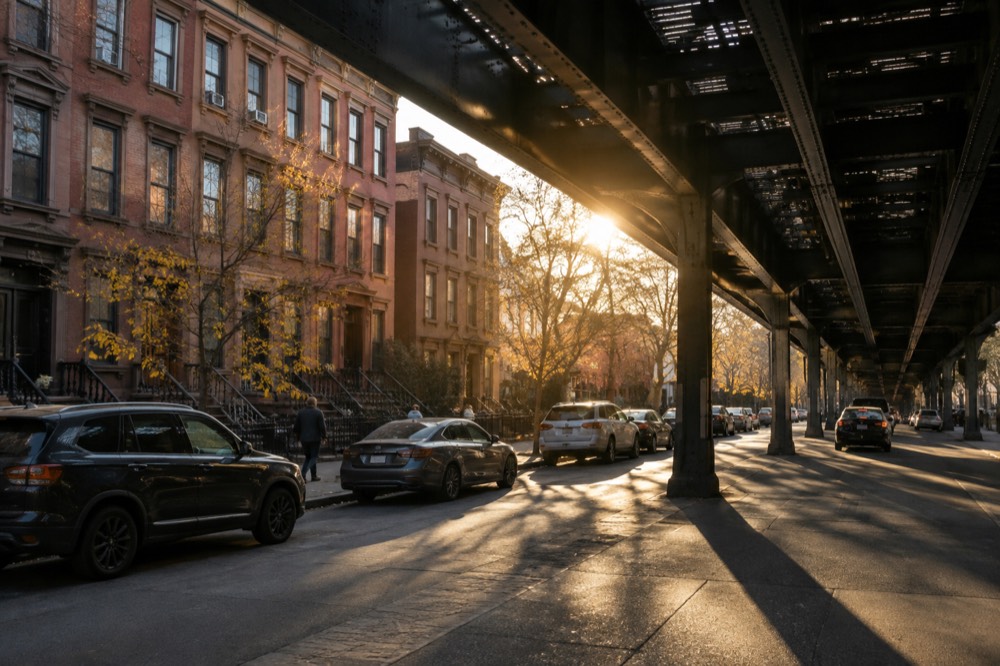
Brooklyn is a borough of roughly 2.6 million people spread across dozens of neighborhoods that feel like separate towns, and the honest answer to which one is toughest has barely changed in decades of NYPD reporting: the concentration of violent crime in Brooklyn sits persistently in the eastern corridor, above all Brownsville and East New York. That answer comes with caveats worth reading before anyone repeats it, because "toughest" is a word that carries history, reputation and a fair amount of myth along with the data. This page gives the direct answer, the context behind it, and the practical picture for a visitor who is choosing where to walk, eat and stay. For the wider sightseeing picture, see the things to do in NYC overview, which covers the whole city including Brooklyn.
What Is the Toughest Neighborhood in Brooklyn?
The toughest neighborhood in Brooklyn, by the measure most police reporting and most New Yorkers would use, is Brownsville, with adjacent East New York close behind. These adjoining areas on the borough's eastern edge have recorded the highest concentration of shootings and violent crime in Brooklyn for decades, and public housing developments anchor much of that pattern. The label describes a statistical and historical reality, not a blanket verdict on every block or every resident.
Brownsville sits in eastern Brooklyn, bordered roughly by East New York to the south and Canarsie to the west. It is a neighborhood shaped by public housing on a scale few places in the country match, by decades of disinvestment, and by a concentration of poverty that produces exactly the conditions where violent crime runs highest. East New York, its neighbor, shares the same profile and appears alongside it in nearly every serious discussion of where Brooklyn's shootings cluster.
Two things keep the answer honest. First, "toughest" is not the same as "most dangerous to a visitor." Violent crime in these neighborhoods is overwhelmingly concentrated among people who know each other, in specific locations, at specific hours. A daytime visitor passing through on the 3 train or the L is not the profile of a victim. Second, no number on this page is invented: this site does not print crime statistics it cannot source, and neighborhood-level figures change month to month. The NYPD publishes CompStat data by patrol borough and precinct on nyc.gov, and anyone wanting current numbers should read those pages directly rather than a guide's frozen snapshot.
The word "toughest" also carries a cultural meaning that the data does not. Brownsville produced world champions, rappers and writers, and its reputation for hardness is as much about surviving hard conditions as about crime itself. Treating the neighborhood as nothing but a statistic misses half the story.
Which Brooklyn Neighborhoods Consistently Show the Highest Crime?
The neighborhoods that appear again and again at the top of Brooklyn's crime reporting are Brownsville, East New York and the areas around them, including parts of Bed-Stuy and Bushwick that border the same corridor. The precincts covering East New York and Brownsville have for years recorded among the highest shooting and homicide counts in the entire city, not just the borough. The pattern is geographic and stubborn: the eastern edge carries the burden.
That geography matters more than any single year's numbers. A visitor can stand in Brooklyn Heights, walk twenty minutes, take a train, and be in a statistically different world. The borough is not uniform, and averaging it produces meaningless figures.
The table below gives the honest shape of the borough without inventing statistics. It describes reputation and record, not live numbers.
| Area | General record and character | What a visitor is likely to do there |
|---|---|---|
| Brownsville | Highest sustained concentration of violent crime in Brooklyn; large public housing stock | Rarely visited; mostly residential |
| East New York | Consistently near the top of shooting and homicide counts citywide | Rarely visited; transit pass-through on the L, A and 3 |
| Bed-Stuy (parts) | Improved markedly over recent decades; pockets near the eastern edge still elevated | Increasingly visited for brownstones and restaurants |
| Bushwick (parts) | Gentrified core is busy and safe-feeling; some blocks further east remain mixed | Popular for street art, bars and food |
| East Flatbush | Elevated in parts, tied to specific corridors | Rarely visited |
| South Brooklyn (Bay Ridge, Dyker Heights) | Among the calmest areas of the borough | Visited for food and the Christmas lights |
For context on how New York as a whole treats safety questions, the site's broader is NYC safe guide covers the citywide picture, including the honest caveats about what crime statistics do and do not tell a tourist.
A Barclays Center evening is a good example of how far the visitor's Brooklyn is from the eastern corridor. The arena sits in Prospect Heights, above Atlantic Avenue, with several subway lines within a short walk, and a Brooklyn Nets game ticket is one of the easiest Brooklyn nights out to plan. Check availability on the listing, pick your matchup with care since opponents vary widely, and bring layers for the arena.
Is Brownsville Dangerous for Visitors?
For a visitor passing through in daylight, Brownsville is not a place to fear, but it is also not a place on any sensible tourist route. Violent crime there is concentrated among people known to each other, in and around specific locations, and the risk profile of a stranger walking a commercial strip at noon is nothing like the neighborhood's statistics suggest. In practice there is almost no reason to go, so the question rarely becomes real.
This is where honest writing parts ways with both the fearmongers and the reassurers. A guide that calls Brownsville a warzone is lying. A guide that says "Brooklyn is totally safe, everywhere!" is also lying. The truth is that risk in New York is extraordinarily concentrated by location, time and relationship, and a visitor's behavior puts them in a different risk category from a resident's.
Daytime transit through the neighborhood, on the 3 train or the L, is ordinary city life. Thousands of people do it daily. The things a visitor would worry about, muggings of strangers, are more a function of empty streets and late hours than of any particular neighborhood's statistics. An empty industrial block at 1am is riskier than a busy Brownsville commercial strip at noon, wherever the map says those blocks sit.
The thing not to do is treat the neighborhood as a spectacle. It is a poor neighborhood where people live, work and raise children, not a set for a crime documentary. If a route takes you through it, take it normally. Do not plan a visit to "see the tough neighborhood," which is disrespectful and pointless in equal measure.
Why Does the Eastern Edge of Brooklyn Carry This Record?
The concentration of violent crime in Brownsville and East New York traces back to a chain of policy decisions: redlining that starved the areas of credit, the placement of enormous public housing complexes, and an era in which city services were withdrawn from neighborhoods officials had written off. Those choices concentrated poverty in a way Brooklyn's northwest never experienced. The crime record follows the design, and no honest answer skips that history.
Brownsville was never a place that simply "went bad." It was a working-class neighborhood, heavily Jewish and then heavily Black and Puerto Rican, that was systematically denied the investment its neighbors received. When the city built massive housing projects there while withdrawing fire services and maintenance from the same blocks, the outcome was predictable, and it was predicted at the time by the people who lived there.
East New York's story runs parallel. Its housing stock decayed through the same decades, and the city's fiscal crisis of the era hit the eastern boroughs hardest. The recovery that transformed Williamsburg, Park Slope and DUMBO from the later years of the last century onward largely stopped at the edges of these neighborhoods. Investment followed the subway lines tourists ride and stopped where the tourists stopped.
This history is why the word "toughest" deserves care. It describes a condition imposed on a place and a population, not a character flaw of the people living there. Any New Yorker who talks about Brownsville with respect talks about it this way.
Which Brooklyn Neighborhoods Are the Calmest?
The calmest parts of Brooklyn for a visitor are the northwest and southwest of the borough: Brooklyn Heights, Park Slope, Carroll Gardens, Cobble Hill, Bay Ridge and Dyker Heights all record some of the lowest crime levels in the city, not just the borough. These are also the areas where most visitors spend their time, which is not a coincidence. The neighborhoods tourists love and the quietest records overlap almost completely.
The overlap matters because it answers the question behind the question. Almost nobody asking "what is the toughest neighborhood in Brooklyn?" is planning to go there. They are planning a trip, reading headlines, and trying to figure out whether their hotel or Airbnb is in a bad spot. The answer for nearly every plausible booking is no.
| Visitor-favorite area | Character | Typical visitor plan |
|---|---|---|
| Brooklyn Heights and DUMBO | Historic streets, the promenade, the famous bridge photo spots | Half day, walk the bridge, eat in DUMBO |
| Williamsburg | Bars, food halls, vintage shops, the Hasidic quarter to the south | Evening or a full afternoon |
| Park Slope and Prospect Heights | Brownstones, Prospect Park, the museum and Barclays Center | Daytime, families especially |
| Carroll Gardens and Cobble Hill | Quiet residential, strong restaurant row | Dinner |
| Bay Ridge and Dyker Heights | Far-flung, relaxed, dramatic December lights | A deliberate trip out |
For the full sightseeing picture across the borough, see the things to do in Brooklyn guide, which covers the areas above in detail. The short version: a visitor's Brooklyn and the statistically tough Brooklyn are different places, and the standard itinerary keeps you firmly in the first one.
How Should a Visitor Think About Safety in Brooklyn?
A visitor should think about safety in Brooklyn the same way New Yorkers do: by hours, streets and situations rather than by neighborhood names. The habits that matter are avoiding empty blocks late at night, keeping phones out of back pockets on crowded platforms, and taking the subway instead of walking long unfamiliar stretches after midnight. Following those habits, the practical risk in the parts of Brooklyn anyone visits is low.
The subway deserves its own sentence, because it is where visitors and statistics actually meet. Brooklyn's trains are busy, well-used at all hours, and the platform is where petty theft, not violence, is the realistic concern. Tap your card, keep your bag closed, stand near other people, and the ride is ordinary.
Beyond the train, the same handful of habits cover nearly everything. Take the car service or a licensed cab rather than a long walk after midnight in an area you do not know. Do not leave bags on the back of a chair at an outdoor cafe. Treat a stranger's aggressive pitch, on the street or in a bar, as the opening of a scam rather than a conversation. None of this is Brooklyn-specific; it is city sense.
One Brooklyn-specific note: the borough is large, and a route that looks short on a map can be a long walk in reality. The distance from Brooklyn Heights to Williamsburg, for example, is a pleasant but substantial hike, and at night the L train back is the better plan. Plan by transit, not by straight lines.
Where Do Visitors Actually Spend Their Brooklyn Time?
Visitors spend their Brooklyn time overwhelmingly in four clusters: the Brooklyn Bridge, Brooklyn Heights and DUMBO on the downtown side; Williamsburg on the north; Park Slope and Prospect Park in the center; and Coney Island at the far southern end. None of these sit anywhere near the eastern corridor, and the busiest visitor routes, the bridge walk above all, are among the most heavily trafficked public spaces in the city.
The bridge walk is the classic example. Crossing the Brooklyn Bridge on foot puts you in a crowd of thousands, from morning to night, and the walk down into DUMBO for the Washington Street photo is one of the most documented routes in the world. A guided option makes sense for anyone who wants the history along with the views: the Brooklyn Bridge and Dumbo walking tour covers the bridge, Brooklyn Heights and the waterfront with a guide handling the route.
For a free introduction to the same ground, there is a well-reviewed tip-based option on GuruWalk: . It crosses the bridge, takes in the Heights promenade and ends in DUMBO, and you pay the guide what you think the walk was worth. One honesty note specific to this site's listings: six of the ten New York walks on GuruWalk belong to a single operator, CityShuffles, so treat the free-walk menu as narrower than it first appears.
Williamsburg is the other big draw, and it carries its own contrast lesson: the same neighborhood holds million-dollar condos, a Hasidic quarter, and blocks that still feel transitional. The free Williamsburg and Jewish quarter walk on GuruWalk covers that mix directly, from the historic synagogues to the bakeries to the streets the hipsters renamed. See this free tour on GuruWalk. It is a reminder that "tough" and "safe" are often one subway stop apart in this borough.
Common Questions About the Toughest Neighborhood in Brooklyn
The questions below are the ones readers actually ask after the headline answer, and each gets a direct response, sourced where sourcing exists and free of invented statistics. They cover whether Brownsville is dangerous to visit, whether the answer changes year to year, which neighborhoods a tourist should avoid, and how Brooklyn compares with Manhattan. The consistent thread is that location, hour and situation decide risk far more than a neighborhood's reputation does.
what is the toughest neighborhood in brooklyn?
Brownsville, with East New York immediately behind it. These adjoining neighborhoods on Brooklyn's eastern edge have recorded the borough's highest concentration of shootings and violent crime for decades, anchored by large public housing developments. The label is statistical and historical, not a description of every block or every resident, and it has almost no bearing on the Brooklyn a visitor sees.
Is Brownsville dangerous for tourists?
Not in the way the statistics suggest. Violent crime there is concentrated among people known to each other, in specific locations and hours. A visitor passing through in daylight on the 3 train or the L faces ordinary city risk, not elevated danger. In practice there is very little in Brownsville that draws a tourist, so the question rarely becomes real.
Should visitors avoid any Brooklyn neighborhoods?
There is no neighborhood a sensible daytime itinerary passes through that needs avoiding. The areas with the toughest records, Brownsville and East New York, are simply not on visitor routes. The habits that matter are the citywide ones: no long walks through unfamiliar empty blocks after midnight, and take the subway or a licensed car instead.
Is Brooklyn safer than Manhattan?
Both boroughs are safe for visitors who follow ordinary city habits, and both contain a wide internal range. Brooklyn's tourist areas rank among the calmest places in the city, while its eastern edge records some of the highest crime. Averaging either borough tells you little; the specific block and hour tell you nearly everything.
Does the answer change from year to year?
The top of the list barely moves. Brownsville and East New York have led Brooklyn's crime reporting through the city's crime drop, its rise, and its drop again. The levels change year to year; the geography does not. For current figures, read the NYPD's own CompStat pages rather than any guide's frozen numbers.
Which Brooklyn neighborhoods should a first-timer stay in?
Brooklyn Heights, Park Slope, DUMBO, Williamsburg and Carroll Gardens are all popular, well-connected and quiet by record. Each gives easy subway access to Manhattan and plenty to do locally. Bay Ridge is calmer still and further out. None of them sits near the eastern corridor.
The useful closing thought is this: the toughest neighborhood in Brooklyn is a real answer to a real question, but it is almost never a travel question in disguise. The Brooklyn that 65 million annual visitors move through, the bridge, the promenade, the piers, the brownstone streets and the arena, is one of the most visited and best-managed corners of the city. Go where the itinerary points, keep ordinary city habits after dark, and the borough's eastern edge stays exactly where it belongs: in the statistics, not in your trip. For everything worth actually doing, start with the New York City Travel Guide homepage and work outward from there.