Roosevelt Island Tram: What It Costs, How It Works, and Whether It Is Worth It
The Roosevelt Island Tram is the only commuter aerial cable car in New York City, and it costs the same $3.00 as a subway ride, with a free transfer to the subway when you tap the same card or device.
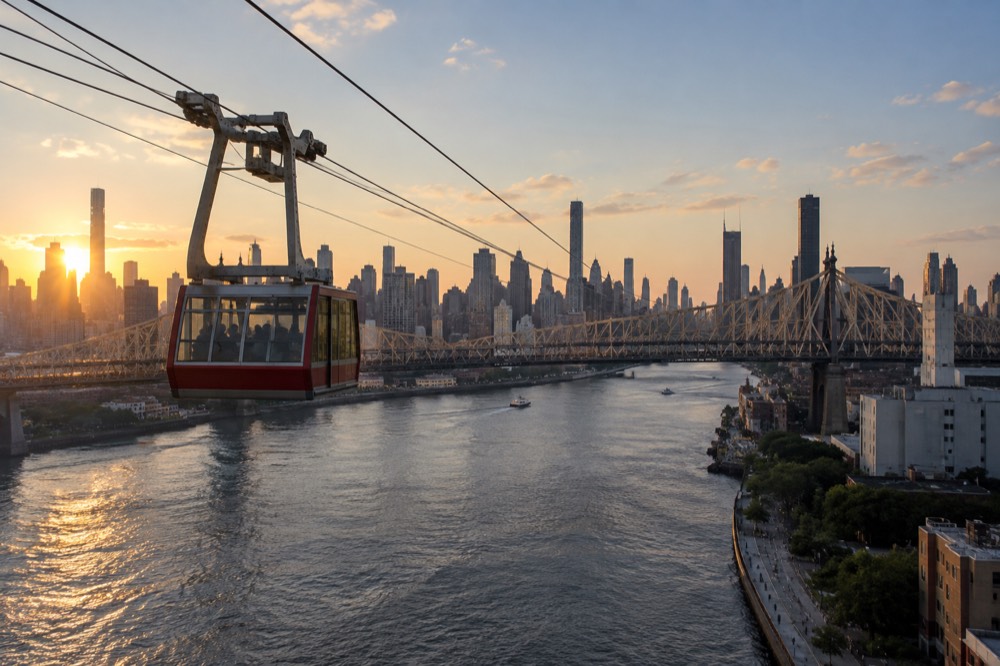
Short answer
The Roosevelt Island Tram costs $3.00 each way, the same as a subway fare, and tapping the same OMNY card, credit card or phone for both legs earns a free transfer within two hours. It runs between East 59th Street and Second Avenue in Manhattan and Roosevelt Island, roughly parallel to the Queensboro Bridge.
The Roosevelt Island Tram carries its cabin about two hundred feet above the East River, between a corner of Midtown Manhattan and a two-mile sliver of an island most visitors never step on. It is not a tourist attraction in the amusement-park sense. It is a working commuter service, one of very few aerial cable cars anywhere that carries regular transit passengers as part of a city's fare system, and it charges exactly what the subway charges: $3.00 a ride, tap in with OMNY, free transfer to the subway within two hours if you use the same card or device.
That fare integration is the detail that surprises people. You do not buy a special ticket, there is no separate booth markup, and the ride counts toward the same $35 weekly OMNY cap as your subway and local bus trips. This page covers what the tram actually is, what it costs, how to ride it, how it compares with the F train to the same island, what to do once you are over there, and the honest verdict on whether it earns a slot in a trip of any length. For the wider picture of the city's sights, start with the full things to do in NYC rundown.
What Is the Roosevelt Island Tram?
The Roosevelt Island Tram is an aerial cable car connecting Manhattan's Upper East Side, at East 59th Street and Second Avenue, with Roosevelt Island in the East River. The crossing takes roughly three minutes each way. It is operated as part of the city's transit network, charges the standard $3.00 fare, accepts OMNY, and hands riders a free transfer to the subway or bus within two hours. Cabins arrive every few minutes in both directions.
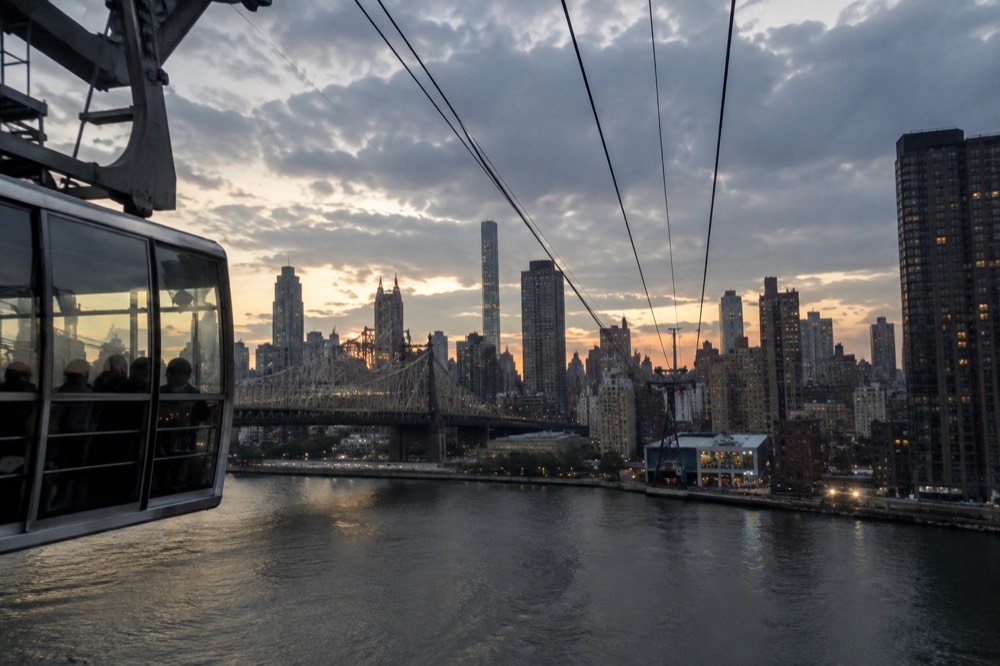
The tram exists because the island needed a link to Manhattan before subway service reached it, and it has outlived that excuse by decades: the F train has long stopped on Roosevelt Island, yet the tram kept running and now carries well over a million riders a year. It survived, in short, because people like it. The station on the Manhattan side sits at the base of the Queensboro Bridge, and the crossing runs alongside the bridge, so you get the bridge's steelwork in one window and the open river and skyline in the other.
Roosevelt Island itself sits between Manhattan and Queens, a narrow strip about two miles long that was hospital and institutional land for most of its history and is now a quiet residential neighborhood with a waterfront promenade on both sides. The tram is the island's signature approach, and the view on the crossing, straight down the East River toward Midtown, is the reason most visitors ride it. The Upper East Side guide covers the Manhattan side of the river if you are building a day around the area.
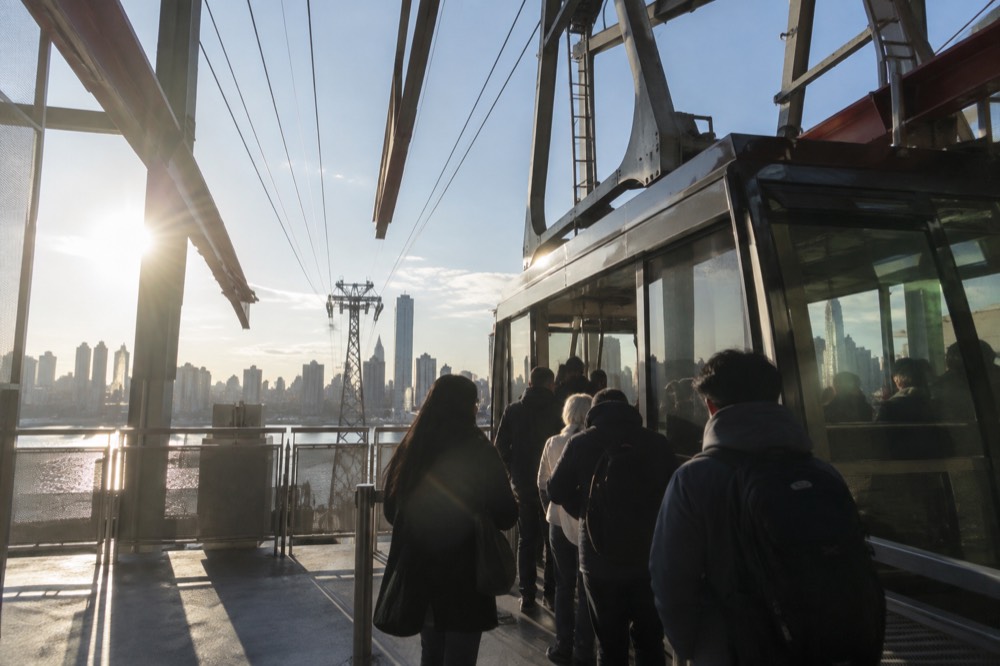
One thing worth being clear about: this is a cable car, not a loop of sightseeing. The cabin detaches from the haul cable in the stations and slows for boarding, then accelerates out over the river. It sways a little in wind, it pauses occasionally for the machinery, and in strong storms it can be taken out of service while the subway underneath keeps running. If the ride itself is the point of your visit, have a plan B, because the F train stops a short walk from the same island station area.
How Much Does the Roosevelt Island Tram Cost?
A single ride on the Roosevelt Island Tram costs $3.00, identical to a subway or local bus fare, and there is no separate ticket, tour price or booking fee. Tap the same OMNY card, contactless credit or debit card, or phone for the tram and a following subway or bus trip and the transfer is free within two hours. Children under 44 inches tall ride free with a fare-paying adult, up to three children per adult.
The fare mechanics are the same as the rest of the system, and that matters in 2026 more than it used to. The MetroCard is retired: as of 1 January 2026 the MTA no longer sells or refills them at all, so the old advice about buying a card at the machine is dead. You tap. Every tram and subway tap on the same card or device counts toward the automatic $35 weekly cap for subway and local bus rides, and once you hit the cap everything else in that seven-day window is free. There is no pass to buy and nothing to activate; the cap simply applies.
| Fare item | Price | Notes |
|---|---|---|
| Single tram ride | $3.00 | Same as subway and local bus |
| Free transfer | $0 | Subway or bus within 2 hours, same card or device |
| Children under 44 in | Free | Up to 3 per paying adult |
| Reduced fare (eligible) | $1.50 | Seniors 65+ and eligible disabled riders |
| OMNY weekly cap | $35 | Tram taps count together with subway and local bus |
Two cautions on the cap. First, the seven-day window starts with your first tap, not on a Monday, and it resets rolling. Second, you must tap the same physical card or the same device every time: if you tap your phone for the tram and your plastic card for the subway, the system sees two separate riders and neither earns the transfer or the cap. Groups should note that each traveler needs their own card or device, because group trips do not pool toward one cap.
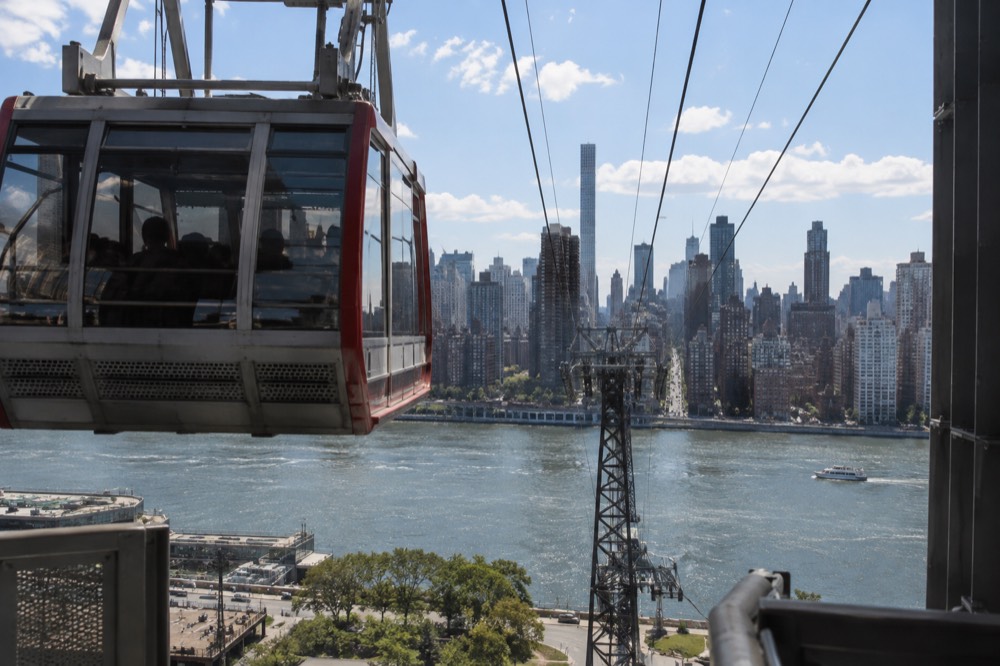
For current fare rules and the official service notices, the operator and transit authority pages carry the live detail: the Roosevelt Island Operating Corporation site covers the tram service itself, and the MTA fares page governs what a tap costs. If a blog or listing tells you the tram needs a special ticket, it is out of date.
How Do You Ride the Roosevelt Island Tram?
Riding the tram is closer to riding a subway than a ski lift: walk to the station, tap your card or phone at the fare gate, board the cabin when the doors open, and ride to the other side in about three minutes. The Manhattan station is at East 59th Street and Second Avenue; the island station sits at the tram's only island stop, a short walk from the promenade. There is no reserved seating and no booking.
The Manhattan station is the one to start from if you want the postcard ride, because crossing toward the island puts the skyline behind you and the river and bridge in front. Arrive a few minutes before you want to ride in case a cabin has just left, and note that cabins fill up at rush hour with actual commuters, island residents who use this as their daily link to Manhattan. Standing is normal and the ride is short.
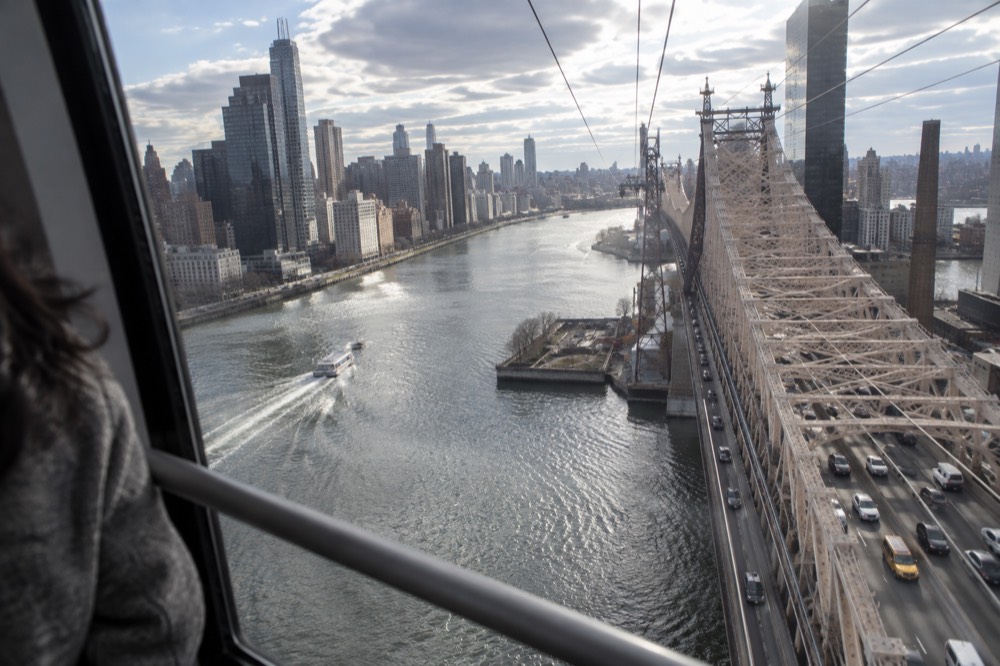
The practical sequence, in order:
- Get to East 59th Street and Second Avenue. The 4, 5, 6, N, R and W trains all stop within a few blocks at Lexington Avenue/59th Street.
- Tap in at the fare gate with OMNY. No ticket purchase, nothing to print.
- Board when the cabin doors open, and stand anywhere; the view is good from both sides.
- Ride roughly three minutes over the river, alongside the Queensboro Bridge.
- On the island, walk straight ahead to the riverside promenade, which runs the length of the island's western shore facing Manhattan.
If you are building a bigger day around Manhattan's classic sights and want a guide handling the navigation, the Central Park guided walking tour is a natural pairing: park in the morning, tram in the late afternoon when the light on the river is better.
Accessibility is straightforward. Both stations have level access to the platforms, and the cabins are designed for standing riders, wheelchairs and strollers alike, with wide doors. That makes the tram one of the more accessible sightseeing rides in the city, in contrast to some older elevator-dependent attractions where a single broken lift closes the experience.
Tram or Subway: Which Is the Better Way to Reach Roosevelt Island?
The F train and the tram both reach Roosevelt Island for the same $3.00 fare, and the honest answer is that most visitors should ride the tram over and take the F train back, or vice versa. The tram takes about three minutes and gives you the aerial view; the F train takes about the same time underground and gives you nothing to look at.
Doing both costs one fare total if you tap the same card or device, thanks to the free two-hour transfer.
That last point is the one almost everyone misses. The transfer rule means a tram-plus-subway loop is not two fares, it is one: tap onto the tram in Manhattan, explore the island, tap onto the F train back to Manhattan within two hours of your first tap, and the second leg is free. If your island visit runs longer than two hours, you simply pay a second $3.00, which is hardly a decision worth agonizing over. The wider set of guides lives on New York City Travel Guide.
| Factor | Roosevelt Island Tram | F train |
|---|---|---|
| Fare | $3.00 | $3.00 |
| Ride time | About 3 minutes | About 3 minutes |
| View | Aerial, river and skyline | None, underground |
| Frequency | Cabins every few minutes | Every few minutes most of the day |
| Weather risk | Suspends in strong wind | Runs in all weather |
| Manhattan boarding point | E 59th St and Second Ave | Multiple Midtown and Downtown stations |
| Queues at peak | Possible at rush hour | Possible at rush hour |
The F train's island station sits in the middle of Roosevelt Island, a few minutes' walk from the tram station and the promenade, so the two are genuinely interchangeable for access. The difference is entirely the crossing. Weather is the one factor that can override preference: in high winds the tram pauses service, and the F train is then the only option. Check the service status on the day if the forecast looks rough.

If the tram-plus-park combination is the day you are sketching out, it is worth locking the walking tour before you lock anything else, since guided groups run on fixed schedules and the tram can slot around them.
What Can You Do on Roosevelt Island?
Roosevelt Island's main draw is its western promenade, a flat, quiet riverside walk running the length of the island with an uninterrupted view of the Manhattan skyline, plus the FDR Four Freedoms State Park at the southern tip and the small visitor attractions along the main street. The island is walkable end to end in well under an hour, and there is no ticket required for any of the outdoor space.
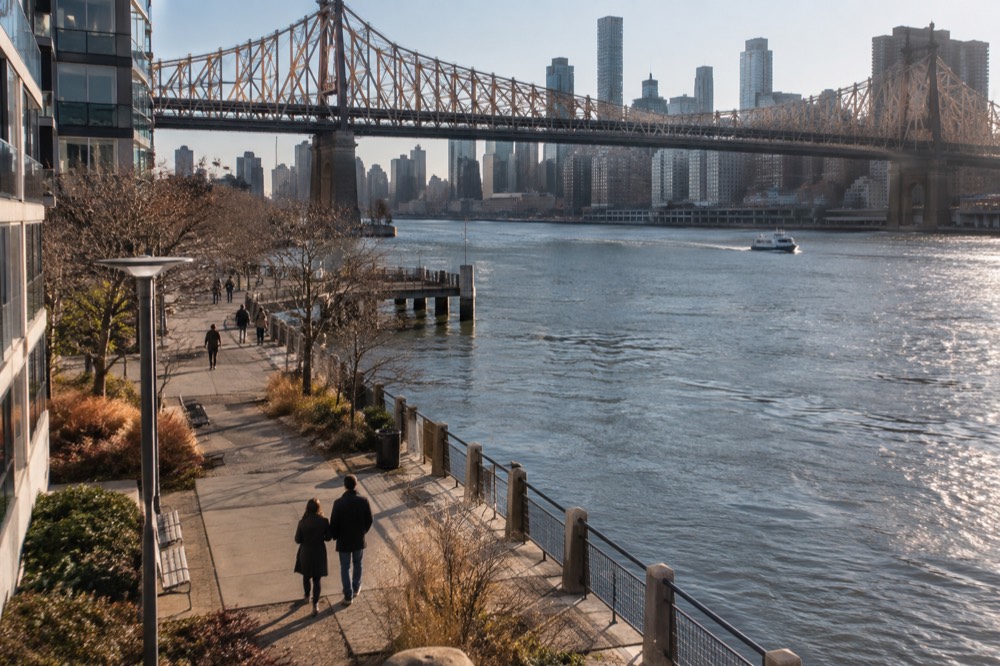
The promenade is the reason photographers come. From the western shore you look straight across at the Upper East Side and, looking south, down the length of the East River toward Midtown, with the Queensboro Bridge overhead. It is one of the few places in the city where you can frame the skyline from water level without a fence, a railing or a crowd in the way, and at sunset it is genuinely one of the best free views in New York.
| Island sight | What it is | Time needed |
|---|---|---|
| Western promenade | Riverside walk facing Manhattan | 30-60 minutes |
| Four Freedoms State Park | Southern tip, memorial park honoring FDR | 20-30 minutes |
| Lighthouse Park | Northern end, small historic lighthouse | 15-20 minutes |
| Main Street | Cafes, a library branch, residential blocks | As long as lunch takes |
| Cornell Tech campus | Modern architecture at the island's center | A look as you pass |
The island's scale is its charm. There is almost no traffic on the main road, a free red bus circles the island for residents and visitors alike, and the whole place runs about ten minutes slower than Manhattan across the water. Come here to decompress between two heavy sightseeing blocks, not to fill a whole day. The Midtown Manhattan guide covers the neighborhoods you will see across the river from the promenade.
If the island's calm is the point of the detour, the free-walk option on the Brooklyn side of the river makes a good contrast for a second day: the Brooklyn Bridge, Brooklyn Heights and Dumbo free tour on GuruWalk covers a waterfront with the same skyline from the opposite direction, tip-based, with no fixed fee.
When Is the Best Time to Ride the Roosevelt Island Tram?
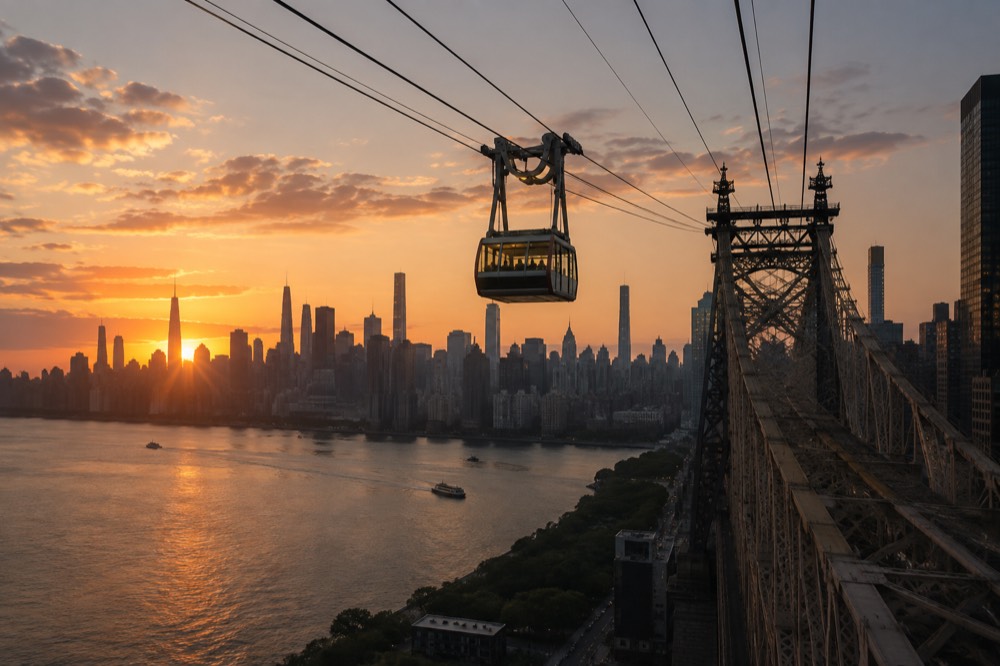
The best time to ride the Roosevelt Island Tram is the hour before sunset, when the low light hits the Manhattan skyline across the river and the promenade is at its photographic best. The worst time is weekday rush hour, roughly 8-9:30am and 5-6:30pm, when island commuters fill the cabins and the ride is standing-room only. Midday and weekends are the quiet, easy windows.
The seasonal angle matters less than the daily one. The tram runs year-round, and the ride is enclosed and heated, so winter is not the obstacle it would be on a ferry deck. What the calendar does change is the light: in summer the sunset crossing happens late, which pairs well with a long evening, and in winter the low afternoon sun can make the west-facing promenade walk genuinely cold, so bring layers between December and March.
One planning note that most guides miss, because it comes from transit data rather than tourism marketing: New York's subway has recovered on weekends but not on weekdays since the pandemic, with weekend ridership at 88 percent of 2019 levels while weekday sits at 73 percent. For a visitor that cuts the other way from the usual advice. The weekend train is the fuller one relative to normal, and the weekday midday, the old "avoid rush hour" window, is now the emptiest the system gets. On the tram specifically, weekday midday is your friend.
Is the Roosevelt Island Tram Worth It?
For most visitors, yes, the Roosevelt Island Tram is worth it, because three minutes and a $3.00 fare buys an aerial river crossing you cannot get any other way in the city, and the free transfer means the round trip can cost one fare.
It is not worth it if your time is down to a single day, if the weather is stormy, or if you expect a themed attraction with commentary, because this is a commuter cable car with a view.
The honest framing is that the tram is a high value-per-minute activity, not a high value-per-hour one. The ride itself is over almost as soon as it registers, and the island, pleasant as it is, is a half-day at the absolute most. Where it shines is as a late-afternoon insert in a day that already touches the Upper East Side or Midtown: park or museum in the morning, tram over around golden hour, promenade walk, F train back. That sequence costs one fare and produces the best photographs of many trips.
| Your situation | Verdict | Why |
|---|---|---|
| First visit, 4+ days | Ride it | Cheap, quick, unique angle on the skyline |
| First visit, 1-2 days | Skip it | The time is better spent on the headliners |
| Photographer | Ride it at sunset | Uninterrupted water-level skyline frames |
| Bad weather, high wind | Skip it | Service can suspend; the F train is the fallback |
| Traveling with kids | Ride it | Children under 44 inches ride free; the ride itself is the event |
| Mobility or stroller needs | Ride it | Level boarding at both stations |
For a first visit of any real length, the classic pairing is a morning in Central Park, still the single best free half-day in the city, and the tram crossing in the late afternoon. A guided walk through the park strings together Bethesda Terrace, the Mall and Bow Bridge without the navigation guesswork, and the Central Park guided walking tour does exactly that.
If instead you want the city's other great cheap thrill after dark, food walks in the downtown neighborhoods pack six tastings into an easy route: the Chinatown and Little Italy food tour is the established one, and it pairs with an evening skyline differently than the tram does, on your feet and at street level.
Common Questions About the Roosevelt Island Tram
The questions visitors ask most are whether the tram costs extra, whether the same card works for the subway afterward, how long the ride takes, whether it runs in bad weather, and whether children pay. The short answers: no extra cost, yes with the same card or device, about three minutes, it can suspend in strong wind, and children under 44 inches ride free. The details below cover each one properly.
How much does the Roosevelt Island Tram cost?
$3.00 each way, the same as a subway fare. Tap with OMNY, a contactless credit or debit card, or a phone. There is no special ticket and no booking fee, and the tap counts toward the $35 weekly OMNY cap alongside subway and local bus rides.
Can you transfer free from the tram to the subway?
Yes. One free transfer applies within two hours between the tram and the subway or bus, provided you tap the same card or device for both legs. Mixing your phone and a plastic card breaks the transfer, so pick one and stick to it for the whole trip.
How long is the Roosevelt Island Tram ride?
About three minutes from East 59th Street and Second Avenue in Manhattan to Roosevelt Island. Cabins arrive every few minutes in each direction, so the wait is usually short outside weekday rush hour.
Does the tram run in bad weather?
It runs in rain and ordinary winter conditions, but strong wind can suspend service, and the F train to the same island is the fallback. Check the operator's service notices on the day if the forecast is rough.
Do children pay on the Roosevelt Island Tram?
Children under 44 inches tall ride free with a fare-paying adult, up to three children per adult, matching the subway and local bus rule. Everyone else pays the standard $3.00.
Is the Roosevelt Island Tram the same as a sightseeing cruise?
No. It is a commuter cable car with no commentary, no food service and no loop of the harbor. What it offers is a three-minute aerial crossing of the East River next to the Queensboro Bridge, for a transit fare rather than a tour price.
The tram's real competition is not another attraction, it is the question of whether a detour is worth your limited hours. On a short trip, skip it and see the headliners. On anything longer, ride it before sunset, walk the promenade, and take the F train home for free.