New Year's Eve in Times Square: What Attending the Ball Drop Really Takes
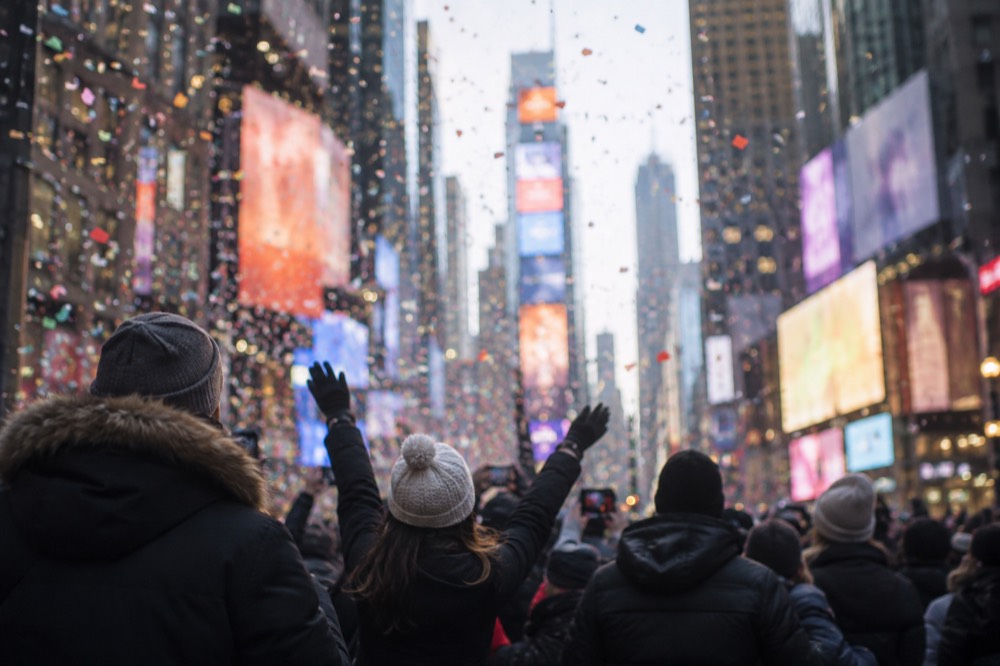
Every 31 December, roughly a million people squeeze into a handful of blocks around Broadway and 7th Avenue to watch a geodesic ball slide down a pole. It costs nothing to attend. It also demands more patience than almost any other thing you can do in New York.
Short answer
Attending the Times Square ball drop is free and requires no ticket, but the viewing pens open in the early afternoon and fill fast, there are no restrooms or re-entry once you are inside, and you will stand outdoors, in December, for many hours. The ball drops at 11:59pm and the whole thing is over in about a minute.
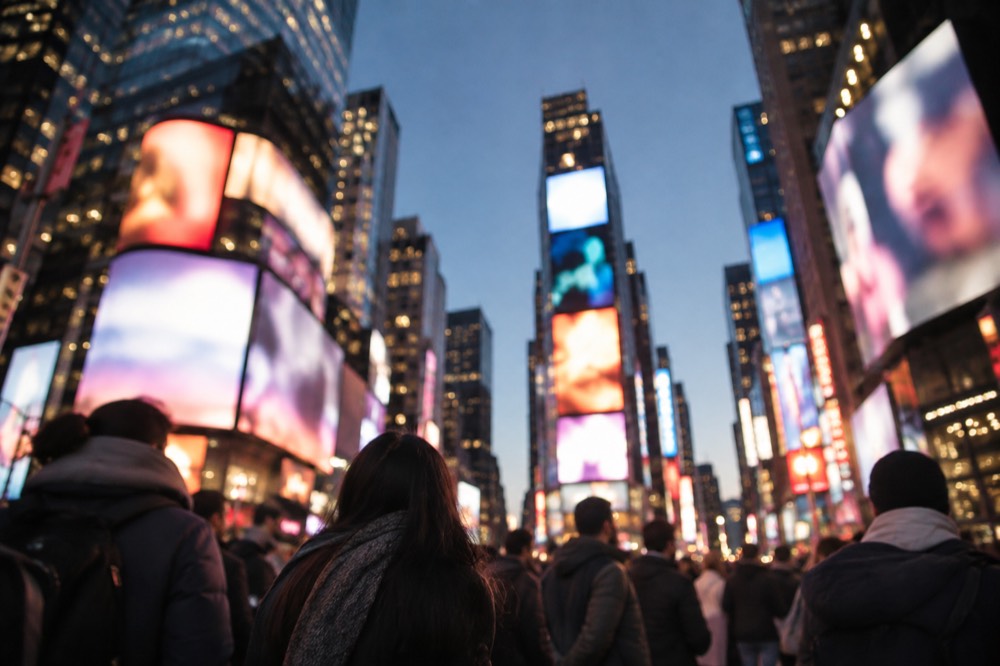
Every 31 December, Times Square empties itself of traffic, fills itself with people, and becomes the most famous countdown venue on the planet. The event is free. There are no tickets to buy, no ropes to bribe your way past, no VIP wristband for sale at the door. That generosity comes with a catch that surprises first-timers: the organizers close the viewing pens in the early afternoon, often hours before sunset, and once you are inside one, you stay inside it until after midnight. No restrooms. No leaving for dinner. No chairs.
This guide lays out what the night actually involves, sourced from the official organizers and the hard climate data for Central Park, and it does not pretend the experience suits everyone. For plenty of visitors, the better New Year's Eve is a harbor cruise, a Broadway show, or a warm table in Brooklyn with a view of the skyline. All of those are covered here too. For the wider menu of the city, start with our things to do in NYC page and work outward.
Is the Times Square Ball Drop Free, and Do You Need Tickets?
Yes, the Times Square New Year's Eve celebration is completely free and no ticket is required to watch the ball drop in person. The event is organized by the Times Square Alliance, and attendance works on a first-come basis inside barricaded viewing pens that open in the early afternoon and close once the space fills. There is no official paid entry and no lottery for public spots.
The only people with reserved positions are invited guests of the organizers and sponsors.
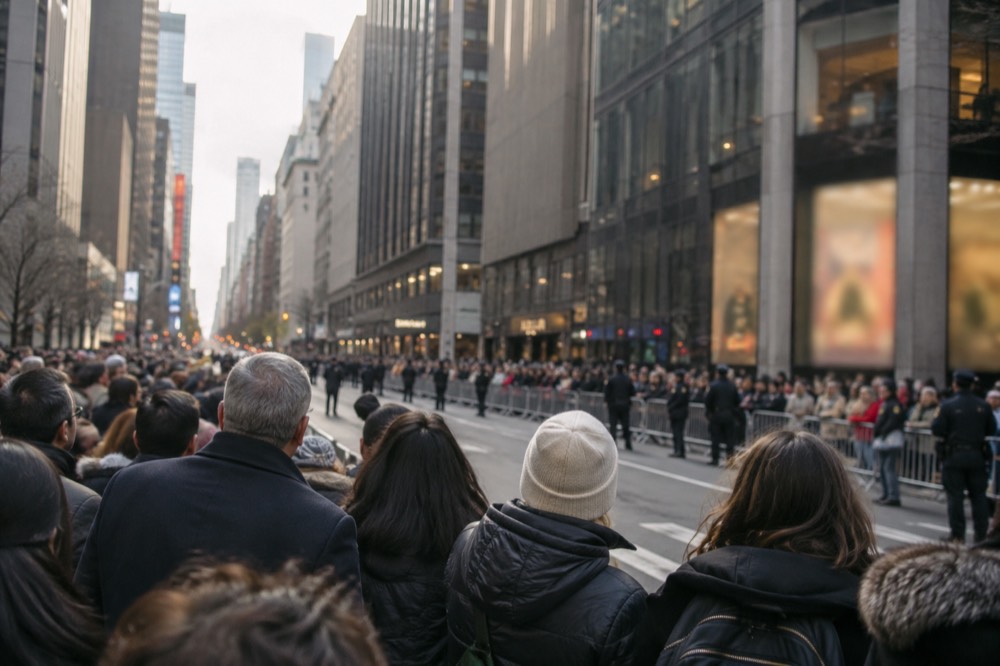
The pens are metal barricade corrals set up along Broadway and 7th Avenue, stacked back from the stage at 45th through roughly 55th Streets. Each pen holds a fixed number of people, and the police and Alliance staff fill them from the front, block by block. Once a pen is full, it is closed, and the crowd behind it moves to the next one north. If you arrive after the last pen has filled, you are simply outside the footprint, and there is no secondary viewing area with a clear sightline to the pole.
The ball itself sits atop One Times Square, the slender tower at the crossing of Broadway and 7th Avenue, and it is raised and lowered on the mast above the building. The descent begins at 11:59pm and takes about sixty seconds, finishing at the stroke of midnight, followed by confetti and a fireworks burst over the square. The whole spectacle, the thing a million people stand for hours to witness, lasts roughly a minute.
What Time Do the Viewing Pens Actually Fill Up?
The viewing pens in Times Square typically begin filling in the early afternoon of 31 December, and the best-placed ones, the blocks closest to the stage at 45th Street, are usually closed hours before dark. Late arrivals can still reach pens further north, but by early evening the entire footprint is routinely at capacity.
The practical rule every veteran repeats is the same: a spot where the ball is clearly visible means standing from early afternoon onward, not from dinnertime.
That is the part most guides soften. The event may peak at midnight, but it effectively begins as an all-day commitment. People queue for the best pens from late morning onward, and the earliest arrivals are the ones who end up with the pole directly in their sightline. Arriving at 6pm or 7pm on a normal New Year's Eve means either a distant pen where you watch the ball on a screen, or no pen at all.
The timing is set by the Alliance and the NYPD, and it shifts a little year to year, so check the official Times Square New Year's Eve site before you commit your day. What does not shift is the arithmetic: the closer you want to be, the earlier you must arrive, and the longer you will stand in December cold with nothing but what you carried in.
If a ten-hour outdoor stand sounds like a bad trade, it is worth knowing what the surrounding blocks feel like earlier in the season. A free, tip-based walk through Times Square, Grand Central and Rockefeller Center on GuruWalk gives you the Midtown landmarks with a local guide and none of the New Year's crush, and it ends with you setting the guide's pay yourself. The same operator's free walk pairs the loudest square in the city with the quietest grand concourse in the country, which is a good way to understand why people love this neighborhood at all.
What Can You Bring Into the Pens, and What Is Banned?
Security rules for the Times Square pens prohibit bags of any kind, backpacks, alcohol, umbrellas and coolers, and there are no public restrooms inside the pens once you enter. Re-entry is not allowed: if you leave your pen, you cannot return to it, and there is nowhere to sit, so plan to stand for the entire duration.
Dress in more layers than feels reasonable in your hotel room, eat before you enter, and carry only what fits in your pockets.
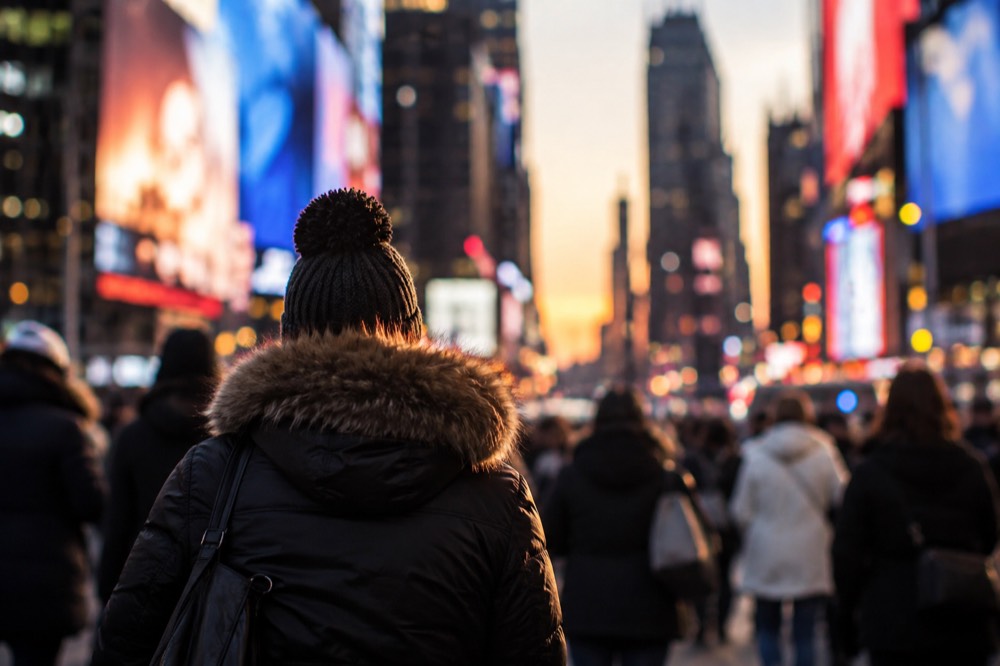
The no-bag rule is the one that catches the most people. It applies to everyone, it is enforced at the pen entrances, and it exists because the whole footprint is screened as a secure zone. That means no thermos of coffee, no folding stool, no blanket beyond what you can wear, and no bag of snacks. Whatever you need for the evening must be distributed across your coat pockets and your body.
The restroom situation deserves its own warning because it is the single most common reason people abandon the attempt. Once you are in a pen, you are in for the duration. There are no facilities inside, and stepping out means losing your spot permanently. Veterans handle this by stopping intake of liquids hours before entering and accepting that the evening is a test of endurance as much as enthusiasm.
Here is the honest packing list, built around what the pens allow:
| Item | Allowed? | Notes |
|---|---|---|
| Backpack or large bag | No | Prohibited by security rules at pen entry |
| Small crossbody or clutch | Risky | Rules discourage bags generally; pockets are safest |
| Hand warmers | Yes | Small, pocketable, worth their weight |
| Snack bars | Yes | Must fit in pockets; no coolers |
| Sealed water bottle | Use caution | No restrooms inside the pens; plan liquid intake |
| Umbrella | No | Blocks sightlines; wear a hooded waterproof layer instead |
| Folding stool or chair | No | Standing room only, no seating of any kind |
| Alcohol | No | Prohibited; the area is a secure zone |
How Cold and Wet Will It Actually Be at Midnight?
The official Central Park climate normals for December put the average high at 44.3°F and the average low at 33.8°F, with 4.38 inches of precipitation and 4.9 inches of snow across the month, so a typical midnight in Times Square is a few degrees above freezing with a real chance of rain or snow. The wind funnels down the avenue canyons of Midtown, which makes the felt temperature colder than the forecast number suggests.
Those figures come straight from the NOAA 1991-2020 normals for the Central Park station, the same dataset the National Weather Service publishes for the city, and they describe the average, not the extremes. New York Decembers have produced both bone-chilling cold snaps and bizarrely mild midnights. The average is what you should pack for, and the average means a serious coat, a hat, gloves, and boots you can stand in for ten hours.
The wind is the detail the numbers do not capture. Times Square is a canyon of tall buildings, and the blocks around Broadway channel gusts that cut through a coat that would be fine for a fifteen-minute walk. Layers trap warm air; a single heavy shell over a t-shirt does not. Wool socks and waterproof footwear matter more than they seem in the afternoon, when the air still feels manageable.
Here is how the winter months stack up against each other in the official normals, which is useful if your dates are flexible:
| Month | Avg high °F | Avg low °F | Precipitation (in) | Snowfall (in) |
|---|---|---|---|---|
| December | 44.3 | 33.8 | 4.38 | 4.9 |
| January | 39.5 | 27.9 | 3.64 | 8.8 |
| February | 42.2 | 29.5 | 3.19 | 10.1 |
Note what that table quietly says: February, not January, is the snowiest month in the official record, and February is also the driest. If you are choosing between a December 31 visit and a late-winter one, December is milder on average but wetter than either month that follows.
For month-by-month planning beyond December, our NYC weather by month guide carries the full Central Park normals table, and the winter in NYC guide covers the season as a whole.
Is Standing in the Pens Worth It, Honestly?
For most visitors, no: ten-plus hours standing outdoors with no restrooms, no food and no re-entry is a bad trade for a sixty-second view you can see better on television. The people who genuinely enjoy it are the ones for whom being present is the point, the atmosphere, the crowd energy and the confetti at midnight, rather than the sightline itself.
If you are curious but not committed, arrive early, see the pens fill from the outside, and book a warm backup plan.
That is the honest editorial answer, and it deserves to be said plainly because most coverage of the event is promotional. The ball drop is magnificent from inside the pens, and it is also magnificent from a rooftop in Brooklyn, a dinner cruise on the harbor, or a friend's apartment with the broadcast on. The unique thing the pens offer is not the view, it is the shared experience of a million people counting down in the same place.
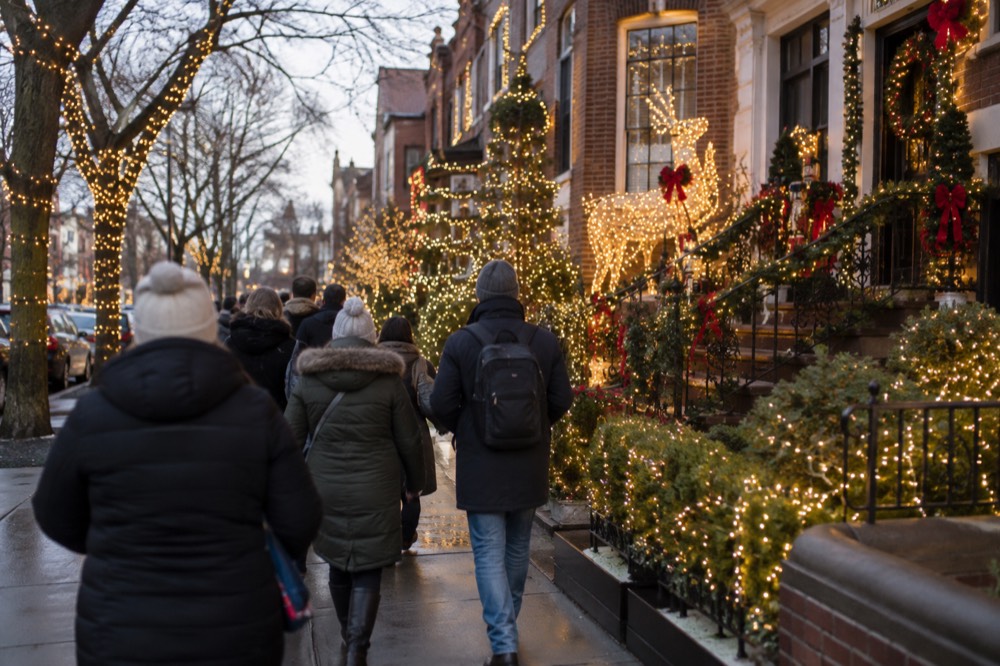
Families with young children should think especially hard. The hours, the cold, the crowds and the restroom math are punishing for adults and worse for kids. A family-friendly alternative with genuine spectacle, the Dyker Heights Christmas lights in Brooklyn, runs through the holiday season, and a guided tour handles the transit to a residential corner most visitors never reach on their own.
What Are the Best Alternatives to Standing in Times Square?
The strongest alternatives to the pens are a Broadway show on the biggest night of the theater calendar, a harbor or dinner cruise with the skyline and fireworks from the water, a warm table at a restaurant with a view, or a rooftop bar in Midtown without the barricade ordeal. Each gives you the midnight moment with heat, food and a restroom, which the pens do not.
Book any of them well in advance, because New Year's Eve is the busiest night of the year for New York hospitality.
A Broadway show is the classic move, and the Theater District sits a few blocks from the square, so you can exit an evening curtain near 11pm and catch the midnight chaos from the edge without committing to a pen. MJ the Musical plays in the heart of that district and delivers a big, polished, choreography-heavy night that suits a celebration; check the listing for the performance calendar and seat tiers, because New Year's Eve performances sell early.
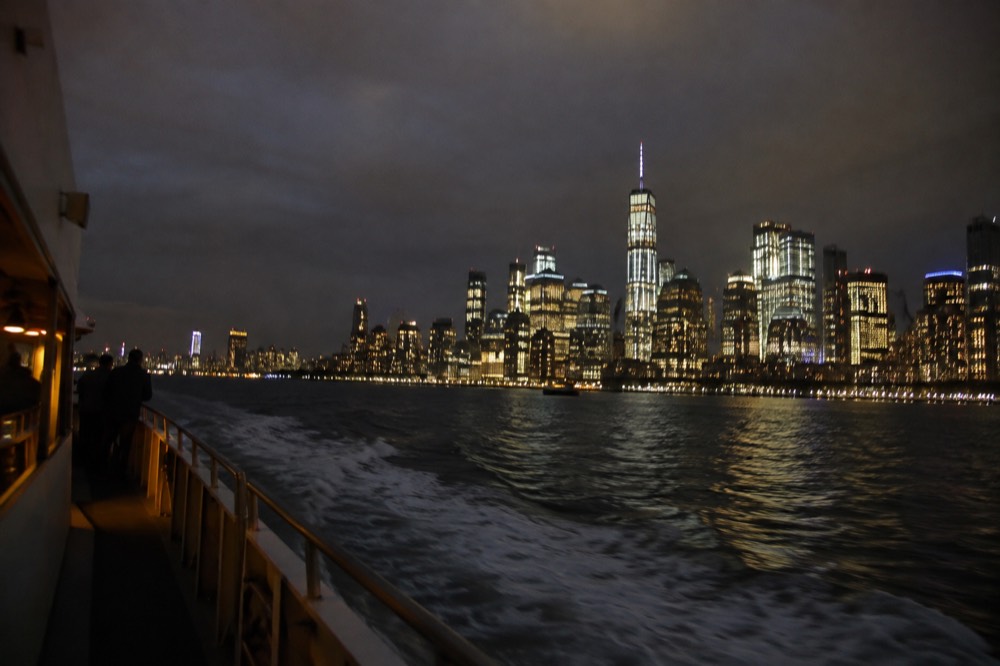
On the water, the harbor cruises run special New Year's sailings that put the skyline, the bridges and often the midnight fireworks in front of you with a bar and a heated cabin attached. The two-and-a-half-hour sightseeing loops that normally run the harbor by day shift to evening departures for the occasion, and the glass-enclosed dinner cruises go out as full celebrations with served courses. Neither requires you to stand in the cold for ten hours, and both let you use a restroom, which by now you understand is not a small thing.
| Option | Midnight view | Warmth | Cost level | Book ahead |
|---|---|---|---|---|
| Times Square pens | The ball, up close | None, outdoors all day | Free | N/A, arrive early |
| Broadway show, then edge of the square | Ball drop from the crowd fringe | Heated theater for hours | Moderate to high | Yes, weeks ahead |
| Harbor or dinner cruise | Skyline and fireworks from the water | Heated cabin | High | Yes, well ahead |
| Rooftop bar in Midtown | Ball and skyline from above | Indoor-outdoor mix | High, with drinks | Yes, reservations |
| Restaurant with a view | Distant skyline | Fully heated | Varies | Yes, essential |
| Brooklyn promenade or rooftop | Skyline panorama, ball on a screen | Depends on venue | Free to high | Varies |
How Do You Get to and from Times Square on the Night?
The subway is the only sane way in and out of Midtown on New Year's Eve, and the MTA runs extra service overnight for the occasion, but several stations around Times Square are closed or exit-restricted during the event, so plan to walk a few blocks east or west to catch a train. Driving is a poor idea: streets in the footprint close to traffic from the morning, and the rest of Midtown gridlocks.
After midnight, expect the biggest pedestrian crush of the year.
The practical pattern is to arrive from a station outside the frozen zone, somewhere along 8th Avenue or east of 6th Avenue, and walk in. On the way out, resist the instinct to fight for the closest entrance, because the stations nearest the square are the ones with the longest, slowest, densest lines of the night. Walking three extra blocks to a less famous station routinely saves an hour.
Fare-wise, the system is simpler than older guides claim. A single subway ride is $3.00, tapped with OMNY on a contactless card or phone, and the weekly fare cap of $35 applies automatically with no pass to buy. The MetroCard as a purchasable product is retired: as of 1 January 2026 the MTA no longer sells or refills them, so any guide telling you to buy a 7-day unlimited on arrival is describing something that no longer exists. Our OMNY guide covers the capping rules in detail.
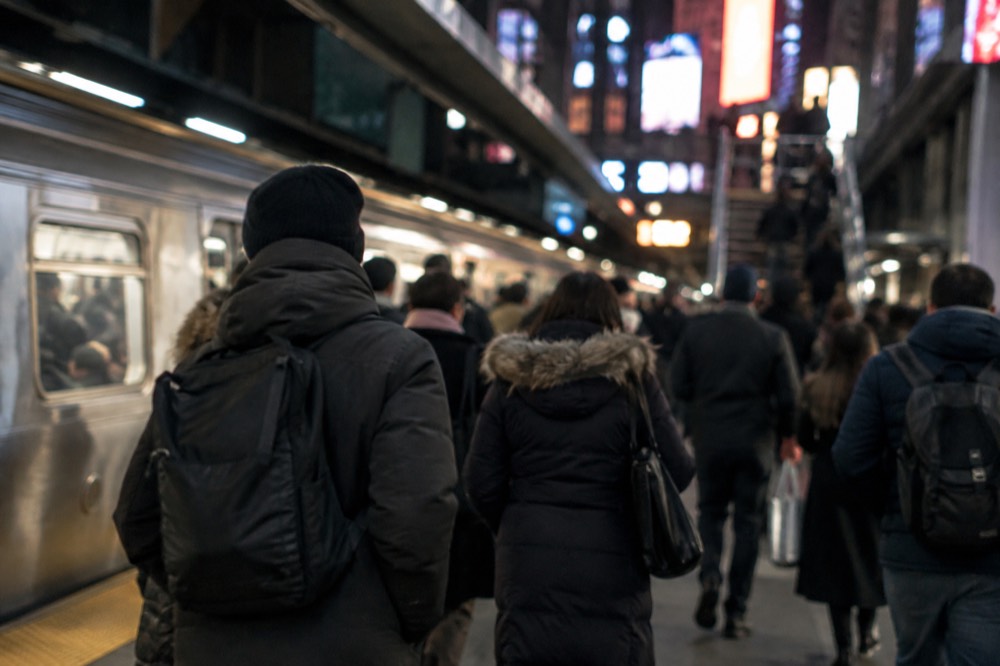
One transit fact worth knowing before the night: Times Sq-42 St is not just the busiest station in the system, it is the busiest by a wide margin. The MTA's 2025 counts put it at 61,203,303 riders, 71% more than Grand Central, and New Year's Eve concentrates that volume into a single midnight hour. The crowd leaving the pens is the largest simultaneous pedestrian movement the city produces all year.
What Is the Rest of the Holiday Season Worth Seeing?
The week between Christmas and New Year's is the most festive stretch of the New York calendar, and the ball drop is only its finale. The Rockefeller Center Christmas tree, the holiday markets, the department store windows on 5th Avenue and the light displays of Dyker Heights all run through New Year's week, so a trip built around the 31st can easily fill three or four days with seasonal sights.
Hotels price the week at their annual peak, so book early.
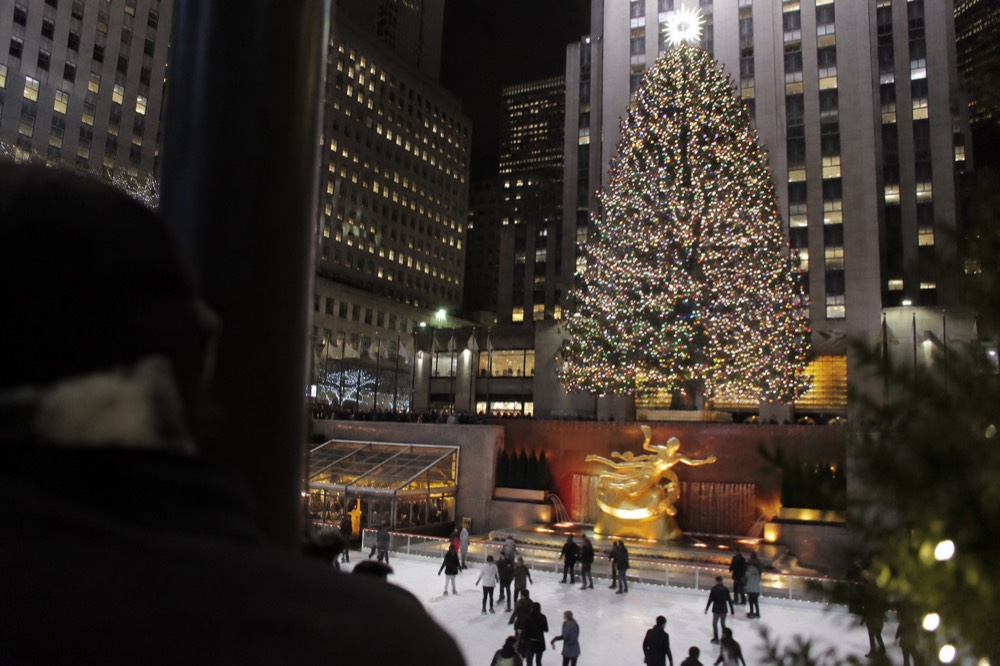
The tree at Rockefeller Center anchors the season and draws its own crowds, and the surrounding blocks, the windows along 5th Avenue, the shops and the rink, make a full day of it. Our Christmas in NYC guide covers the whole seasonal program, and the Times Square guide handles the square itself on a normal, survivable day.
For the full menu of the city beyond the holiday week, the New York City Travel Guide homepage is the orientation hub, and the money page of things to do in NYC carries the year-round essentials.
Common Questions About New Year's Eve in Times Square
The questions below cover the practicalities visitors ask most: cost, timing, restrooms, kids and getting out afterward. The short version of every answer is the same: the event is free, it is a full-day commitment, it is cold, and there is no infrastructure inside the pens beyond other people and confetti. Anyone who plans around those four facts, or books a warm alternative instead, will have a good night.
Is the Times Square ball drop free?
Yes. There are no tickets and no entry fee. The viewing pens are open to the public on a first-come basis and close when full.
How early do you need to arrive for the Times Square ball drop?
The pens begin filling in the early afternoon, and the best blocks close hours before dark. For a spot with a clear view of the ball, plan to arrive by early afternoon and expect to stand until after midnight.
Are there restrooms in the Times Square pens?
No. There are no restrooms inside the pens and no re-entry if you leave. Manage your liquid intake before you enter and treat the evening as a commitment.
Can you bring a bag to the Times Square ball drop?
No. Backpacks and large bags are prohibited by security rules. Bring only what fits in your pockets.
Is the Times Square ball drop good for kids?
Generally no. The hours, cold, crowds and lack of restrooms are hard on children. A family alternative like the Dyker Heights Christmas lights tour delivers spectacle without the endurance test.
How do you get home after the ball drop?
Take the subway from a station a few blocks outside the immediate footprint, and expect very large crowds until well after midnight. The MTA runs extra overnight service for the event.
Whatever you choose, book the parts that need booking, dress for the December normals rather than the forecast optimism, and treat the ball drop as one option among several rather than an obligation. The city does not grade you on where you were at midnight, but it does remember whether you were warm.