NYC Weather by Month: What Each Month Actually Feels Like
Official Central Park climate records say July is the wettest month in New York and February gets more snow than January. Most guides get both backwards. Here is what each month actually delivers, with the numbers behind it.

Short answer
New York City weather runs a full four-season cycle: average highs climb from 39.5°F in January to 84.9°F in July, and every month of the year averages more than three inches of precipitation. There is no dry season here. The most reliable months for comfortable sightseeing are May, June, September and October.
July, not a winter month, is the wettest time of year in New York City. The official 1991-2020 climate normals for Central Park put July at 4.60 inches of precipitation, ahead of August at 4.56 and June at 4.54. And February, which most visitors brace for less than January, averages 10.1 inches of snow against January's 8.8. Both figures come from the National Oceanic and Atmospheric Administration, and both contradict what almost every competing guide tells you.
This page works through the year month by month using those verified normals: average highs, average lows, rain and snow. It also translates the numbers into what they mean for real plans, because a 49.9°F average high in March reads very differently on a windy day at the Brooklyn Bridge than it does on paper. If you are still choosing your dates, the broader best time to visit NYC guide covers crowds and prices, and the things to do in NYC page has the full activity menu for whatever month you land on.
What Is the Weather Like in New York City by Month?
New York City has four real seasons, with average highs ranging from 39.5°F in January to 84.9°F in July, and average lows from 27.9°F to 70.1°F across the same span. Every single month averages more than three inches of precipitation, so there is no dry season to aim for. The driest month is February at 3.19 inches, which is also the snowiest.
The numbers below come from NOAA's 1991-2020 climate normals recorded in Central Park.
| Month | Avg High (°F) | Avg Low (°F) | Precipitation (in) | Avg Snowfall (in) |
|---|---|---|---|---|
| January | 39.5 | 27.9 | 3.64 | 8.8 |
| February | 42.2 | 29.5 | 3.19 | 10.1 |
| March | 49.9 | 35.8 | 4.29 | 5.0 |
| April | 61.8 | 45.5 | 4.09 | 0.4 |
| May | 71.4 | 55.0 | 3.96 | 0.0 |
| June | 79.7 | 64.4 | 4.54 | 0.0 |
| July | 84.9 | 70.1 | 4.60 | 0.0 |
| August | 83.3 | 68.9 | 4.56 | 0.0 |
| September | 76.2 | 62.3 | 4.31 | 0.0 |
| October | 64.5 | 51.4 | 4.38 | 0.1 |
| November | 54.0 | 42.0 | 3.58 | 0.5 |
| December | 44.3 | 33.8 | 4.38 | 4.9 |
Read the table with a few cautions in mind. These are 30-year averages, so a mild January afternoon and a July cold front both happen; the normals describe the center of gravity, not a forecast. The snowfall column is an average too, which means a February that delivers two feet in one storm can sit next to a February that delivers almost none. And precipitation includes rain and the water content of snow combined, so the monthly totals stay fairly flat all year even though the form it falls in changes completely.
One more thing the table hides: wind and humidity. A cold day in January with a wind coming off the Hudson feels substantially worse than the number suggests, and a hot day in July with the region's characteristic humidity feels warmer. The city's tall buildings also channel wind hard along the avenues, which is why locals dress in layers even when the forecast looks mild.
Which Months Have the Best Weather in New York City?
May, June, September and October are the months with the most comfortable weather in New York City, offering average highs between 64.5°F and 79.7°F with no sustained-rain pattern to plan around. May averages a high of 71.4°F, June 79.7°F, September 76.2°F and October 64.5°F. October also delivers the city's best light for photography, with low sun angles and clear air more often than any summer month.
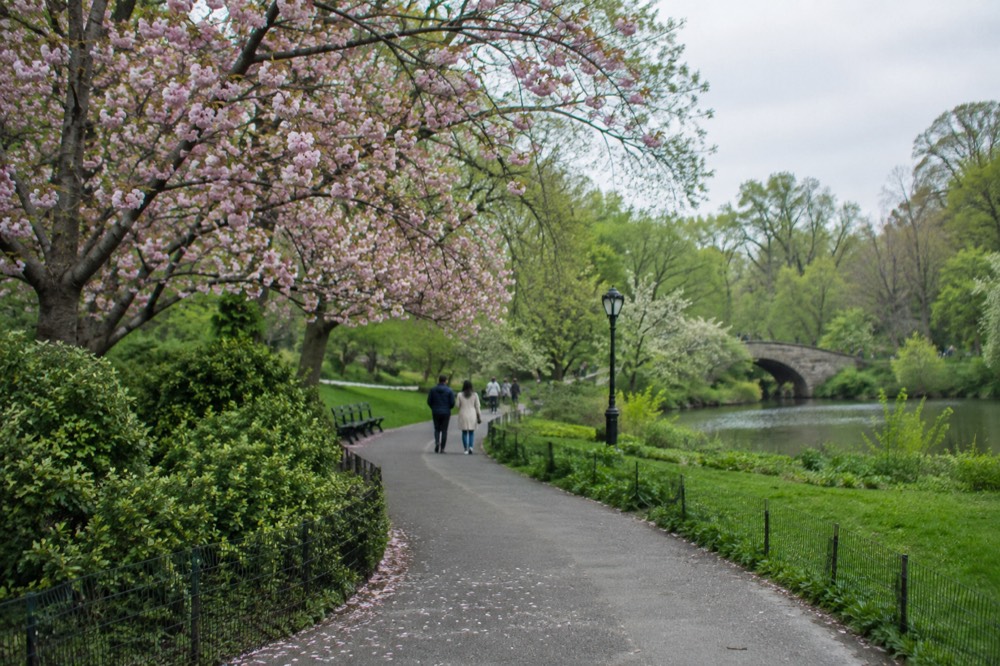
May is the quietest of the four. The park trees are in leaf, terrace seating has opened across the city, and the summer tourist surge has not yet arrived. Average lows of 55.0°F mean evenings want a light jacket, which is a fair trade for daytime conditions that rarely tip into uncomfortable.
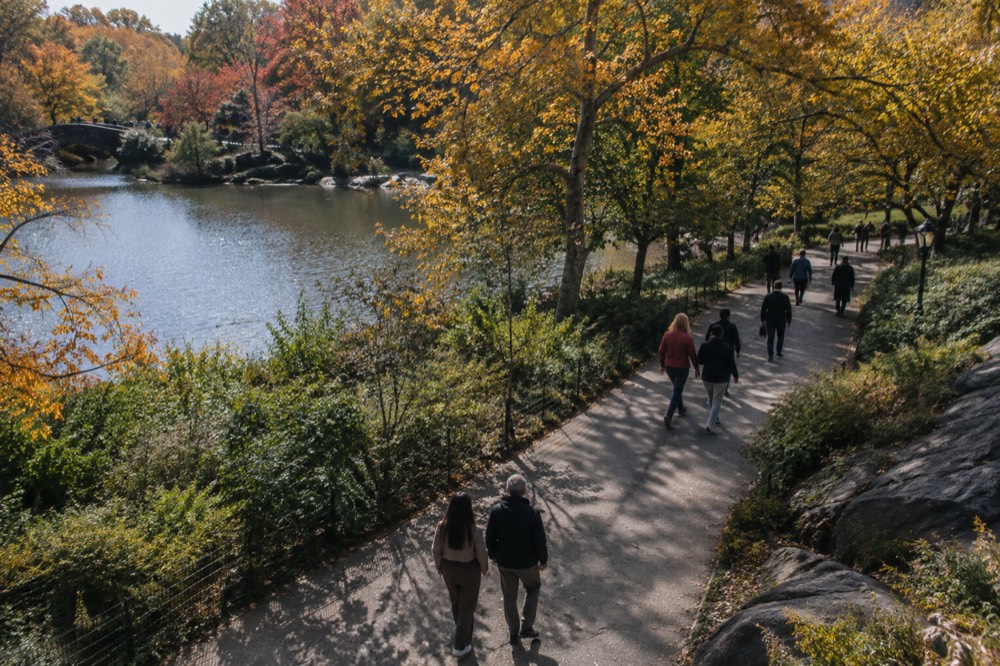
September is the month locals speak up for. The humidity that defines August breaks, average highs sit at 76.2°F, and the first weeks of the month often run warmer than the average suggests. October sharpens from there: 64.5°F average highs, 51.4°F lows, and the foliage peak in Central Park usually landing late in the month. The trade-off in both months is that they are the busiest on the hotel calendar, so the weather premium gets priced in.
June deserves a specific warning despite the pleasant numbers. It averages 4.54 inches of precipitation, essentially tied with July, and its rain tends to arrive as afternoon thunderstorms rather than all-day drizzle. Plan indoor anchors for the late afternoon and you will rarely lose a day to it.
| Month | Avg high / low (°F) | What the days feel like | Best use of the month |
|---|---|---|---|
| May | 71.4 / 55.0 | Mild days, cool evenings, low humidity | Park time, walking neighborhoods, outdoor dining |
| June | 79.7 / 64.4 | Warm to hot, afternoon storm risk | Morning sightseeing, indoor anchors after 3pm |
| September | 76.2 / 62.3 | Summer warmth without the mugginess | Everything: decks, walks, boat trips |
| October | 64.5 / 51.4 | Crisp, clear, foliage from mid-month | Photography, long walks, foliage in Central Park |
Whatever month you choose, the practical move is to hold a mix of outdoor and indoor plans and swap between them as the forecast firms up. A pass that bundles several attractions makes that swap cost nothing, which is why the New York CityPASS earns its place in a weather-planning conversation: it pairs outdoor decks with museums, so a rained-out morning becomes a MoMA morning instead of a lost morning.
How Much Rain and Snow Does NYC Get Each Year?
New York City's precipitation is spread almost evenly across the year, with every month contributing between 3.19 and 4.60 inches, so no season is meaningfully drier than another. Snow is concentrated between December and March, and February is the snowiest month at 10.1 inches, ahead of January at 8.8. There is no month you can visit and reasonably expect dry weather throughout.
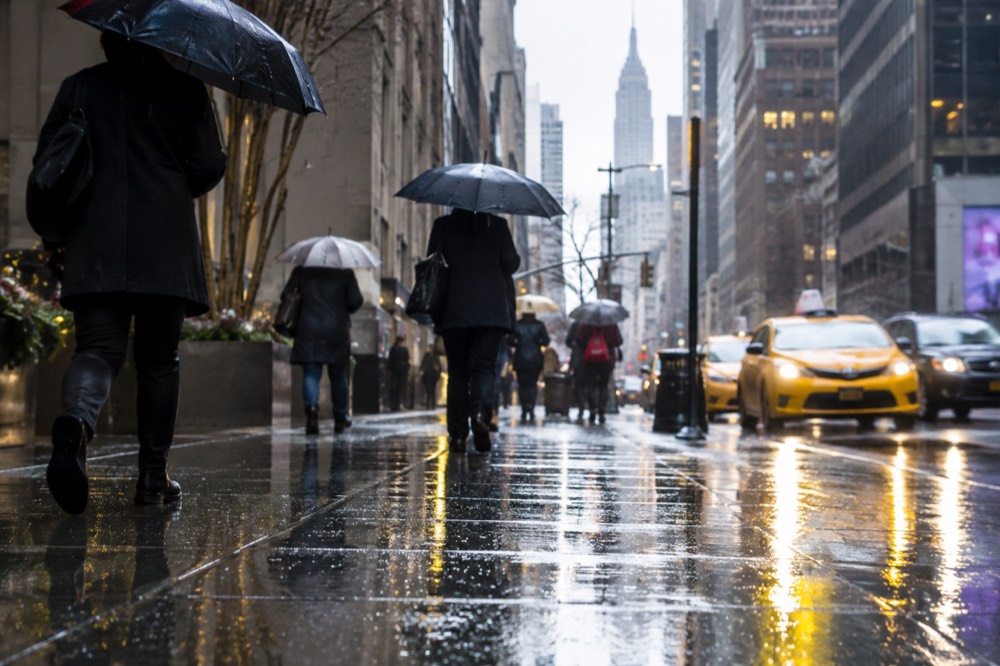
The evenness is the point. Cities with real wet and dry seasons let you plan around the calendar; New York does not. A July trip can deliver a week of flawless mid-80s days or three separate downpours, and both outcomes sit inside the normal range. The correct response is not picking a "dry month" that does not exist, it is building an itinerary with indoor options that you genuinely want to do.
Snow behaves differently from rain because it is bundled into a third of the year. December through March carries nearly all of it, with December averaging 4.9 inches and March 5.0. When a storm does hit, the city clears the major avenues fast but side streets and park paths stay slushy for days, and the slush is the thing that ruins shoes, not the fresh snow. Waterproof footwear matters more than the heaviest coat.
For rainy-day contingencies, the rainy day activities in NYC guide collects the best indoor options, and the free museums in NYC page lists the ones that cost nothing, which is useful when a wet day lands mid-trip and the budget is already spent.
What Is NYC Weather Like in Summer?
Summer in New York City is hot, humid and wet, with average highs of 79.7°F in June, 84.9°F in July and 83.3°F in August, and overnight lows that rarely fall below the mid-60s. July and August are the two wettest months of the entire year at 4.60 and 4.56 inches of precipitation, mostly arriving as heavy afternoon and evening thunderstorms rather than steady rain.
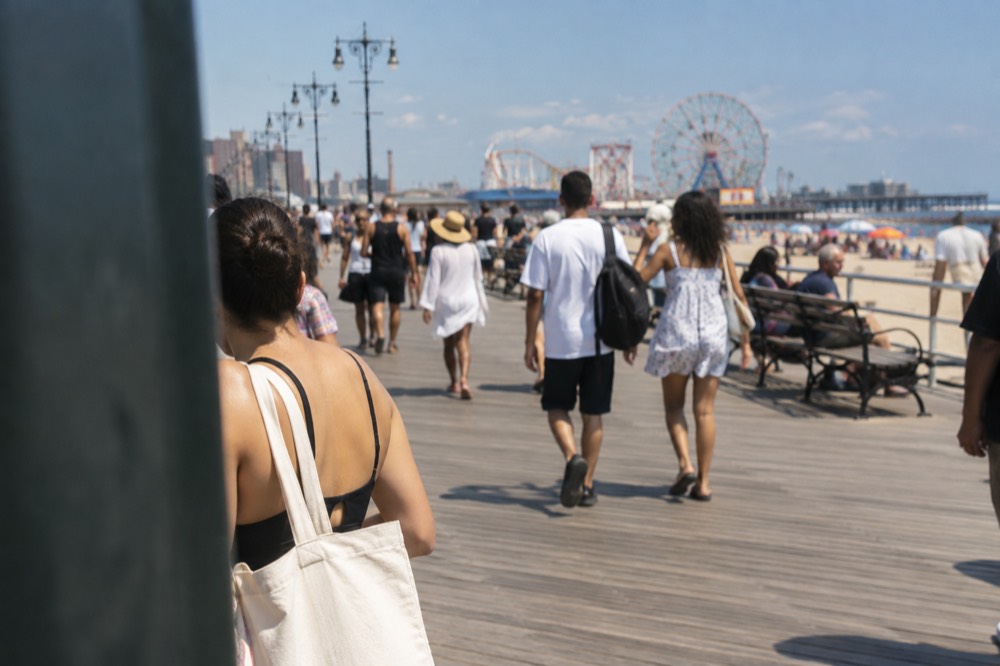
The humidity is what separates a New York summer from a dry-heat city. Air conditioning is universal in hotels, museums and the subway's newer stations, but the older subway platforms in summer are genuinely brutal, and the temperature difference between a platform and a train car can be 20 degrees. Locals structure summer days the way southern Europeans do: out early, indoors or in shade from early afternoon, back out in the evening. The rest of the planning pages sit on New York City Travel Guide.
The thunderstorm pattern deserves respect. A June or July day often runs clear and hot until mid-afternoon, then delivers a fast, violent storm that floods a few intersections and disappears within the hour. Check the radar before committing to a picnic or a boat departure, not the morning forecast alone. The NYC in summer guide goes deeper on beaches, outdoor movies and the strategies that make the season work.
August is the month to be honest about. It is marginally cooler than July on average but feels similar, hotel rates peak, and it carries the year's second-highest rainfall. If your dates are flexible enough to choose September instead, take September.
What Is NYC Weather Like in Winter?
Winter in New York City is cold and damp, with average highs of 44.3°F in December, 39.5°F in January and 42.2°F in February, and average lows below freezing in all three. Snow averages 4.9 inches in December, 8.8 in January and 10.1 in February, but arrives in storms rather than steadily, so many winter days are simply cold and clear. Wind chill, not the thermometer, decides how the day feels.
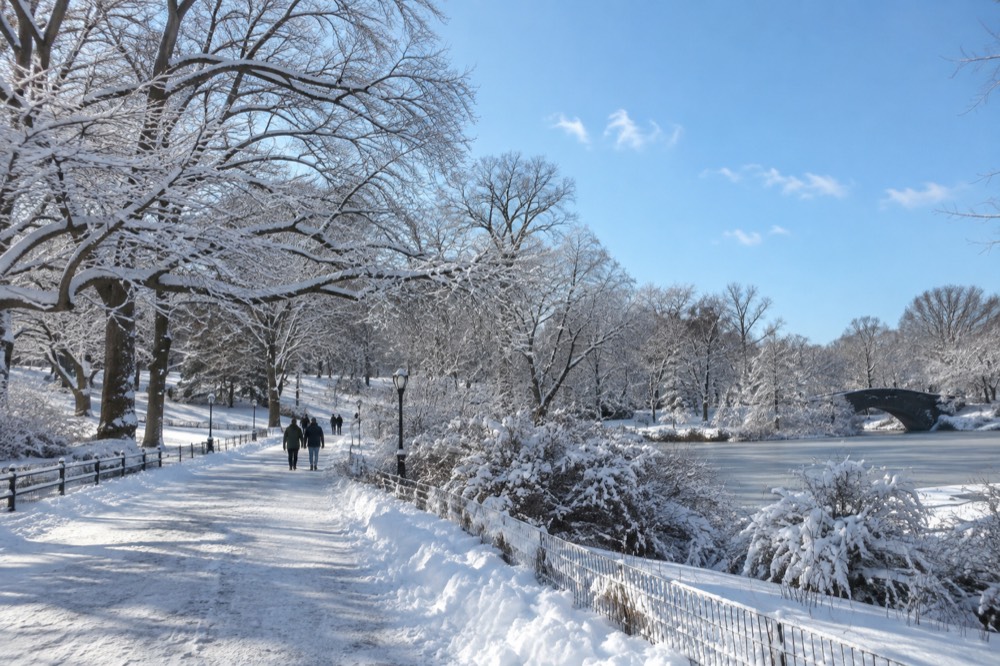
January is the coldest month, with an average low of 27.9°F, but February is the one that delivers the biggest snowfalls. That inversion surprises visitors who assume the deep of winter arrives in January. The practical difference is small: in both months you want a real coat, a hat, and shoes that can handle slush.
The winter payoff is real, though. Hotel rates drop to their annual floor in January and February, museum lines shrink, and a fresh snowfall in Central Park is one of the city's genuinely beautiful sights. The trade is shorter days, with darkness arriving before 5pm in the deepest weeks, which compresses outdoor sightseeing into a narrow window. The NYC in winter guide covers the seasonal upside, and if your trip lands between late November and the new year, the Christmas in NYC guide is the better starting point.
December is the transitional month and the most crowded of the three. Average highs of 44.3°F mean most December days are cold-but-walkable, the first snows are possible but rarely heavy, and the holiday period brings both the city's best atmosphere and its worst sidewalk congestion around Fifth Avenue and Rockefeller Center.
What Is NYC Weather Like in Spring and Fall?
Spring and fall are New York City's shoulder seasons, with March and April warming from average highs of 49.9°F to 61.8°F, and September and October cooling from 76.2°F to 64.5°F. March is deceptively raw, averaging 4.29 inches of precipitation and 5 inches of snow, while April turns genuinely pleasant. Fall is the more reliable season, with September offering the year's best balance of warmth and post-summer calm.
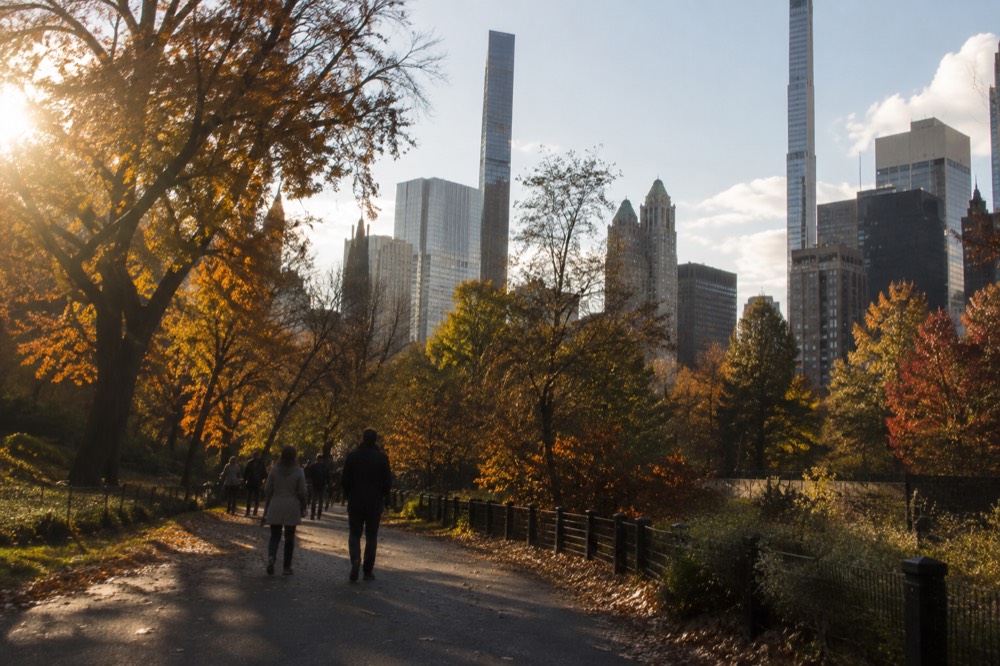
March is the month visitors most often misjudge. A 49.9°F average high sounds tolerable, but March wind in Manhattan is a specific kind of unpleasant, and the month still averages 5 inches of snow. April fixes most of it: 61.8°F highs, 45.5°F lows, and the cherry blossoms arriving in Brooklyn Botanic Garden. April's 0.4 inches of average snowfall is essentially the exit stamp for the season.
Fall earns its reputation honestly. September's air has the summer's warmth without the humidity, October adds the foliage and the year's clearest light, and even November, at a 54.0°F average high, gives you more workable sightseeing days than March does. The NYC in the fall guide covers the foliage timing and the seasonal events, and NYC in spring does the same for April and May.
If you are weighing spring against fall with everything else equal, take fall. Spring in New York is lovely but volatile, with the year's most erratic swings between warm and raw, while fall moves in one direction, steadily cooler and steadily clearer, which makes it far easier to pack for.
What Should You Pack for New York City Weather?
Pack for New York City weather in layers regardless of month, because every season produces wide daily swings and the subway runs hot while the streets run cold. In summer you want breathable clothing plus one warm layer for air-conditioned interiors. In winter you want a real insulated coat, waterproof shoes for slush and a hat. In spring and fall, a light jacket over layered tops handles days that can swing sharply between morning and afternoon.
An umbrella is worth carrying in every month.

| Season | Months | Daytime essentials | Evening essentials | The one thing people forget |
|---|---|---|---|---|
| Winter | Dec-Feb | Insulated coat, hat, gloves | Same coat, plus scarf | Waterproof shoes for slush |
| Spring | Mar-May | Light jacket, layered tops | Warm layer | Compact umbrella for March |
| Summer | Jun-Aug | Breathable shirts, sun protection | Same, plus light layer for AC | Refillable bottle for subway platforms |
| Fall | Sep-Nov | Light-to-medium jacket | Medium jacket | Sunglasses, for low-angle October sun |
The layering advice is not generic. New York's indoor-outdoor transitions are extreme: a July museum interior can be 20 degrees colder than the sidewalk outside, and a January subway car can feel like the only warm room in the city. The people who suffer are the ones dressed for a single temperature. The detailed version of this lives in the what to pack for NYC guide, broken down by season and by trip length.
Shoes deserve a specific warning. Cobblestones in SoHo and DUMBO, slush in February, and summer-pavement heat all punish the wrong footwear. Nothing on this page matters more to your daily comfort than shoes you can walk five miles in, wet or dry.
Between the two passes and the food tour above, the weather logic works like this: observation decks are the fair-weather play, and museums and covered food halls are the storm plan. Holding both kinds of ticket means the forecast never decides your day for you.
The five-attraction CityPASS is the strongest fit for a shoulder-season trip, because its menu mixes outdoor decks with indoor museums and you can decide which to use on the morning of, once you have seen the sky.
Common Questions About NYC Weather by Month
The questions visitors ask most about New York City weather cluster around the extremes: which month is hottest, which is coldest, when it snows, and whether rain will ruin a trip. The verified answers are that July is both the hottest and the wettest month, January is the coldest, February is the snowiest, and no month of the year is reliably dry. The details below unpack each of those, plus the humidity and packing questions that follow from them.
What is the hottest month in New York City?
July, with an average high of 84.9°F and an average low of 70.1°F. August is a close second at 83.3°F. Both months feel hotter than the numbers because of humidity, and both average over 4.5 inches of rain, mostly from thunderstorms.
What is the coldest month in New York City?
January, with an average high of 39.5°F and an average low of 27.9°F. February is close behind and is actually snowier, averaging 10.1 inches of snow against January's 8.8. Wind chill regularly pushes felt temperatures well below the thermometer reading in both months.
What is the rainiest month in New York City?
July, averaging 4.60 inches of precipitation in Central Park. August and June follow at 4.56 and 4.54 inches. The counterintuitive part is that summer rain usually arrives in short heavy storms rather than all-day rain, so a wet July often still contains plenty of usable sightseeing hours.
When does it snow in New York City?
Almost entirely between December and March. February averages the most snow at 10.1 inches, followed by January at 8.8, March at 5.0 and December at 4.9. Snow arrives in discrete storms, so plenty of winter days have none on the ground, but the slush after a storm can last for days.
Is New York humid in summer?
Yes, and noticeably so. June through August combine highs in the high 70s to mid 80s with muggy air, and the heat index frequently runs above the actual temperature. Air conditioning is universal indoors, but older subway platforms in summer are the harshest environments in the city.
Is there a dry season in New York City?
No. Every month of the year averages more than three inches of precipitation, and the spread between the driest month, February at 3.19 inches, and the wettest, July at 4.60 inches, is only about 1.4 inches. Plan for possible rain in any month rather than trying to dodge it with your dates.
The month you pick shapes the trip, but it does not have to decide it. A July visitor with museum tickets and a deck reservation loses nothing to an afternoon storm, and a February visitor with waterproof shoes gets Central Park under snow at the year's lowest hotel rates. Pick the month that fits your tolerance and your budget, then build an itinerary that can flex, and the weather stops being a risk and becomes just another part of the plan.