New York Attractions: The Sourced Guide to What to See, What It Costs and What to Book Ahead
New York has more headline attractions than any visitor can fit into one trip, and the pricing is stranger than it looks: three observation decks charge within cents of each other, the Statue of Liberty crown costs thirty cents more than the grounds ticket, and one of the three big city passes no longer exists.
Short answer
The headline New York attractions are the Empire State Building, Top of the Rock, SUMMIT One Vanderbilt, Edge, the Statue of Liberty and Ellis Island, the Metropolitan Museum of Art, the 9/11 Memorial and Museum, Central Park and the Brooklyn Bridge. Expect roughly $26-$75 per paid attraction, and book the Statue of Liberty, the 9/11 Museum and any observation deck sunset slot in advance.
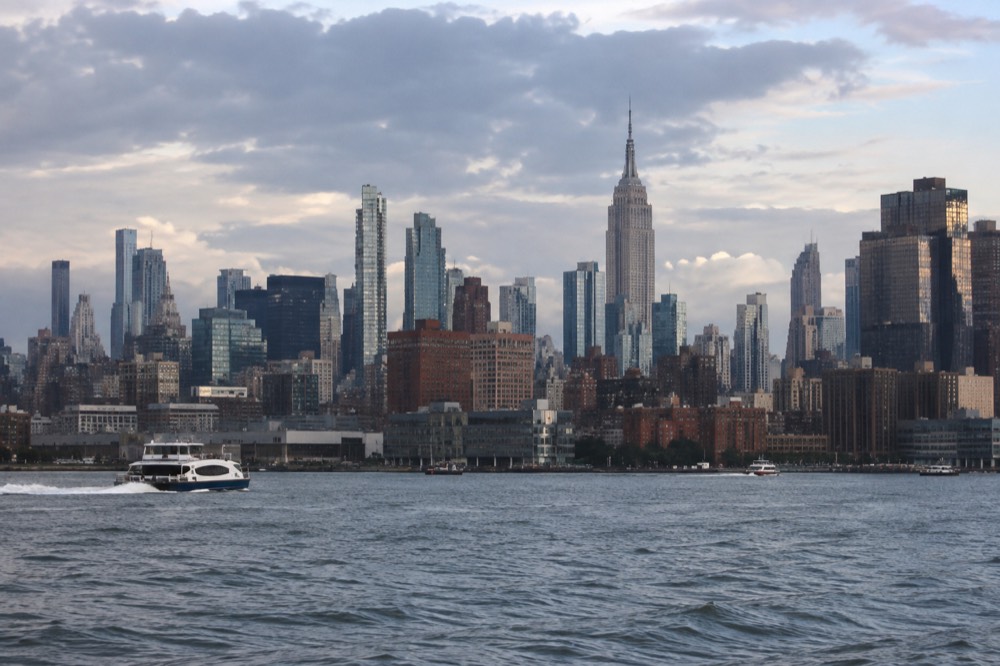
Three of New York's five observation decks, the Empire State Building, Top of the Rock and SUMMIT One Vanderbilt, start within three dollars of each other at the low end of their dynamic pricing. The decisions that actually matter are not which deck is cheapest but which view you want in the frame, and whether you book the scarce things, the Statue of Liberty crown, the 9/11 Museum's free Mondays, before you fly. This guide lays out the headline New York attractions with the prices the operators publish, the free alternatives most guides bury, and the pass maths that decides whether a bundle saves money or wastes it.
What Are the Top New York Attractions?
The ten attractions that define a first New York trip are the Empire State Building, Top of the Rock, SUMMIT One Vanderbilt, Edge at Hudson Yards, One World Observatory, the Statue of Liberty and Ellis Island, the Metropolitan Museum of Art, the 9/11 Memorial and Museum, Central Park and the Brooklyn Bridge. Five of the ten are free to walk onto, and the other five run on timed tickets that reward booking ahead.
The list above is not a ranking. It is the set of sights that appear, in some order, on nearly every first-time itinerary, and the order you visit them in matters less than the spacing. Central Park, the Met and the Guggenheim cluster around the Upper East and West Sides. The Statue of Liberty, the 9/11 Memorial, Wall Street and the Brooklyn Bridge anchor Lower Manhattan. Midtown holds the decks, Times Square, Grand Central and MoMA.
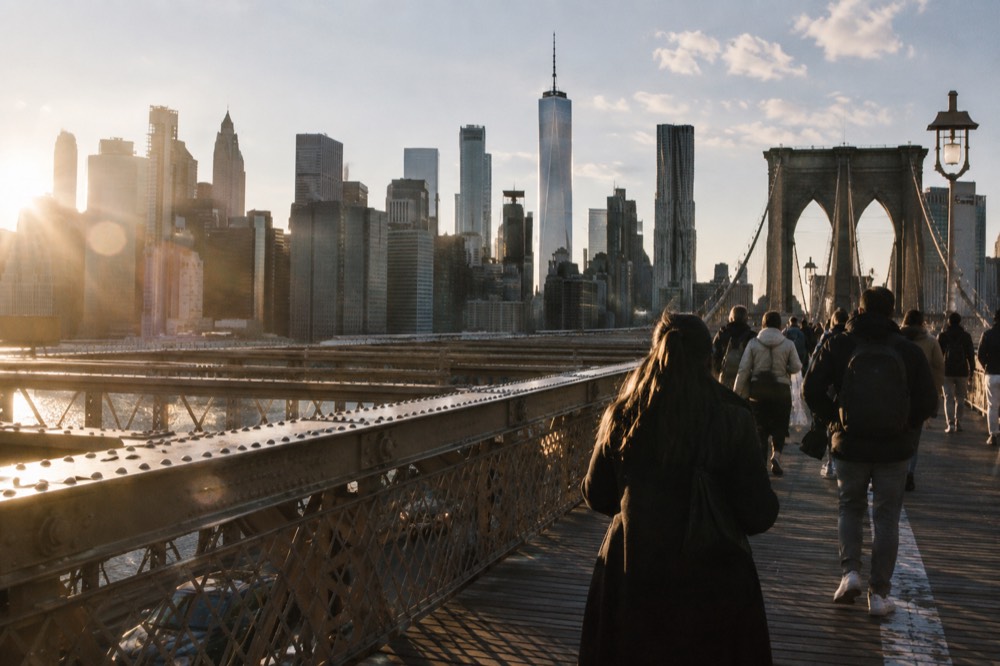
A practical note on geography: Manhattan is not New York City. The city has five boroughs, and two of the strongest attractions outside Manhattan, the Brooklyn Bridge walk into DUMBO and a Nets game at Barclays Center, are one subway ride away. The full rundown of things to do across all five boroughs lives on our things to do in NYC page, which covers the long tail this page does not.
| Attraction | Area | Adult price | Book ahead? |
|---|---|---|---|
| Statue of Liberty & Ellis Island (official ferry) | Battery Park | $26.00 | Yes, weeks ahead |
| 9/11 Memorial & Museum | World Trade Center | $36.00 | Yes, timed entry |
| Metropolitan Museum of Art | Upper East Side | $30.00 | Recommended |
| Empire State Building (86th floor) | Midtown South | from $44 | Yes, timed entry |
| Top of the Rock | Rockefeller Center | from $42 | Yes, timed entry |
| SUMMIT One Vanderbilt | Grand Central | from $44 | Yes, timed entry |
| Edge | Hudson Yards | from $34-$45 | Yes, timed entry |
| One World Observatory | World Trade Center | from $39-$44 | Yes, timed entry |
| Central Park | Central Manhattan | Free | No |
| Brooklyn Bridge | Financial District to DUMBO | Free | No |
Two prices in that table need a caveat. The observation decks all use dynamic timed pricing, so the "from" figure is the floor, not the norm, and sunset slots cost substantially more. The Met's $30 is fixed and mandatory for visitors from outside New York State, which is the single most misunderstood admission policy in the city.
How Much Do New York Attractions Cost in Total?
A realistic daily budget for New York attractions is $45-$120 per person before food: two paid sights a day at roughly $26-$75 each, plus subway fare, which is $3.00 a ride and capped automatically at $35 in any seven-day period. Free anchors like Central Park, the Brooklyn Bridge and the Staten Island Ferry pull the average down hard.
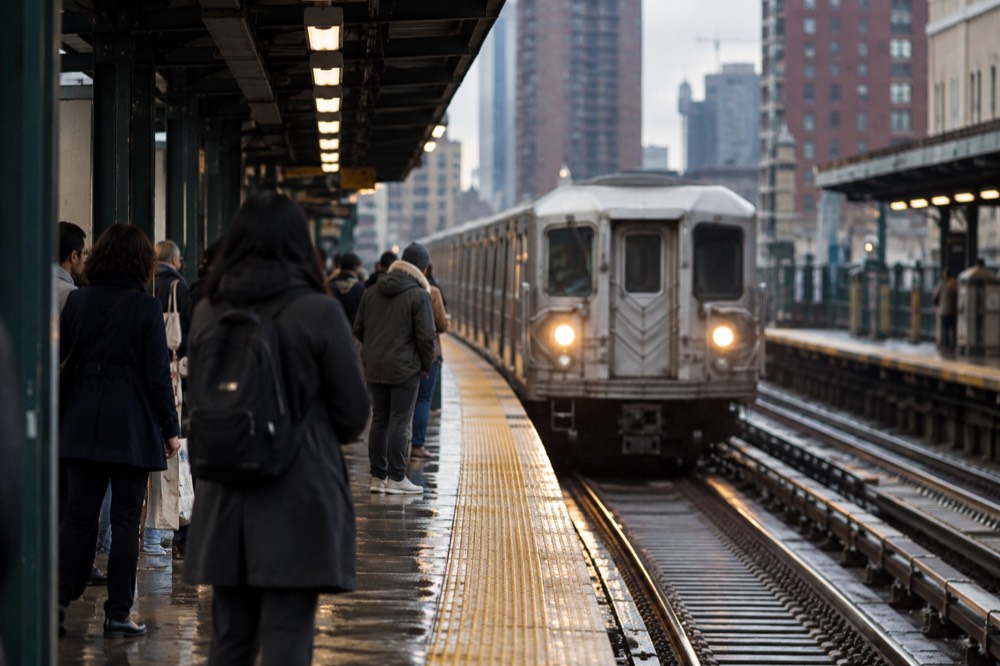
The subway math deserves a sentence because guides still get it wrong. The MetroCard is retired: as of 1 January 2026 the MTA no longer sells or refills them, and the old 7-day unlimited pass does not exist. The weekly value now comes from OMNY fare capping at $35, which applies automatically when you tap the same card or phone at every turnstile. There is nothing to buy in advance and no decision to make, which removes one of the old trip-planning chores entirely.
The attraction spend itself splits into three tiers. The harbor ferry and the Met sit at the accessible end, around $26-$30. The observation decks cluster in the middle, starting in the low forties and climbing with the time slot. The splurge tier is the helicopter, the dinner cruise and the long guided combos, which run from roughly $70 to over $300. Most visitors need one splurge at most.
If your list runs to five or more paid attractions, the pass question becomes real money, and the comparison is worth doing properly. The two bundles below are the ones that fit the classic first-time circuit.
Which New York Attractions Should You Book Before You Fly?
Book three things from home: the Statue of Liberty ferry, ideally with crown or pedestal access, the 9/11 Memorial Museum timed slot, and any observation deck at sunset. Crown tickets are released on a rolling basis and sell out around ninety days, often months, ahead, and they are name-bearing with photo ID checked at departure. The 9/11 Museum releases free Monday tickets at 07:00 ET each Monday, first come first served.
The Statue of Liberty has one structural fact most visitors miss: Statue City Cruises is the only ferry operator authorised by the National Park Service to sell tickets and dock at Liberty Island and Ellis Island. Numerous lookalike harbor cruises circle the islands and never land, and some charge more than the real ferry. A visitor holding one of those tickets cannot set foot on Liberty Island. If the goal is the statue from the water rather than the island, a non-landing cruise is a legitimate and cheaper choice, but the listing should say so plainly.
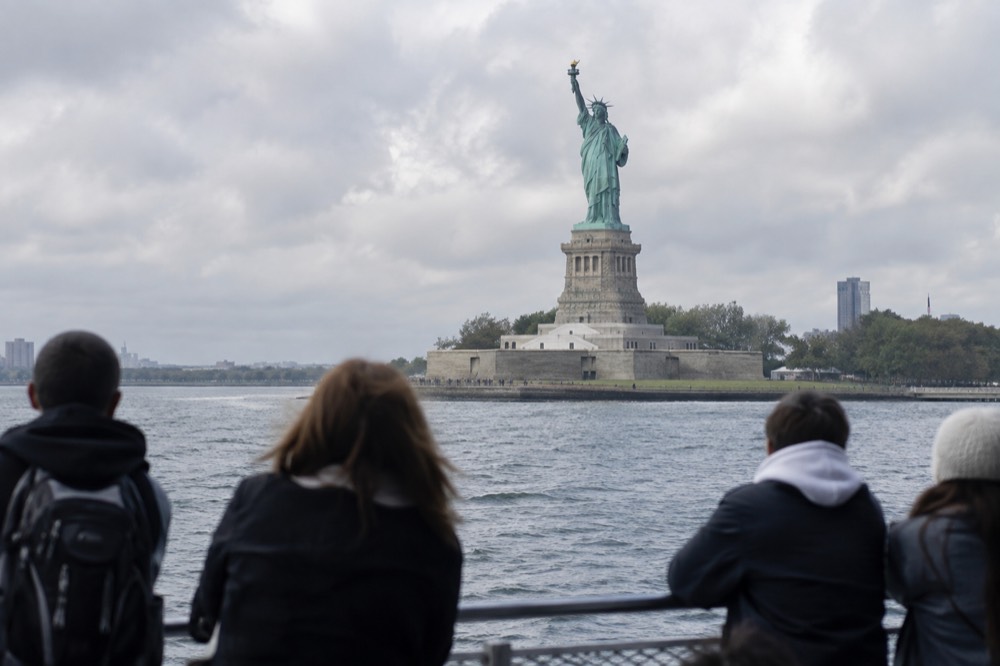
The crown itself is a strange bargain. A Crown Reserve ticket costs $26.30 against $26.00 for the grounds, thirty cents apart, because the barrier was never price, it is availability: a maximum of four tickets per order, name-bearing, ID checked. The pedestal is also capacity-limited. Everything else on the islands, the ferry round trip, the Statue of Liberty Museum, the Ellis Island National Museum of Immigration and the audio tours on both islands, is inside the standard ticket.
For the 9/11 Memorial and Museum, the split matters: the outdoor memorial plaza with its two reflecting pools is free and needs no ticket, open daily. The museum beneath it is the paid, timed part. Describe both plainly. The site sits at the location of a mass killing, and no urgency belongs there; go because it matters to you, and give it the hours it asks for.
What Are the Best Free New York Attractions?
The strongest free New York attractions are Central Park, the Brooklyn Bridge promenade, the 9/11 Memorial plaza, the Staten Island Ferry, the High Line, Grand Central Terminal's main concourse, Times Square and Washington Square Park. Add the free-admission windows at major museums: the Whitney on Friday evenings and second Sundays, the 9/11 Museum on Monday mornings, and pay-what-you-wish at the Met for New York State residents.
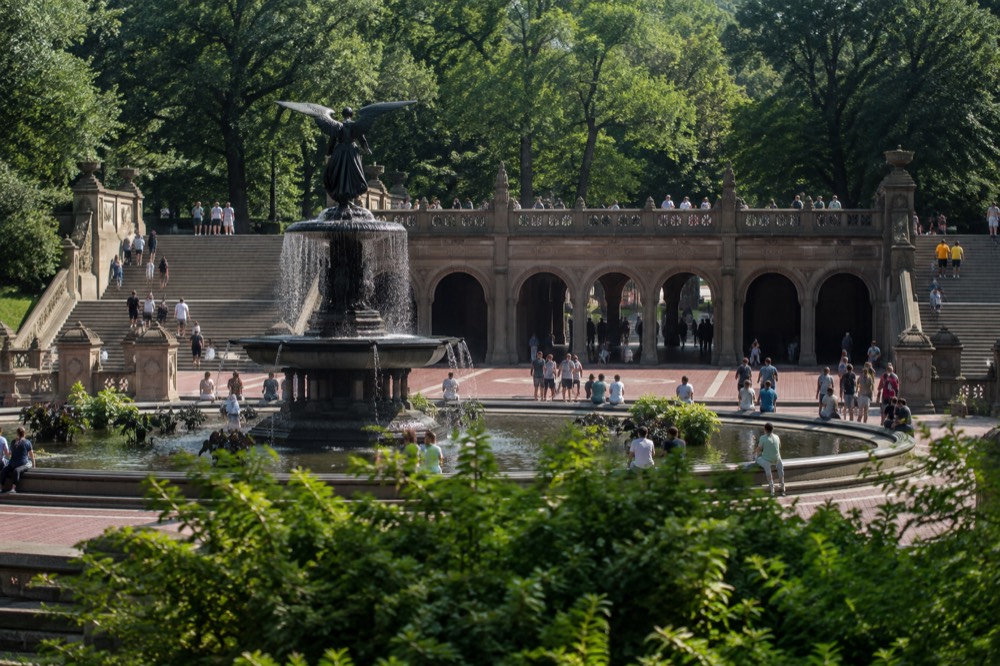
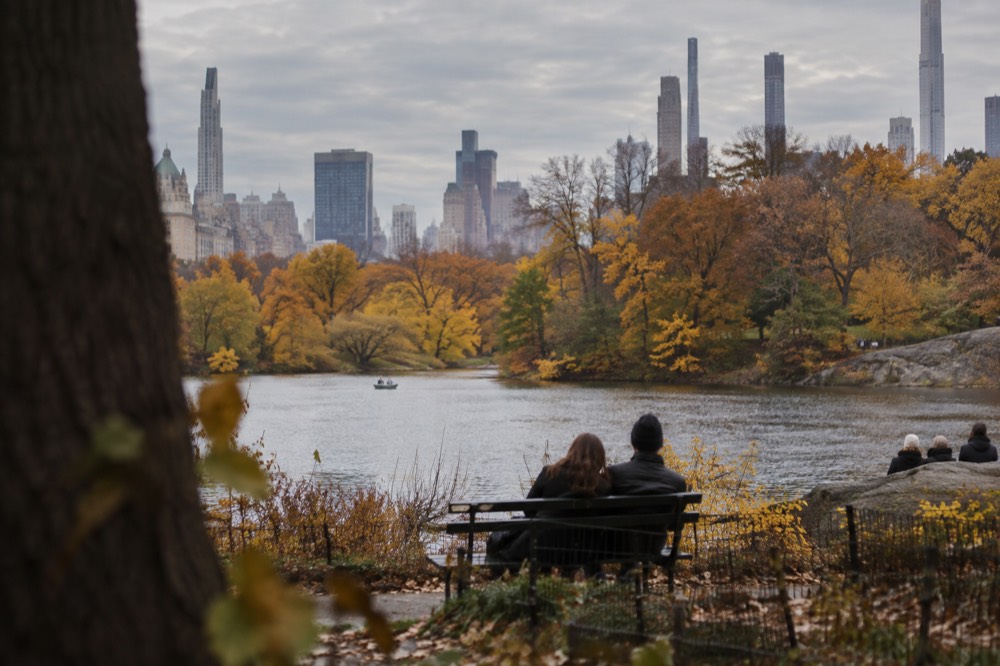
Central Park alone absorbs a full day: Bethesda Terrace, the Mall, Bow Bridge, the Ramble and the lawns around the Lake are the classic spine, and a guided walk is the efficient way to see them without getting lost on the loops. The Central Park guide covers the layout in detail. The Brooklyn Bridge costs nothing and delivers the single best free view in the city, the skyline framed from the pedestrian promenade, and it drops you in DUMBO for the famous Washington Street shot of the Manhattan Bridge.
| Free attraction | Area | Why go |
|---|---|---|
| Central Park | Central Manhattan | The terrace, the Mall, the Ramble |
| Brooklyn Bridge promenade | FiDi to DUMBO | Skyline walk, best light in the morning |
| 9/11 Memorial plaza | World Trade Center | The reflecting pools, free and unticketed |
| Staten Island Ferry | Whitehall Terminal | Harbor crossing past the statue, no fare |
| The High Line | Chelsea to Hudson Yards | Elevated park, 22 blocks of it |
| Grand Central Terminal | Midtown | The concourse and the celestial ceiling |
| Washington Square Park | Greenwich Village | The arch, the scene, free people-watching |
The museum free windows come with conditions, and the conditions are the story. The Whitney's Friday nights, 17:00-22:00, are open to everyone, and anyone 25 and under enters free every day. The 9/11 Museum's free Mondays release at 07:00 ET on the website. The Met's pay-what-you-wish applies only to New York State residents and NY, NJ and CT students, and it still means paying something, with proof of residency asked for. Out-of-state visitors pay the fixed $30. Guides that say otherwise are sending readers to a surprise at the ticket desk.
Which Observation Deck Should You Pick?
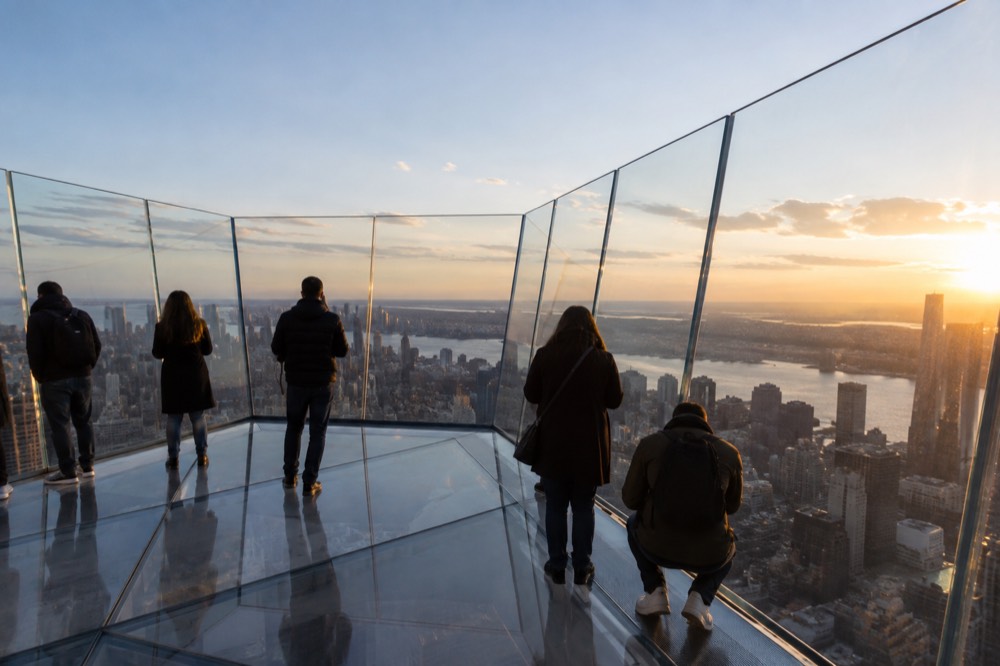
Pick Top of the Rock if you want the Empire State Building itself in your photo, SUMMIT One Vanderbilt for the mirrored rooms and a modern show, Edge for the glass floor and the highest outdoor platform in the Western Hemisphere, One World Observatory for Lower Manhattan and the harbor, and the Empire State Building for the classic open-air 86th floor. Pricing barely separates them at the low end, from $34-$44, so choose the view, not the price.
The box-office ceiling is more differentiated than the floor. CityPASS publishes box-office prices that make the comparison concrete: the Empire State Building's AM/PM Experience at $75.12, Top of the Rock at $71.86, Edge with its immersive experience at $62.06. Those are the upper bounds, and the operators' own "from" prices, $44, $42 and $34-$45 respectively, are the floors. Sunset and weekend slots land well above the floor. Booking a morning slot is the single biggest saving available on any deck. More of these guides are collected on New York City Travel Guide.
| Deck | Adult from | Box-office ceiling | Signature view | Best slot |
|---|---|---|---|---|
| Empire State Building | $44 (+$5 booking) | $75.12 | Open-air 86th floor, the classic | Late evening re-entry |
| Top of the Rock | $42 | $71.86 | Empire State in frame, Central Park | Sunset |
| SUMMIT One Vanderbilt | $44 (+$3 fee) | varies | Mirrored rooms, Grand Central | Morning, fewer people |
| Edge | $34-$45 (+$2 fee) | $62.06 | Glass floor, cantilevered skywalk | Golden hour |
| One World Observatory | $39-$44 (+$3.50 fee) | varies | Harbor, bridges, Lower Manhattan | Any clear hour |
One World Observatory has a quirk worth knowing: it opens at 12:00 on September 11, not its usual 09:00. And a practical pairing: SUMMIT sits directly next to Grand Central, and MoMA is a short walk from Rockefeller Center, so deck-and-museum half-days assemble naturally in Midtown.
Which New York Museums Earn the Ticket?
The Metropolitan Museum of Art, the 9/11 Memorial Museum, MoMA and the American Museum of Natural History are the four that consistently justify their admission for first-time visitors, at $30, $36, $30 and a fixed general rate respectively. The Met is the one with the misunderstood policy: $30 is mandatory for visitors from outside New York State, and pay-what-you-wish is limited to New York State residents and NY, NJ and CT students.
The Met carries a second fact most guides omit entirely: every ticket includes same-day entry to both Met locations, Fifth Avenue and The Met Cloisters. That turns a $30 admission into two museums if you plan the day around it, and The Cloisters, up in Fort Tryon Park, is the quieter and arguably more memorable half. The Met is also mid-renovation: a long list of galleries is closed, including the American Wing in part, the Costume Institute, the Cantor Roof Garden and much of Modern and Contemporary Art, so check the museum's gallery-closures page before planning around a specific wing.

| Museum | Adult admission | Free or discounted window | Closed |
|---|---|---|---|
| Metropolitan Museum of Art | $30 ($22 seniors, $17 students) | PWYW, NY State residents and NY/NJ/CT students only | Wednesdays |
| MoMA | $30 ($22 seniors, $17 students, under 16 free) | Friday evenings, NY State residents, booked ahead | Thanksgiving, Christmas |
| 9/11 Memorial & Museum | $36 ($30 ages 13-17) | Free Mondays, released 07:00 ET | Varies |
| American Museum of Natural History | Fixed for out-of-state visitors | PWYW general admission, NY State residents, ID | Thanksgiving, Christmas |
| Guggenheim | $30 standard, $16 during exhibition changeover | PWYW Tuesdays and Sundays 16:00-17:30 | Open daily |
| Whitney | $30 ($24 seniors/students) | Free Fridays 17:00-22:00, everyone; free under 25 daily | Tuesdays |
| Intrepid Museum | $38 | 50% off for NYC residents every day | Open daily, seasonal hours |
The Tenement Museum on the Lower East Side deserves a mention outside the table because it operates differently: it is a migration-history site built around small guided tours of recreated apartments, and it rewards booking more than any museum in the city. Ellis Island, reached on the same ferry as the statue, tells the other half of that story, and the two pair naturally.
Do the New York City Passes Actually Save Money?
The New York CityPASS saves money only if you use all five choices: it costs $149 adult and $129 child, covers your choice of five attractions from an eleven-attraction list, and CityPASS claims savings of 51% against $307.04 in combined box-office prices, valid over nine consecutive days. The Go City Explorer Pass starts from $89 for flexible choices over thirty days. One former competitor, The Sightseeing Pass, ceased trading in 2025.
The honest maths is simple. CityPASS's own box-office list prices the Empire State Building at $75.12, Top of the Rock at $71.86, the 9/11 Museum at $36, the Statue of Liberty ferry at $26 and Edge at $62.06. Pick the five most expensive, and the bundle pays for itself with room to spare. Pick the cheapest five, and the margin thins to almost nothing. The pass suits the visitor doing the classic circuit; it does not suit the visitor whose plans are loose, and the Explorer Pass fits that traveler better because choices need not be consecutive.
When Is the Best Time to Visit the Big New York Attractions?
The best months for the big New York attractions are late April through June and September through early November, when temperatures sit between the high 50s and high 70s and the outdoor sights, the bridge, the High Line and Central Park, are at their best. July and August are the wettest months of the year in Central Park, 4.60 and 4.56 inches of precipitation respectively, and February out-snows January, 10.1 inches against 8.8.
Those precipitation figures come from the official NOAA 1991-2020 climate normals for Central Park, and they invert two common assumptions. Summer visitors book to dodge rain and find the wettest months on the calendar; winter visitors brace for January and find February is both the snowiest and, at 3.19 inches of total precipitation, the driest month. There is no dry season here, the spread between the wettest and driest month is about 1.4 inches, so pack for the possibility rather than the average.
Crowding follows a pattern the subway data makes unusually concrete. Times Sq-42 St carried 61,203,303 riders in 2025, 71% more than Grand Central's 35,764,931, which is the tourist load made visible. Weekend subway ridership has recovered to 88% of 2019 levels while weekday sits at 73%, meaning the weekend trains around the attractions are the fuller ones relative to normal. If your dates are flexible, weekday mornings at the decks and the ferry terminals are the calmest windows the calendar offers.
For season-by-season depth, the best time to visit NYC guide breaks the trade-offs down month by month, and the nyc-on-a-budget guide covers the cheap end of everything this page prices at full rate.
Common Questions About New York Attractions
The questions below cover the five things readers ask most: what to book ahead, whether the passes pay off, which deck wins, what the Met really costs, and how many days the whole circuit needs. Each answer states the current, verified position, including the 2026 changes to MetroCard sales and the 2025 shutdown of The Sightseeing Pass that most older guides have not caught up with.
What are the top five attractions in New York City?
For a first visit: the Statue of Liberty and Ellis Island, the Empire State Building or Top of the Rock, the Metropolitan Museum of Art, Central Park and the 9/11 Memorial. The Brooklyn Bridge walk is the strongest free addition. Any five of these anchor a complete first trip.
Is it worth buying a New York CityPASS?
It is worth $149 only if you will use all five choices on heavyweight attractions. Against CityPASS's own published box-office prices, five expensive picks total well over the pass price; five cheap picks barely clear it. If your itinerary is loose, the Explorer Pass from $89 with non-consecutive choices fits better.
Which observation deck in New York is the best?
Top of the Rock if you want the Empire State Building in the photo and Central Park in the frame. SUMMIT One Vanderbilt for the mirrored rooms and a theatrical experience. Edge for the glass floor. The Empire State Building for the classic open-air deck. Prices start within a few dollars of each other, so pick the view, not the price.
Is the Met free for tourists?
No. General admission is $30 for adults, $22 seniors, $17 students, and it is mandatory for visitors who are not New York State residents. Pay-what-you-wish applies only to New York State residents and NY, NJ and CT students, who must still pay something and may be asked for proof. Every ticket includes same-day entry to The Met Cloisters.
How many days do you need for New York attractions?
Four to five days covers the headline attractions without rushing: two for Midtown and the park, one for Lower Manhattan and the ferry, one for Brooklyn and one flexible day. Three days works if you skip a deck and one museum. Fewer than three means choosing between the harbor and the museums.
What happened to The Sightseeing Pass?
It ceased trading in 2025 and no longer sells New York passes. Its site serves an empty page. Any guide still listing it alongside CityPASS and Go City is out of date, and any pass comparison you read should be checked against that fact.
The short version of all of this: book the ferry, the museum and one sunset slot before you fly, choose your deck by its view rather than its price, and run the pass maths against your own list rather than the marketing claim. The rest of the city, the park, the bridge, the ferry to Staten Island, is free and needs nothing but a tap of your card at the turnstile.