NYC Travel Tips: What Locals Know That Most Guides Get Wrong
Most New York advice still tells people to buy a 7-day unlimited MetroCard, a product the MTA stopped selling on 1 January 2026. The tips below are checked against official sources, not recycled from older guides.
Short answer
Tap a contactless card or phone with OMNY, budget around $35 per week for transit thanks to automatic fare capping, book the Statue of Liberty crown and observation decks weeks ahead, and never pay full price at a museum without checking residency and age discounts first.
Most New York advice still tells people to buy a 7-day unlimited MetroCard, a product the MTA stopped selling on 1 January 2026. That single stale fact tells you everything about how much of the standard NYC playbook has quietly expired. This page gathers the tips that survive contact with official sources: the MTA's own fare pages, the National Park Service, museum ticketing sites and NOAA's climate normals for Central Park. Where a number is uncertain, it says so rather than guessing.
The practical stakes are real. A traveler who follows outdated transit advice hunts for a card no machine sells. A traveler who buys a lookalike harbor cruise never sets foot on Liberty Island. A visitor who assumes the Metropolitan Museum of Art is pay-what-you-wish walks up expecting a donation and pays a fixed $30 instead. Small errors, each one avoidable, and each one covered below. If you are building a full itinerary, start with the things to do in NYC page and come back here for the mechanics.
How Do You Get Around New York City in 2026?
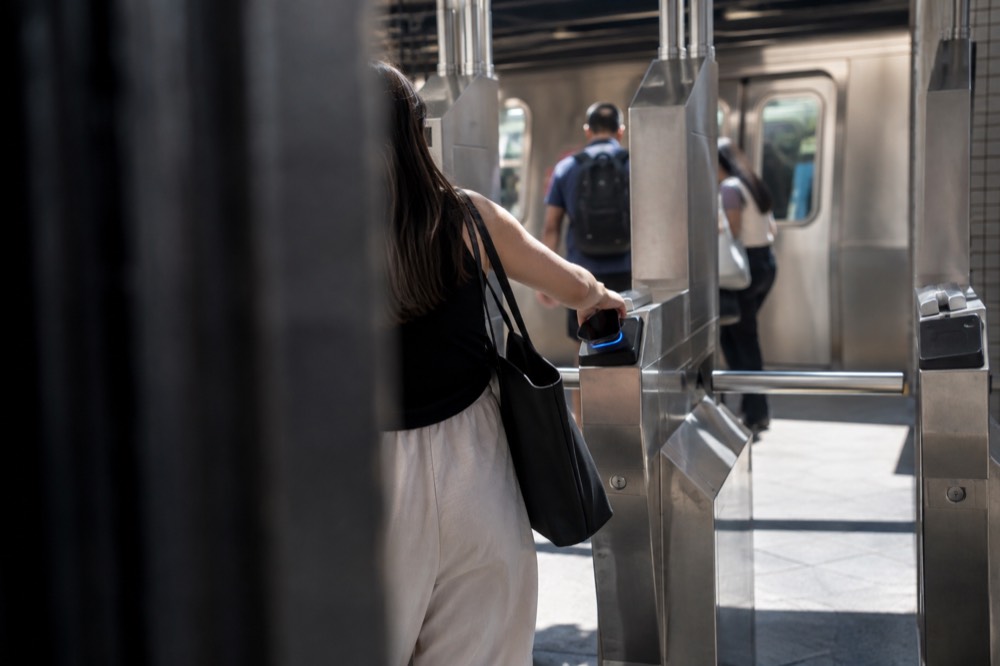
Tap a contactless credit card, debit card, phone or watch at the turnstile using OMNY. The fare is $3.00 per subway or local bus ride, and once you spend $35 on the same card or device within a rolling 7-day period, every further ride that week is free. There is no pass to buy; the cap applies automatically. The MetroCard, which the MTA stopped selling on 1 January 2026, is no longer a product a visitor can acquire.
The cap is the single most useful transit fact for a visitor, and the MTA's own wording matters: "Tap and ride and you'll only pay for the subway and local bus rides you take up to a cap of $35 in a 7-day period, as long as you use the same OMNY Card, credit or debit card, or mobile device." Two conditions trip people up. You must tap the same physical card or the same device every time, so a phone in the morning and the plastic card in your pocket at night breaks the cap silently. And the seven days start with your first tap, a rolling window rather than a calendar week.
Transfers are generous. One free transfer within two hours covers subway to bus, bus to subway and bus to bus. Up to three children under 44 inches tall ride free with a fare-paying adult. Riders eligible for reduced fare, seniors 65 and over among them, pay $1.50 and earn their own cap at $17.50. If you also ride express buses, the cap rises to $67.
| Fare item | Price | Notes |
|---|---|---|
| Subway or local bus, single ride | $3.00 | Tap with OMNY, same card or device each time |
| Express bus, single ride | $7.25 | Higher cap applies if you use these |
| Weekly OMNY cap | $35 | Automatic, rolling 7 days from first tap |
| Free transfer | $0 | One transfer within 2 hours, subway/bus |
| Children under 44 inches | Free | Up to 3 per fare-paying adult |
| Paper Single-Ride OMNY ticket | $3.50 | 2 hours, no subway-to-bus transfer |
Uptown and downtown, not north and south, is how the city gives directions, and the distinction between express and local trains is real: an express train skips stations a local serves. The A train is an express on its own route, the C a local covering many of the same stops. Check whether your train is express before assuming it stops where you need it. For a fuller walkthrough of the system, including the airports, see the OMNY guide.
What Does a Day in New York City Actually Cost?
A mid-range day runs roughly $100-$200 per person before hotel: $3.00 per transit ride capped at $35 a week, $30 at the Metropolitan Museum of Art, $25-$36 at major museums and $26.00 for the official Statue of Liberty and Ellis Island ferry. Observation decks start between $30.49 and $47.91 through advance booking. Food is the biggest variable, and a slice-and-bagel day can cost under $25.
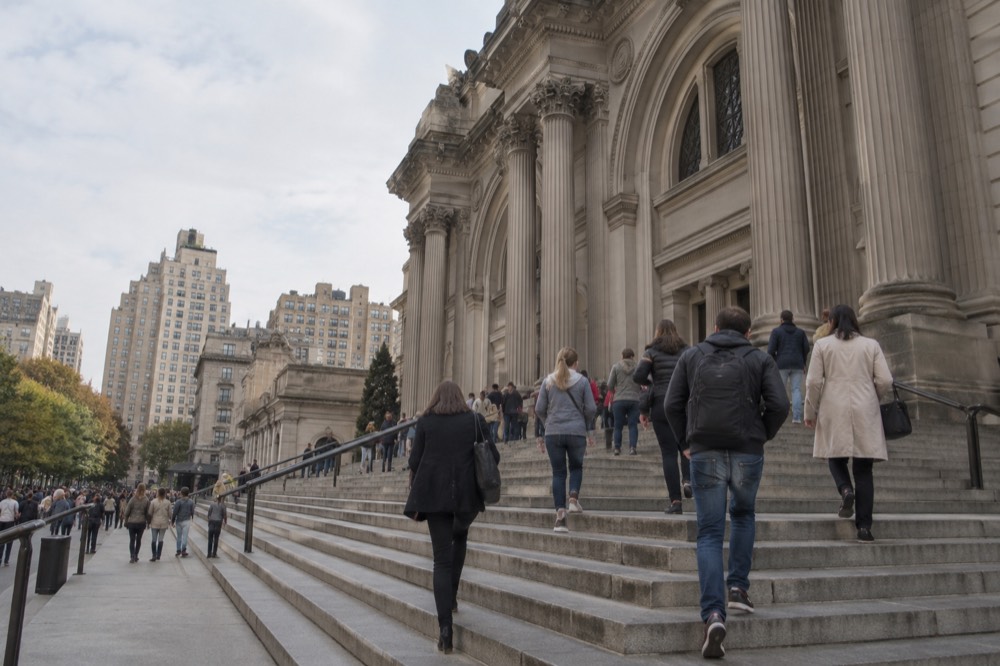
The Met is the most-mispriced attraction in the city. Admission is $30 for adults, $22 for seniors and $17 for students, fixed and mandatory for anyone who is not a New York State resident or a student from New York, New Jersey or Connecticut. Pay-what-you-wish exists only for those two groups, and even then the Met's own wording is blunt: you must pay something, with a one-cent minimum per ticket. Online pay-what-you-wish requires a New York State billing address, and New Jersey and Connecticut students must buy in person with valid student ID. What most guides omit: one ticket covers both Met Fifth Avenue and The Met Cloisters on the same day.
Museum discounts cluster around residency, age and timing rather than coupons. MoMA runs free Friday evenings for New York State residents only, with proof required. The Whitney is free every day for anyone 25 and under, free for everyone on Friday nights, and free all day on the second Sunday of each month. The Guggenheim holds pay-what-you-wish windows on Tuesdays and Sundays. The Intrepid gives NYC residents 50% off daily. The 9/11 Memorial and Museum releases free Monday tickets on its website each Monday at 07:00 ET, first come first served.
| Attraction | Adult price | Discount to check first |
|---|---|---|
| Metropolitan Museum of Art | $30 | NY State residents and NY/NJ/CT students pay what they wish, minimum $0.01 |
| MoMA | $30 | Free Friday evenings, NY State residents only, reserve ahead |
| Whitney Museum | $30 | Free daily for ages 25 and under; free Friday nights for all |
| 9/11 Memorial and Museum | $36 | Free Mondays, tickets released 07:00 ET each Monday |
| Statue of Liberty and Ellis Island ferry | $26.00 | Children 4-12 pay $17.00, under 4 free |
| One World Observatory | from $30.49 | Cheapest of the five decks when booked in advance |
The five observation decks are the clearest case for advance booking. Dynamic timed pricing means the same deck can cost $30.49 or nearly $48 depending on when you buy and when you go. Three of them, the Empire State Building, SUMMIT One Vanderbilt and Edge, price identically at $47.91 as a starting advance figure, while One World Observatory starts at $30.49, which is $17.42 cheaper than the top three. The comparison that matters is the view, not the price: One World sits downtown at the World Trade Center, the others cluster in Midtown.
If your trip stacks several of these, a pass changes the arithmetic. The New York CityPASS bundles a choice of five attractions, including the Empire State Building, for $149 adult against $307.04 of box-office value, valid over nine consecutive days. It only pays if you use all five tickets, so match it against your actual plans rather than buying it on reflex.
Which Tickets Do You Need to Book Weeks Ahead?
Book the Statue of Liberty crown and any observation deck slot as far ahead as your dates allow, and reserve timed-entry museums before you leave home. Crown tickets sell out roughly 90 days and often several months in advance, are limited to four per household, are name-bearing and require photo ID. Timed-entry attractions hold you to your slot, so late arrival can mean a lost ticket.
The crown is the extreme case of scarcity rather than price. A Crown Reserve adult ticket costs $26.30 against $26.00 for the grounds ticket, thirty cents more for the hardest ticket in the city. The only authorized ferry operator is Statue City Cruises, the sole operator permitted by the National Park Service to dock at Liberty Island and Ellis Island. Tickets are sold at statuecitycruises.com and at official booths inside Castle Clinton in Battery Park and the terminal at Liberty State Park in Jersey City. The National Park Service maintains the crown booking details at nps.gov/stli/planyourvisit/visit-the-crown.htm.
One warning deserves its own paragraph. Numerous lookalike sightseeing cruises circle the islands and never land, and some charge more than the real ferry. A visitor holding one of those tickets cannot set foot on Liberty Island. If standing on the island matters to you, the ticket must be a Statue City Cruises ferry product. The Statue of Liberty tickets guide breaks down every tier, including the pedestal and the Ellis Island Hard Hat Tour.
Broadway works on the opposite principle: last-minute is the discount window. The TKTS booths at Duffy Square and Lincoln Center sell same-day seats plus next-day matinees at 20-50% off face value, with an $8 per-ticket service fee. Only two booths operate currently, Times Square and Lincoln Center; older guides still send people to a South Street Seaport location that no longer exists. Digital lotteries through Broadway Direct and Lucky Seat typically award seats in the $30-$50 range, and rush and standing-room policies are set show by show.
What Is New York Weather Really Like Month to Month?
July is the wettest month in New York, averaging 4.60 inches of rain against June's 4.54 and August's 4.56, and February out-snows January, 10.1 inches to 8.8. There is no dry season: the spread between the driest month, February at 3.19 inches of precipitation, and the wettest is only about 1.4 inches. Pack for rain whenever you come, and pack for more snow in February than January if you come in winter.
Those figures come from NOAA's 1991-2020 climate normals for Central Park, the official record, and they invert what most visitors assume. Summer trips get booked with the idea that rain is a winter problem. The official normals say the opposite, with July's average high of 84.9°F paired with its peak rainfall. Winter visitors braced for January storms meet the snowier month in February, which is simultaneously the driest month of the year by total precipitation.
| Month | Avg high | Avg low | Precipitation | Snowfall |
|---|---|---|---|---|
| January | 39.5°F | 27.9°F | 3.64 in | 8.8 in |
| February | 42.2°F | 29.5°F | 3.19 in | 10.1 in |
| April | 61.8°F | 45.5°F | 4.09 in | 0.4 in |
| July | 84.9°F | 70.1°F | 4.60 in | 0.0 in |
| October | 64.5°F | 51.4°F | 4.38 in | 0.1 in |
| December | 44.3°F | 33.8°F | 4.38 in | 4.9 in |
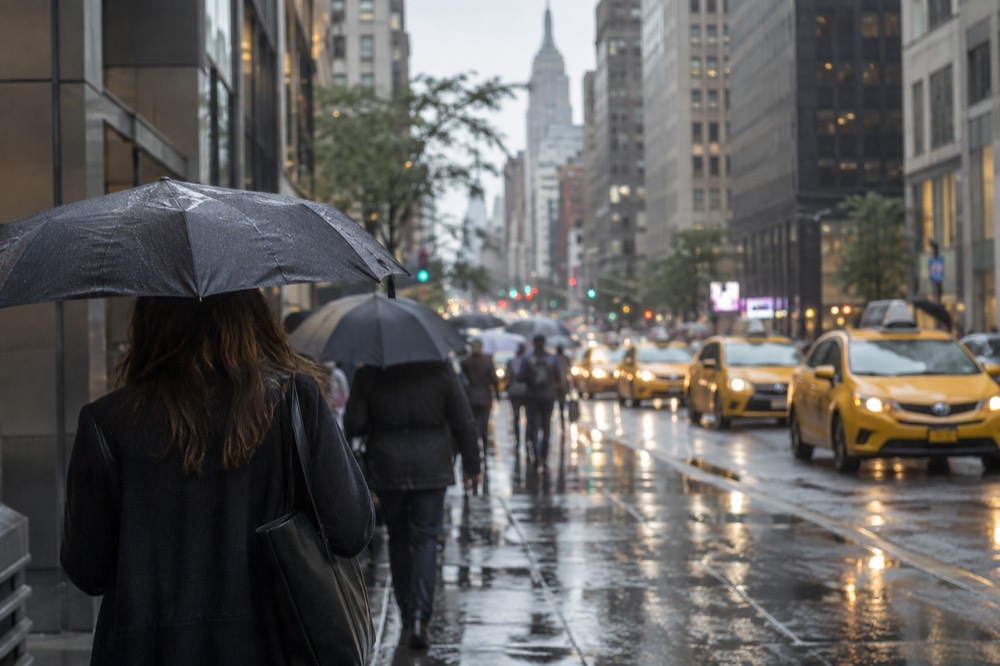
The practical version: a compact umbrella earns its space in any season, and a February visit needs real boots, not sneakers. Museum-heavy itineraries double as rain plans, and the city has enough indoor depth, from the Tenement Museum to the Museum of Broadway, that a wet day costs you nothing but a rerouting. For month-by-month depth, the NYC weather by month guide carries the full table.
How Do You Avoid the Classic Tourist Traps in NYC?
Skip Times Square restaurants, never buy a harbor cruise that promises Liberty Island without a Statue City Cruises ticket, and treat any street character in a costume as a paid solicitation, not free entertainment. The genuine traps are transactional: lookalike ferry tickets, third-party resellers charging above box office, and bundled passes sold for itineraries that do not use them. The markup is usually in how you buy, not what you see.
The costume-character problem is specific and manageable. Anyone dressed as a cartoon character in Times Square who poses for a photo expects payment, and disputes over the expected amount are common. A polite no and walking on costs nothing. The same logic applies to CD-handing and friendship-bracelet approaches: any object placed in your hands comes with a demand attached.
Ticket resellers are the costlier trap. Third-party sellers mark up observation deck and museum tickets above box office, and some sell products that sound like official access but are not. The Statue of Liberty case is the clearest: only Statue City Cruises ferries dock at the islands, so anything else is a harbor loop. Buying direct from the attraction, or through a pass whose inclusions you have verified, removes the entire category of risk.
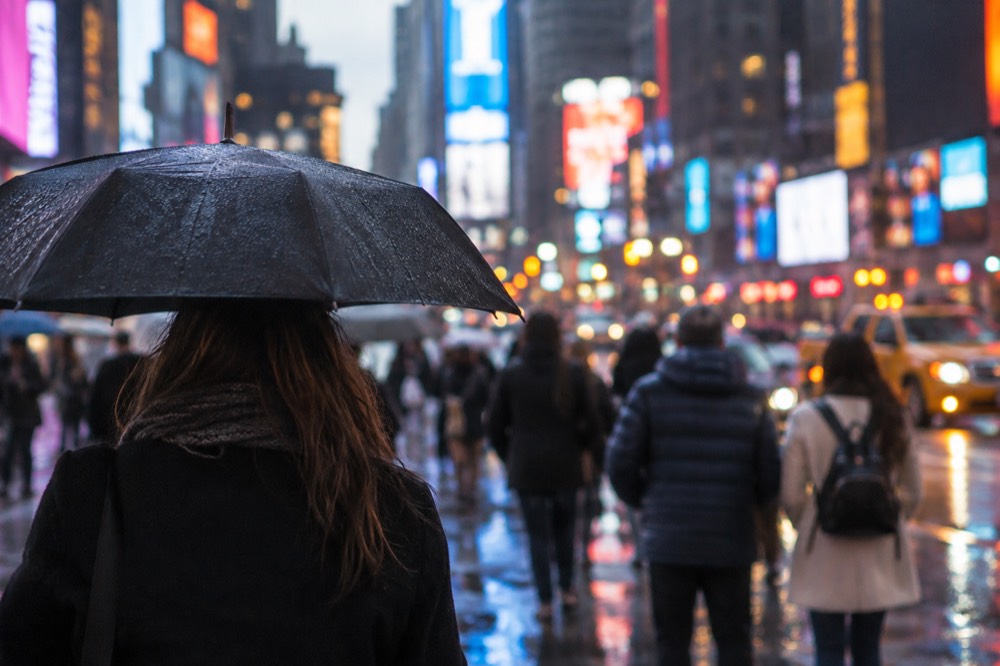
Times Square itself is worth one walk-through at night and not much more. The station beneath it, Times Sq-42 St, is the busiest in the system, carrying 61,203,303 riders in 2025, some 71% more than Grand Central. The crowd you are standing in is the tourist crowd, not the city. Two blocks in any direction, Hell's Kitchen for dinner or Bryant Park for a breather, prices drop and the food improves.
Where Should You Eat Without Overspending?
Eat where the neighborhoods eat: a dollar-slice or by-the-slice pizzeria, a bagel shop in the morning, a deli counter at lunch, and outer-borough restaurants where rents do not fund your dinner. Slices, bagels and counter sandwiches keep a food day under $25, and the sit-down markup in the Theater District is the most avoidable expense in the city.
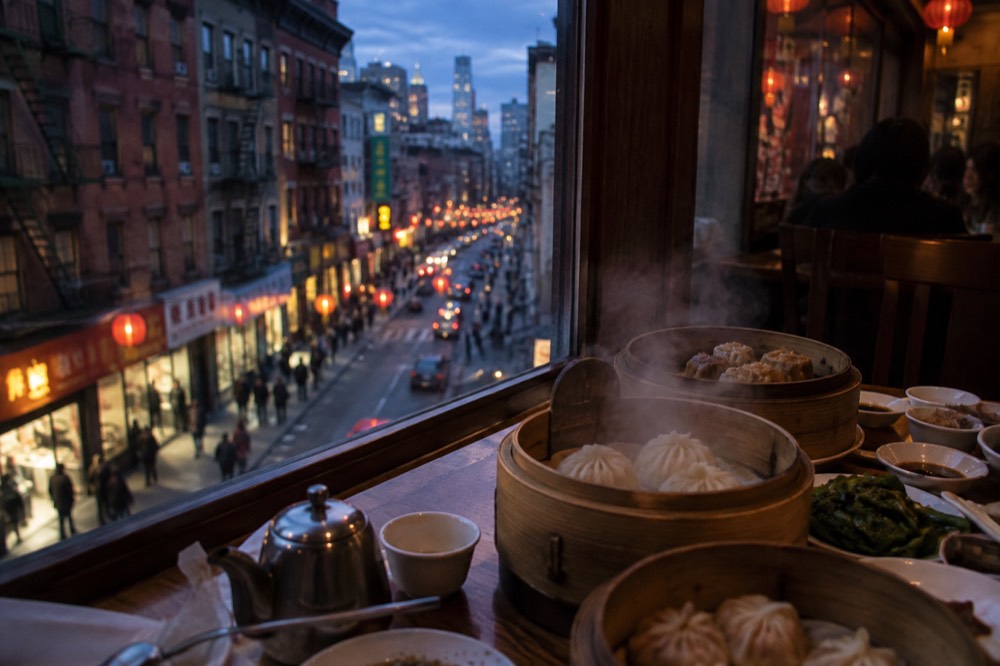
Chinatown, the East Village and Jackson Heights deliver the best price-to-quality ratio in the five boroughs.
The classic New York eating structure is cheap at breakfast and lunch, and worth splurging only where the city earns it. A bagel with cream cheese, a bodega sandwich, a slice folded in wax paper: these are the city's actual daily foods, and they cost a fraction of a white-tablecloth dinner. Pizza and bagel quality varies block by block, and the dedicated guides, best pizza in NYC and best bagels in NYC, sort the institutions from the tourist counters.
A food tour is one purchase where the price makes sense as a meal replacement rather than an add-on. The Chinatown and Little Italy tour includes six tastings that add up to a real meal, runs about three hours, and doubles as a neighborhood history walk. The Greenwich Village equivalent does the same for downtown bohemia. Arrive hungry and skip lunch beforehand.
Tipping is not optional in sit-down restaurants: 18-20% on the pre-tax total is the standard, and many checks now include suggested amounts calculated on the post-tax figure, which quietly raises the ask. Counter service, where you order at a register, increasingly presents a tip screen, and a smaller amount or none is a defensible choice there. Bartenders expect about a dollar or two per drink. The tipping in NYC guide covers the full range, from taxis to hotel staff.
What Are the Best Free Things to Do in New York City?
The 9/11 Memorial plaza, the Staten Island Ferry, Central Park, the High Line, Brooklyn Bridge promenade, Grand Central's main concourse and Washington Square Park all cost nothing, and several museums hold genuinely free windows. The Staten Island Ferry passes the Statue of Liberty both ways, the memorial pools are free with no ticket, and the Whitney is free for anyone 25 and under every day it is open. A free day in New York is not a compromise itinerary.
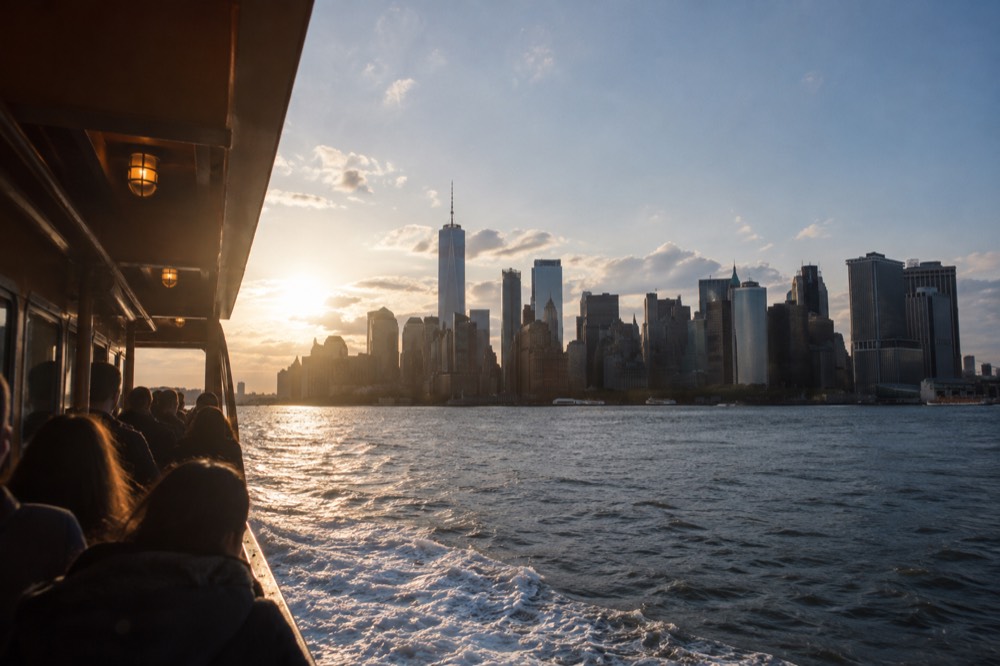
The Staten Island Ferry is the best free view in the city, a 25-minute crossing that passes the harbor and the statue. It is a commuter service, so it runs around the clock and carries no sightseeing commentary, but the price is right and the skyline angle from the deck is one photographers chase. Grand Central is the other free interior: the celestial ceiling, the whispering gallery and the main concourse are all open to anyone, and the Grand Central Terminal guide maps the details worth finding.
| Free activity | What you get | Catch |
|---|---|---|
| Staten Island Ferry | Harbor crossing past the Statue of Liberty | Commuter service, no commentary |
| 9/11 Memorial plaza | The twin reflecting pools, open 08:00-20:00 | The museum below is ticketed |
| Central Park | Bethesda Terrace, the Mall, the Ramble | Nothing, it is a public park |
| High Line | Elevated park on a former rail line | Gets crowded on weekend afternoons |
| Whitney, ages 25 and under | Full museum, every day | Timed ticket still required |
| MoMA Friday evenings | Galleries 17:30-20:30 | NY State residents only, proof required |
The free museum windows have conditions worth reading twice. MoMA's Friday program is New York State residents only, with residency proof and advance reservation. The Whitney's under-25 policy is open to everyone regardless of where they live, which makes it the single best museum deal for young travelers in the city. The 9/11 Memorial plaza is always free, while the museum beneath it carries its $36 admission, with the free Monday releases described above.
How Do You Handle Airports and Arrival Day Without Stress?
LaGuardia is the cheapest airport to reach, $3.00 total via subway plus the free Q70 LaGuardia Link bus, while JFK costs $11.75 because the AirTrain adds $8.75 on top of the subway fare, and Newark runs $16.80 by NJ Transit from Penn Station. Allow extra time at Newark on weekday mornings, when AirTrain service to the rail station is replaced by shuttle buses between 05:00 and 15:00.
The counterintuitive part: the airport people assume is best connected, JFK, with its dedicated rail link, is the expensive one, and LaGuardia, long the butt of jokes, is the budget run. The Q70 bus is free, so the whole trip is one $3.00 subway fare. At JFK, the E, J or Z to Jamaica or the A to Howard Beach feeds the AirTrain, and the $8.75 AirTrain charge stacks on top. Children under 5 ride the AirTrain free.
Newark's current service change matters for morning departures. The AirTrain between the terminals and the NJ Transit station is replaced by shuttle buses on weekdays from 05:00 to 15:00, while inter-terminal AirTrain service still runs. A weekday morning flight out of Newark deserves an extra half hour. The airport-specific guides, JFK to Manhattan, LaGuardia to Manhattan and Newark Airport to Manhattan, carry the full route detail.
What Should You Pack and Plan Before You Fly?
Pack for rain in any month, comfortable shoes for real walking distances, and a contactless payment method you will use consistently for OMNY. Before you fly, reserve the crown if you want it, book timed-entry decks and museums, and decide whether a pass matches your itinerary rather than your ambitions. New York rewards a loose plan with two or three anchored bookings per day and empty space between them.
The walking point deserves emphasis. Distance on a Manhattan map is deceptive: crosstown blocks are short, avenue blocks are long, and a day of museum-hopping on foot can cover six or seven miles without noticing. Shoes matter more than any wardrobe choice, and the subway exists precisely so you do not have to walk everything. The what to pack for NYC guide handles the seasonal detail.
Booking discipline is the other half. Two anchored, pre-booked activities per day is the sustainable maximum, because timed entries, queues and transit between them eat hours. A day that pairs a morning museum with an afternoon deck and leaves dinner open beats a five-stop checklist that collapses by 3pm. The itinerary guides, from 1 day in NYC to 5 days in NYC, are built on exactly that principle.
For the anchor bookings, a pass can cover several at once. The CityPASS five-attraction choice at $149 adult works when your list genuinely includes its heavy hitters, the Empire State Building, Top of the Rock, the official Liberty ferry among them. A shorter or looser stay does better buying direct.
Common Questions About NYC Travel Tips
The questions below cover the gaps this page's main sections do not: safety on the subway, whether tap water is drinkable, how many days a first visit needs, and what to do when plans collapse to rain. Each answer is short and sourced, and the full reasoning lives in the dedicated guides linked throughout this page. Read them before you finalize bookings, not after.
Is the subway safe for tourists?
Yes, in the ordinary sense that millions of rides complete without incident daily, and subway fare evasion actually fell from 12.7% to 10.2% between 2024 and 2025. The practical risks are pickpocketing in crowds and standing near the platform edge, not violent crime. Ride in the conductor's car if a platform feels empty, and use the same street sense you would in any large city.
Can you drink the tap water in New York?
Yes. New York's tap water comes from protected upstate reservoirs and is widely regarded as excellent. There is no reason to buy bottled water for safety.
How many days do you need in New York City?
Four to five days covers the classic first-visit circuit without rushing: the major decks, one or two museums, Liberty and Ellis, a Brooklyn walk and a Broadway night. Three days works if you cut whole categories deliberately. Fewer than two means choosing between Midtown and downtown rather than seeing both.
What do you do in New York when it rains?
Go indoors on purpose, not by accident. The Tenement Museum, the Museum of Broadway, MoMA and the 9/11 Museum are all full half-days, and Chelsea Market covers lunch. July is the wettest month, so summer visitors should hold a rain plan ready rather than hoping.
Do you need cash in New York?
Almost nowhere, but carry a little. Cards and phones work on OMNY and in nearly every shop, and a small cash amount covers the occasional cash-only counter, a market stall or a tip. Most street vendors now take cards too.
Should you buy a CityPASS for New York?
Only if your itinerary uses at least four of its five chosen attractions at full box-office value. At $149 adult against $307.04 of box-office prices, the maths is favorable for the classic sightseeing circuit and unfavorable for a loose or short stay. Check the current inclusions on the live listing before buying.
The last tip is the one that underwrites all the others: verify before you buy. The MTA, the National Park Service and every major museum publish their own prices and policies, and they change. This site checks them, but the listing you book from is the one that governs your day. Start with the New York City Travel Guide homepage for orientation, and plan from the ground up rather than from a checklist you found in a magazine.