What Is the Best Rooftop Bar to See the Empire State Building in New York City?
A direct, sourced answer to which New York rooftop bar gives the best Empire State Building view, plus the geometry, the costs, the free alternatives and the observation deck comparison.
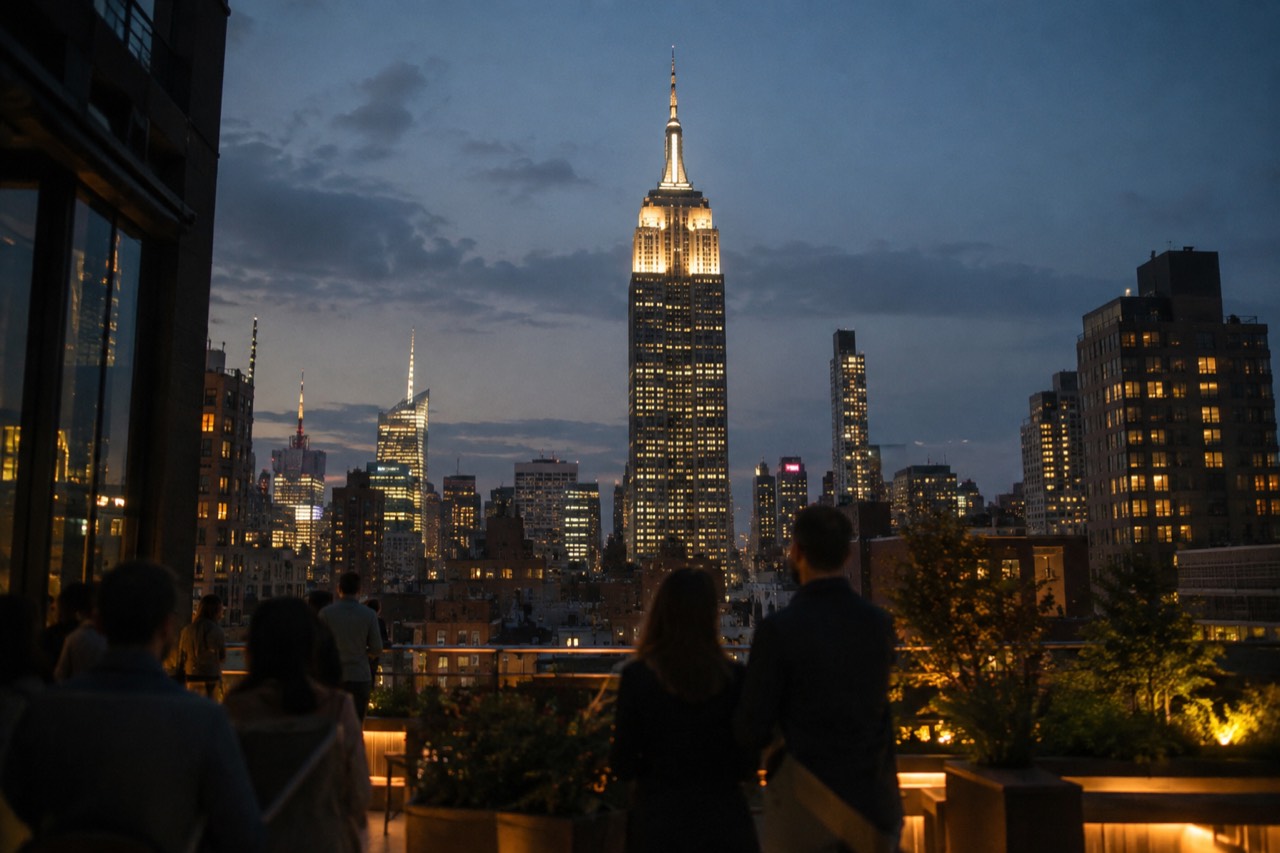
The Empire State Building sells its own view from $47.91, but a rooftop bar sells the opposite frame: a chair, a drink, and the tower standing in the middle of the photograph. The question of which bar does that best has a surprisingly stable answer, because it is not really a question about bars at all. It is a question about where you stand relative to 5th Avenue and 34th Street, and about what kind of photograph you want. This page gives the direct answer first, then the reasoning, the costs, the timing and the free alternatives, all checked against the building's own published figures.
What Is the Best Rooftop Bar to See the Empire State Building?
230 Fifth is the rooftop most people mean when they ask this question: a large rooftop terrace on Fifth Avenue itself, a short distance south of the Empire State Building, with the tower framed head-on up the avenue. No other rooftop puts the building so squarely in the center of the frame, which is why it remains the standard answer.
The reasoning is pure geometry. The bar sits on the same avenue as the tower, several blocks due south, so the Empire State Building rises directly in front of you rather than off to one side. The terrace is wide, the sight line is uncluttered, and in winter the roof is known for its heated igloos, which turn a cold-weather visit into something closer to a cabin with the tower outside the window. Expect a cover-style minimum on busy evenings and a crowd that is there for exactly the view you came for.
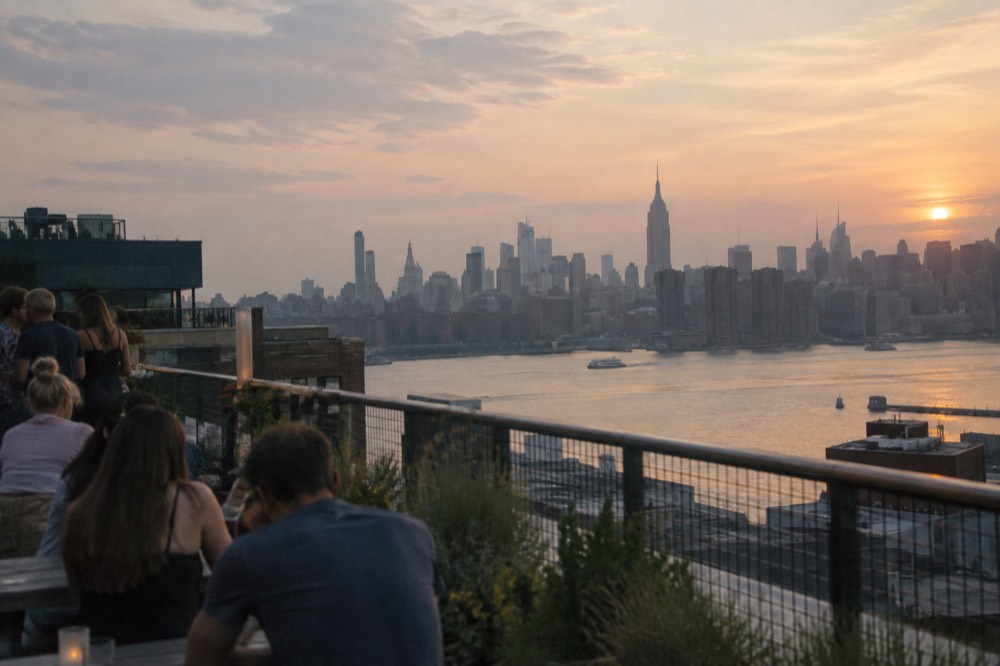
Two honest caveats belong next to that answer. First, "best" splits into at least two different questions: the best bar for a straight-on portrait of the tower, and the best bar for the wider skyline with the tower in it. 230 Fifth wins the first. For the second, a Brooklyn roof such as Westlight in Williamsburg gives you the whole of Midtown across the East River, with the Empire State Building anchoring the composition. Second, rooftop venues change operators, reservation policies and seasonal rules constantly, so confirm current terms on the venue's own site before committing an evening.
For the fuller landscape of terraces across the five boroughs, the site's guide to rooftop bars across New York covers the scene neighborhood by neighborhood, and the wider itinerary question starts on the things to do in NYC page. The picks below are the sightseeing experiences that either put you inside the tower or frame it from the water and the air, which is the other half of this question.
Why the View Geometry Matters More Than the Bar
The Empire State Building stands at 5th Avenue and 34th Street, so the view depends almost entirely on where the bar sits relative to that point. A roof directly south on the avenue gets a head-on tower; a roof in Brooklyn gets the whole Midtown skyline with the building as its centerpiece; a far-west roof sees it small inside a panorama. The bar matters less than the line.
Cocktail lists, music and service differentiate bars from one another, but none of them move the building. A visitor who books a celebrated rooftop in the far West 40s and then wonders why the tower looks distant has made a geometry error, not a taste error. The building is 102 stories of limestone and steel set in the low-rise corridor of Midtown South, and the neighborhoods around it, NoMad, the Flatiron District, Kips Bay and Murray Hill, are where the close, dramatic frames live. Bars in those blocks, such as the terrace at 230 Fifth or the rooftop at the Freehand a few blocks southeast, look up at the tower rather than across at it.
Downtown and Brooklyn invert the relationship. From a Financial District roof such as Overstory, the tower reads as a distant spike layered among the newer, taller slabs of Lower Manhattan, a layered, depth-heavy photograph rather than a portrait. From Williamsburg or Brooklyn Heights, the building is the most recognizable silhouette in a skyline that spans the water. Neither is a lesser view. They are different pictures, and a photographer would want both.
The table below is the planning version of that logic: where to stand, and what the building does from there.
| Where the bar sits | How the Empire State Building reads | What you trade off |
|---|---|---|
| NoMad or Flatiron, on or near 5th Avenue | Head-on, fills the frame, the classic portrait | Close roofs book out first on weekends |
| Midtown far west, Hell's Kitchen or Chelsea | One element in a wide panorama, tower at a distance | Hudson sunset competes for your attention |
| Times Square and Midtown proper | Foreshortened, dramatic, often partially blocked by neighbors | Midtown roofs vary enormously by block |
| Financial District | Distant, layered among newer towers | Smaller tower, more depth in the frame |
| Williamsburg, DUMBO or Brooklyn Heights | Full skyline across the water, tower as centerpiece | Longer trip, exposed waterfront wind |
One rule of thumb survives every venue change: if the address is within a ten-minute walk of 5th Avenue between 23rd Street and 34th Street, the tower will be close and vertical. If it is not, you are buying the skyline, not the building.
What the View Costs: Rooftop Drinks Versus Observation Decks
A rooftop drink in New York is priced by the venue, the seat and the season, so no honest guide can quote one number. The figures that can be planned around are the sightseeing alternatives: the Empire State Building's own deck sells from $47.91, SUMMIT One Vanderbilt from the same $47.91, and a helicopter flight from $272.19. Those are fixed, published starting prices.
Rooftop bars set their own menus and change them by season, by seat type and sometimes by time of night, and the site's honesty rules bar quoting a cocktail price that no source verifies. What can be compared cleanly are the ticketed ways to see the same building, because those prices are published on the operator's live listing and can be checked before you book. The deck inside the Empire State Building itself starts at $47.91 per person and carries a 4.7 rating across more than 28,000 reviews on the listing; the box-office AM/PM Experience, which adds the second-floor museum and a same-night re-entry, is published at $75.12 with tax included. Whether that upgrade is worth it depends entirely on whether you will come back down after dark.
The comparison matters because a rooftop evening and a deck visit are not interchangeable. The deck puts you inside the tower at the center of the skyline; the bar puts you outside it with a drink in hand. Many visitors do the bar one evening and the deck another, and the table below shows what each of the ticketed options costs and how long it takes, drawn from the live listings.
| Experience | From (per person) | Duration | Rating on the listing |
|---|---|---|---|
| Empire State Building Observation Deck & Museum | $47.91 | Self-paced | 4.7 |
| SUMMIT One Vanderbilt tickets | $47.91 | 1h 30m | 4.7 |
| Sunset & Harbor Lights cruise | $45 | 2 hours | 4.6 |
| Complete Manhattan Island cruise | $35 | 2 hours 30 minutes | 4.5 |
| Manhattan sightseeing helicopter flight | $272.19 | 15 minutes | 4.8 |
If the deck is the plan, the practical details are friendly ones. The building is open 365 days a year, with the current posted window running 10:00 to 23:00 and the entry door closing at 22:00, though hours shift by season, so check the official hours page before you go. Booking details and timed entry for the deck and museum ticket are on the live listing.
When to Go: Timing the Light on the Tower
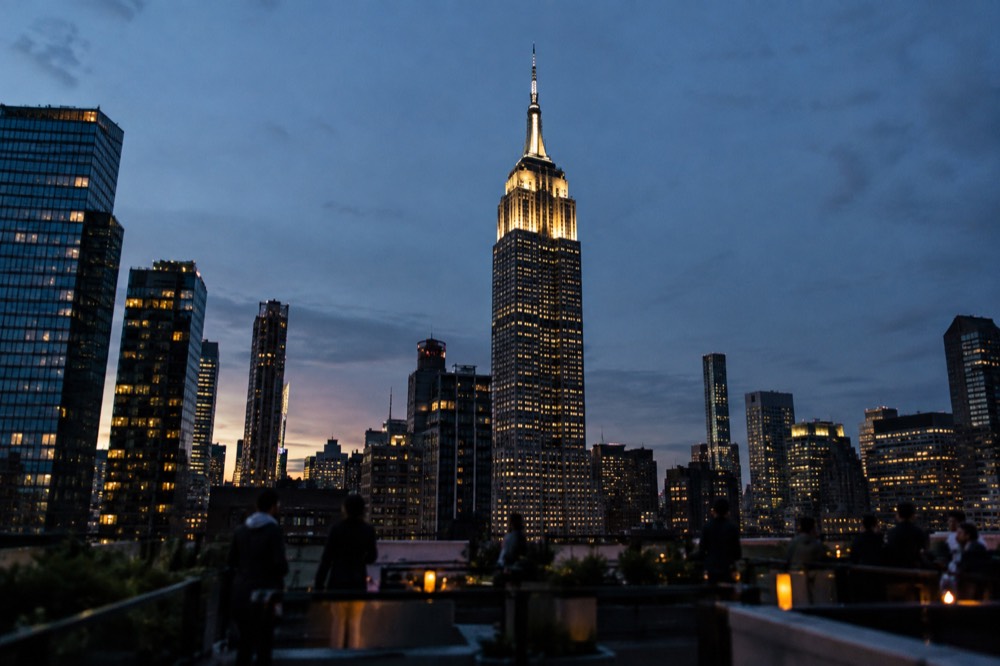
Go in the hour before sunset. The Empire State Building's floodlit facade reads best in the half light, when the tower is lit but the sky has not gone fully black, and a west-facing or south-facing roof catches the last color on the masonry. After dark the tower lighting changes its scheme regularly, so no single time owns the view.
Photographers call the window after sunset the blue hour, and it flatters the Empire State Building more than any other building in the city, because its stepped setbacks catch the fading sky on multiple planes at once. Arrive at a rooftop 45 to 60 minutes before the published sunset time, claim a rail seat facing north or east toward the tower, and let the city do the work. The tower's floodlights come on as the sky drops, and for roughly half an hour you get both: lit limestone above, deep blue behind. The rest of the planning pages sit on New York City Travel Guide.
After full dark the equation changes. The tower runs a changing program of lighting schemes, so the building you see at 21:00 may not match the one on a friend's photo from last month, and the surrounding Midtown lights wash the lower floors. That is not a worse view, it is a louder one, and it suits a night out more than a photograph. Weekends tilt every rooftop toward party volume; a weekday evening is the quieter way to hold the same seat.
Season matters too. Winter gives the crispest air and the earliest sunsets, which means a blue-hour visit can begin at 17:00 and leave the rest of the evening free, and the cold clears the haze that summer installs over the harbor. Summer rewards the late sit: sunset falls past 20:00 in July, and the terraces run at full capacity around it. Whichever season, the water option below times the same light from the river, with the skyline switching on as the boat turns.
Manhattan Rooftops or Brooklyn Rooftops for the Empire State Building?
Manhattan roofs close to the tower give the dramatic, foreshortened view: the building fills the frame. Brooklyn roofs give the postcard: the whole skyline across the water with the Empire State Building holding the center of the composition. Neither is better, they are different photographs, and the honest answer is to do one of each if the trip allows.
The Manhattan case rests on proximity. From a NoMad or Flatiron terrace the tower is close enough that its floodlit crown separates from the masonry, and on a clear night you can read the setback details that vanish at distance. The trade is that Midtown roofs sit inside the skyline rather than opposite it, so the frame contains one great building instead of forty. Bars like 230 Fifth, the rooftop at the Royalton Park Avenue a few blocks east of the tower, and the terrace at the Wyndham Grand on the same avenue all trade on that closeness, each with a slightly different angle up or across 5th Avenue.
The Brooklyn case rests on the water. From Westlight in Williamsburg, or from a DUMBO roof within sight of the bridge anchors, the East River sits between you and the tower, and the whole of Midtown stacks up behind it. The Empire State Building is not the tallest structure in that frame anymore, but it is the one every eye finds first, and the foreground, river traffic, bridge cables, the Brooklyn shoreline, gives the photograph a depth that no Manhattan roof can manufacture. The trade is travel time and exposure: the waterfront wind is real in every season, and the subway ride each way eats an hour of an evening.
For visitors splitting the difference, the East River ferry terminals and the L train make Williamsburg reachable from Union Square in about twenty minutes, and the walk from the Bedford Avenue station to the waterfront passes through the neighborhood's own bar layer, so the journey is not dead time. A full comparison of the two boroughs' attractions, including the rooftop and nightlife scenes, is in the things to do in Manhattan and things to do in Brooklyn guides, but for this specific question the split is simple: Manhattan for the portrait, Brooklyn for the panorama.
Free Vantage Points That Rival Any Rooftop Bar
The Brooklyn Heights Promenade, the Manhattan Bridge pedestrian path and the shores of Long Island City all deliver Empire State Building views that rival any rooftop, and all of them cost nothing. The trade is comfort: no drinks, no heat in winter, and the walk to reach them. For a visitor budgeting carefully, these three free vantage points do most of what a rooftop does.
The Brooklyn Heights Promenade is the strongest of the three. It sits directly opposite Lower Midtown, elevated over the Brooklyn-Queens Expressway, and the Empire State Building stands centered over the water in a frame that includes the harbor, the bridge towers and the downtown cluster. Photographers have shot the tower from that spot for as long as the promenade has existed, and no velvet rope improves on it. The Manhattan Bridge pedestrian path, reached from the Bowery at Canal Street, gives a moving version of the same frame, with the tower rising behind Chinatown's rooflines as you cross toward DUMBO.
Long Island City's waterfront parks, along the East River opposite the United Nations, put the tower in a mid-distance frame with the newer East Side slabs around it, and the parks themselves are calm in a way no rooftop is. Gantry Plaza is the best known of them, and the view from its piers is the one that appears on a surprising number of New York postcards despite the absence of any bar. For the free version of the close-up view, the corner of 23rd Street and Broadway, at the Flatiron, angles the tower up 5th Avenue with the crowd energy of the intersection in the foreground.
None of these carry a drink, a seat or a restroom, and all of them are exposed to the weather, which is the honest summary of what a rooftop bar sells. The rest of the city's no-cost inventory, from the Staten Island Ferry's harbor crossing to the public plazas of the things to do in NYC listings, is catalogued in the site's free coverage. But for this one building, the promenade alone justifies the trip across the river, and it pairs naturally with a DUMBO walk for the bridge-level frame.
The Other Direction: Seeing the Building from Its Own Deck, the Sky and the Water
The observation deck inside the Empire State Building, from $47.91, answers the question from the other direction: instead of looking at the tower, you stand in it, with open-air views from the 86th floor. SUMMIT One Vanderbilt, at the same starting price, looks back at the Empire State Building from a glass-and-mirror deck a few blocks away. A helicopter flight, from $272.19, frames it from the harbor.
The deck inside the building is the one view no bar can copy, and it is the reason many visitors end up doing both in one trip: a rooftop at golden hour, then the 86th floor on a different day. The open-air promenade wraps the floor, so you circle the whole skyline rather than facing one direction of it, and the companion museum inside the ticket covers the building's construction and its place in the city's history. Timed entry means you pick a slot when booking, and the current posted hours run daily, with the last entry an hour before close. Full ticketing detail is in the site's Empire State Building tickets guide.
SUMMIT One Vanderbilt is the counterweight. It stands a few blocks northeast of the tower, next to Grand Central, and its mirrored rooms and glass ledges photograph the Empire State Building from a modern angle that the older decks cannot offer, at the identical $47.91 starting price. It runs 08:00 to 24:00 daily with the last entry at 22:30, which makes it the latest of the deck options and the natural companion to a late dinner. The helicopter option is the splurge tier: a 15-minute flight from the Downtown Manhattan Heliport crosses the harbor and returns with the tower, the bridges and Central Park in a single loop, and it is the only version of this view that moves.
The water option costs the least of the ticketed set. The sunset harbor cruise, from $45, runs two hours from Midtown West and turns the skyline as the lights come on, with the Empire State Building and the harbor bridges sharing the frame; the full island cruise, from $35, takes two and a half hours and circles the whole of Manhattan with a close pass at the statue. Neither lands anywhere, but for the specific question of the tower, the sunset run times it perfectly.
Between the deck, the mirrors and the flight, the trio below covers every altitude at which this building can be seen, and the prices are the published starting figures from each live listing.
Common Questions About Rooftop Bars and the Empire State Building
The best rooftop for a straight-on Empire State Building view is 230 Fifth on Fifth Avenue; the best for the full skyline with the tower in it is a Brooklyn roof such as Westlight; the best budget answer is the free Brooklyn Heights Promenade. For the reverse view, the building's own 86th floor deck sells from $47.91. Those four cover every version of the question.
what is the best rooftop bar to see the empire state building?
230 Fifth, on Fifth Avenue a short distance south of the tower, gives the head-on portrait frame that most people asking this question want. If the goal is the wider skyline with the tower as its centerpiece, a Williamsburg roof such as Westlight is the stronger pick. Confirm current reservation terms on the venue's own site, since rooftop policies change by season.
Do you need a reservation for rooftop bars in New York?
The best-known rooftops release reservations and fill weekend slots quickly, especially in summer and around the blue-hour window. Walk-in policies vary by venue, by night of the week and by season, so check the bar's own site before planning an evening around a specific terrace.
Can you see the Empire State Building from Brooklyn rooftop bars?
Yes, and from many of them very well. Williamsburg, DUMBO and Brooklyn Heights roofs face the full Midtown skyline across the East River, with the tower as the most recognizable element in the frame. The view is a panorama rather than a close-up, which suits the skyline photograph better than the portrait.
Is it cheaper to visit an observation deck than a rooftop bar?
The comparison is not fixed, because rooftop drink prices are set by each venue and change constantly. The deck prices are published: the Empire State Building and SUMMIT One Vanderbilt both start at $47.91 per person, and the box-office AM/PM Experience at the Empire State Building is published at $75.12 with tax included.
What is the best time of night to photograph the Empire State Building from a rooftop?
Arrive 45 to 60 minutes before sunset and shoot through the blue hour, when the tower's floodlights are on but the sky still holds color behind them. After full dark the lighting scheme changes regularly and the surrounding Midtown lights brighten, which suits a night out more than a photograph.
The last practical note is getting between these rooftops without burning the budget. The subway fare is $3.00 a ride, and the weekly cap is $35, applied automatically when you tap the same card or device every time, with no pass to buy; the details are on the official OMNY page. A NoMad rooftop, a Williamsburg rooftop and the promenade between them make one coherent evening of it, and the tower will be in the frame at every stop.