4 Days in NYC: A Realistic Itinerary for a First Trip
Four days is enough to see New York properly if you pace it: one neighborhood cluster per day, the ferry booked ahead, and the subway doing the heavy lifting.
Short answer
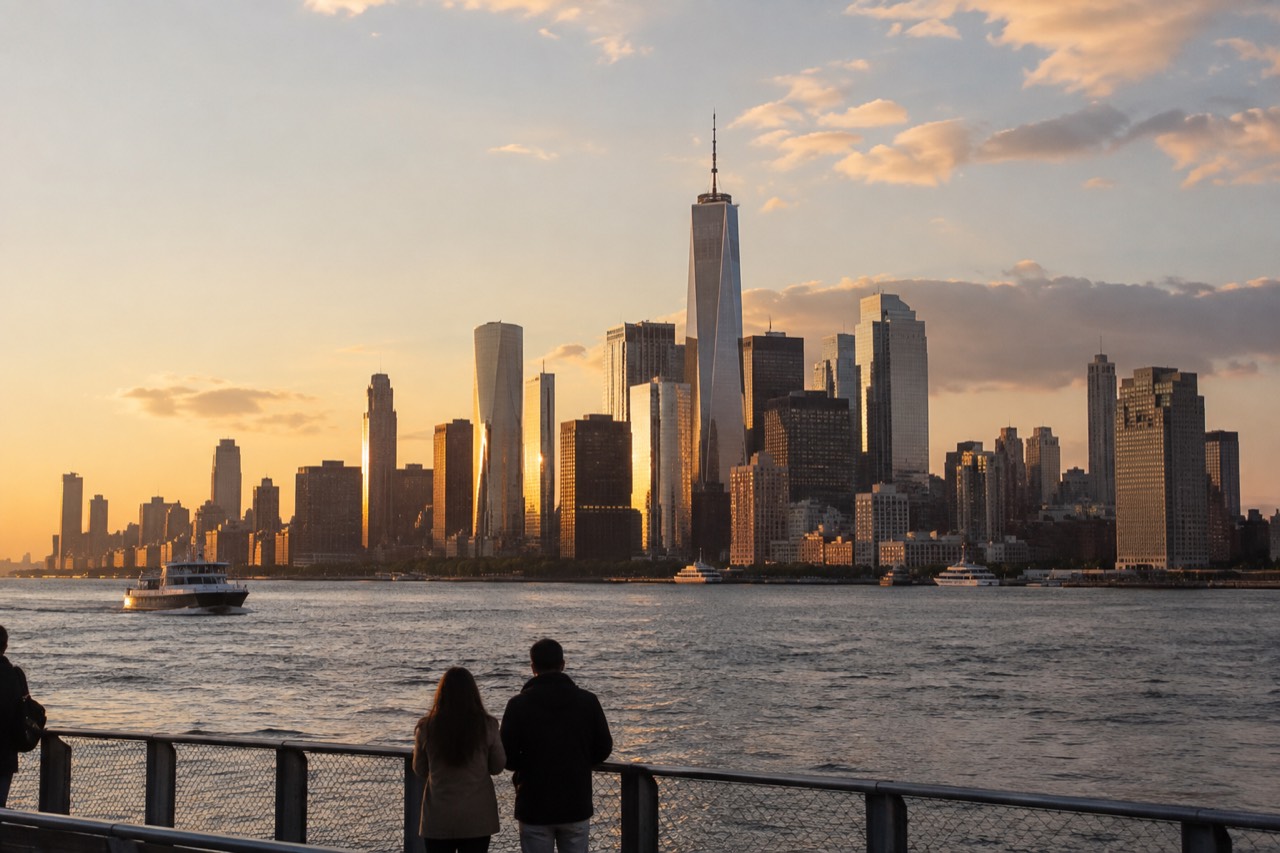
Four days in NYC is enough for a first visit if you cluster your sightseeing: Midtown and an observation deck on day 1, the Statue of Liberty and Lower Manhattan on day 2, Central Park and a museum on day 3, and Brooklyn plus downtown neighborhoods on day 4. Book the ferry, decks and any Broadway show in advance, and tap the same card on the subway so the $35 weekly fare cap applies.
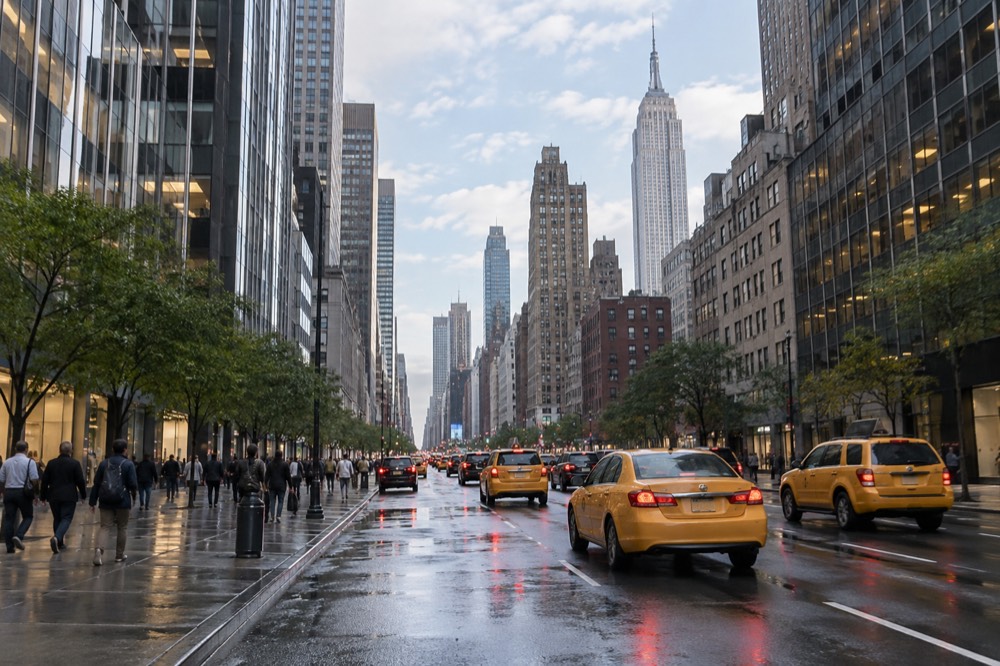
Four days in New York is the sweet spot for a first visit. Long enough to leave Manhattan once, short enough that you cannot afford to waste a morning backtracking across the city. The plan below clusters each day around one corner of the five boroughs so you spend your time looking at things rather than riding between them. It assumes you are staying somewhere in Midtown, which is where most first-time visitors land, and it uses the subway for every crossing because that is the honest answer to getting around this city.
One warning before anything else: several of the things on this itinerary sell out or price up as dates fill. The official Liberty ferry, the observation decks and any Broadway show all reward booking ahead. Everything else can be decided on the day.
Is 4 Days in NYC Enough for a First Visit?
Four days is enough to see the core of New York well, but not enough to see everything, and the mistake most first-timers make is treating it as a checklist sprint. Realistically you can cover one major sight in the morning, a second in the afternoon and one evening activity per day, which over four days means roughly ten to twelve headline experiences plus real time to eat and wander.
Five boroughs exist, and four days will not get you deep into more than two of them.
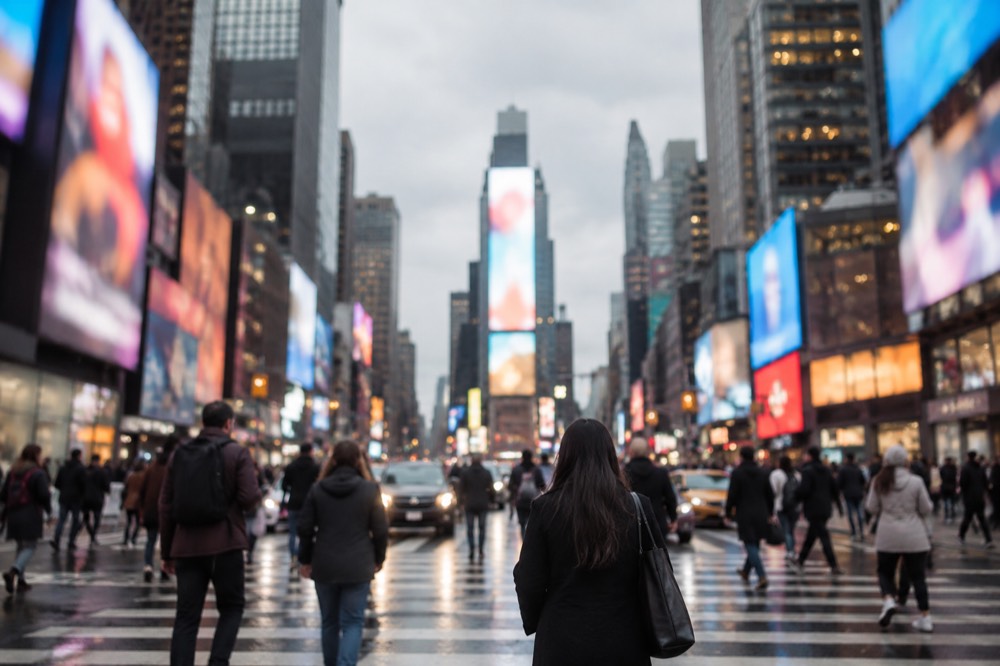
The itinerary below trades breadth for sanity. Each day is built around a geographic cluster, because New York punishes zigzag planning: a trip from the Statue of Liberty ferry up to the Met and back downtown can eat two hours of subway time in a day that only has maybe ten useful ones.
Here is the shape of the four days at a glance:
| Day | Cluster | Morning | Afternoon | Evening |
|---|---|---|---|---|
| 1 | Midtown | SUMMIT One Vanderbilt or Top of the Rock | MoMA or the New York Public Library and Bryant Park | Times Square and a show, or a sunset harbor cruise |
| 2 | Lower Manhattan | Official ferry to Liberty and Ellis Islands | 9/11 Memorial and the Financial District | Brooklyn Bridge at sunset or One World Observatory |
| 3 | Upper Manhattan | Central Park walk | The Metropolitan Museum of Art | Dinner on the Upper West Side or Midtown |
| 4 | Downtown neighborhoods and Brooklyn | SoHo, Little Italy and Chinatown walk | Brooklyn Bridge walk into Dumbo | Brooklyn dinner or a Harlem gospel or jazz evening |
If you want alternatives for any slot, the full things to do in NYC page breaks the city down by borough and by interest, and it is worth a read before you commit to anything below.
Day 1: Midtown Icons and the View from Above
Start day 1 with an observation deck in the morning, when lines are shortest and the light is clean, then spend the afternoon at street level around Rockefeller Center and MoMA, and finish with either a Broadway show or a sunset cruise. Midtown is where most visitors sleep, so day 1 barely touches the subway, which is exactly what you want while you are still jet-lagged. Book the deck and any show tickets before you fly.
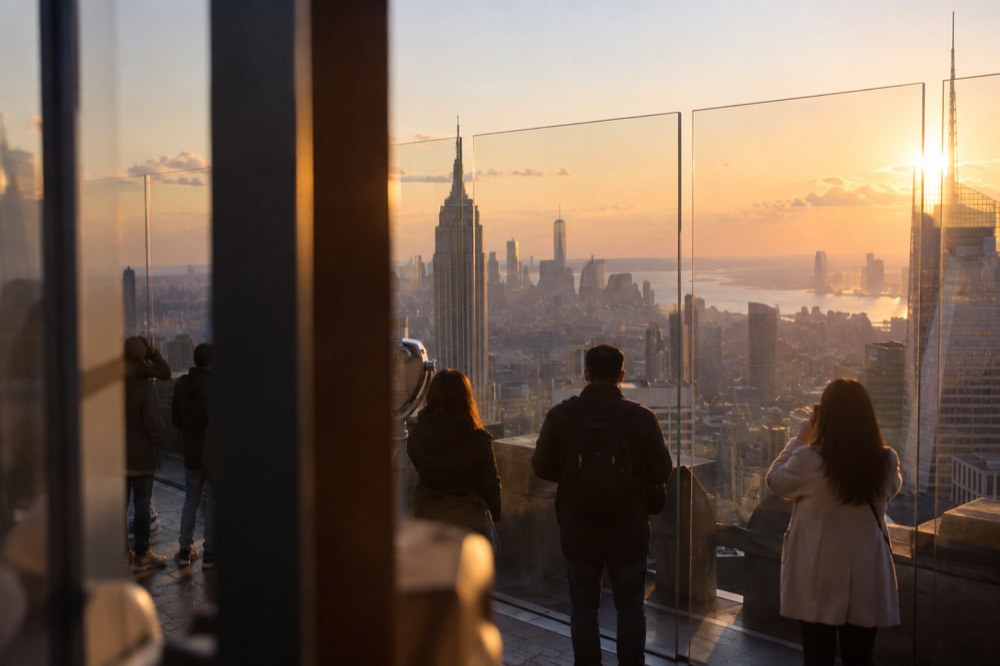
The deck decision is the first real choice of the trip, and it is worth getting right because you only need one. The honest comparison is not price, since three of the five decks price almost identically from $47.91 on the booking pages. It is what you want in the frame. Top of the Rock is the pick if you want the Empire State Building itself in your photo, and it frames Central Park better than any competitor. SUMMIT One Vanderbilt, next to Grand Central, is the playful one, with mirrored rooms and glass ledges, and it suits anyone chasing memorable photos over a quiet classic view. Edge at Hudson Yards has the glass floor and the highest outdoor platform in the Western Hemisphere. One World Observatory, downtown, is the cheapest of the five on the booking pages and pairs naturally with day 2 instead.
| Deck | Location | What it is best for | Listed from (adult) |
|---|---|---|---|
| Top of the Rock | Rockefeller Center, Midtown | Empire State Building in the frame, Central Park views | $45.73 |
| SUMMIT One Vanderbilt | Next to Grand Central | Mirror rooms, glass ledges, bold photos | $47.91 |
| Edge | Hudson Yards | Glass floor, outdoor skywalk, newest build | $47.91 |
| Empire State Building | Midtown South | The classic open-air 86th floor, plus museum | $47.91 |
| One World Observatory | World Trade Center | Cheapest listed deck, downtown skyline and harbor | $30.49 |
Whichever deck you pick, book a timed slot for the first entry window of the day. Afternoons draw the longest queues, and sunset slots sell out first because everyone wants the same photograph.
Spend the late morning walking the Midtown cluster: Rockefeller Center, St Patrick's Cathedral on 5th Avenue, and Grand Central Terminal, whose celestial ceiling and whispering gallery most commuters rush past without ever noticing. The Grand Central guide covers the details worth slowing down for. MoMA in the afternoon is the efficient pick, since it sits in Midtown within walking distance of Rockefeller Center; skip-the-line entry starts from $30 on the listing and covers Starry Night through the sculpture garden.
For the evening, this is the night for Broadway if a show is on your list, because you are already in the Theater District. Seats for the long-running hits start from around $71 on the booking pages and go up sharply for weekend evenings, so book ahead rather than hoping. If a show is not your thing, the two-hour sunset harbor cruise, from $45, loops past the Statue of Liberty as the skyline lights come on, and it is the single most efficient sightseeing hour-for-hour in the city.
Day 2: The Statue of Liberty, Ellis Island and Lower Manhattan
Day 2 belongs to the harbor and Lower Manhattan: the official ferry to Liberty and Ellis Islands in the morning, booked in advance, then the 9/11 Memorial and the Financial District in the afternoon, and the Brooklyn Bridge at sunset if your legs still work. Reserve the ferry before you travel, because Statue City Cruises is the only operator authorized to land on the islands, and every lookalike cruise merely circles them.
Give the islands half a day, not an hour.
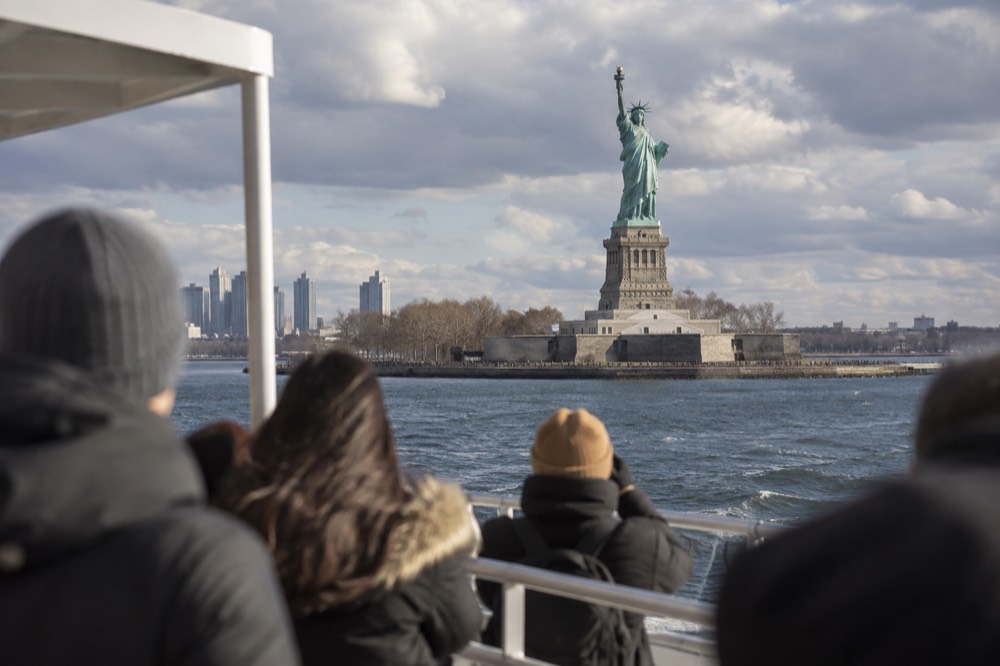
The ferry facts matter here, and a lot of guides get them wrong. Statue City Cruises is the only ferry operator authorized by the National Park Service to sell tickets for and dock at Liberty Island and Ellis Island. An adult general ticket costs $26.00 and covers the round trip, both islands, the Statue of Liberty Museum and the Ellis Island National Museum of Immigration, plus audio tours on both. Children 4 to 12 pay $17.00, seniors $23.00, and under 4s ride free.
The detail worth knowing: the crown ticket costs $26.30, thirty cents more than the grounds ticket. The barrier to the crown is not money, it is availability. Crown tickets are name-bearing, photo ID is checked, maximum four per order, and they are reported to sell out around 90 days and often several months ahead. If the crown matters to you, book it the day your dates are fixed, through Statue City Cruises only. The National Park Service keeps the authoritative detail at its crown reservation page.
| Ferry ticket | Adult | What it includes |
|---|---|---|
| General / Reserve | $26.00 | Both islands, both museums, audio tours |
| Pedestal Reserve | $26.30 | Adds the pedestal, capacity-limited |
| Crown Reserve | $26.30 | Adds the crown, book months ahead, ID checked |
| Ellis Island Hard Hat Tour | +$55 | South-side hospital complex, ages 13+ only |
Allow three to five hours for both islands at a relaxed pace. The guided tour option with reserved ferry entry, from $59, suits travelers who want a guide attached on both islands rather than the self-guided audio route.
Back on land, the afternoon belongs to the World Trade Center area. The 9/11 Memorial plaza, the two reflecting pools set into the footprints of the towers, is free and open to all, daily 08:00-20:00, and it deserves unhurried time. The museum beneath it is a separate timed ticket, $36.00 at the box office, with free admission on Mondays via tickets released each Monday at 07:00 ET, first come first served. This is a memorial to a mass killing, so plan it as a contemplative block, not a photo stop wedged between shopping.
If you still have daylight, walk the Financial District's surviving colonial lanes, or take the free Staten Island Ferry at golden hour for the best free view of the harbor and the statue. The Brooklyn Bridge crossing is better saved for day 4, when it starts a Brooklyn afternoon rather than ending an exhausted one.
Day 3: Central Park, Museum Mile and the Upper East Side
Day 3 is the uptown day: a morning walk through Central Park's highlights, an afternoon in the Metropolitan Museum of Art, and an easy Upper West Side or Upper East Side evening. The pairing is deliberate, since the museum sits on the park's eastern edge at 5th Avenue and 82nd Street, so the two fill one day without a single midday subway ride.
Reserve a Met timed ticket online, and know the admission rules before you go, because they are the most misquoted in American travel writing.
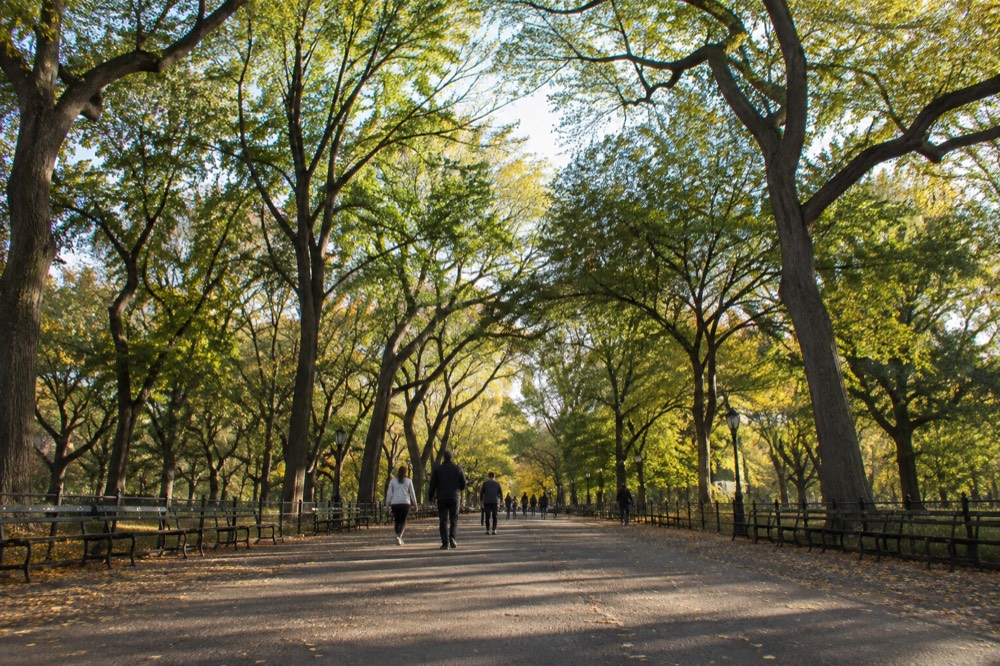
The Met's admission rules, stated plainly: adults pay a fixed, mandatory $30, seniors $22, students $17, children 12 and under free. Pay-what-you-wish applies only to New York State residents and to students from New York, New Jersey and Connecticut, and even then you must pay something, with a one-cent minimum. Online pay-what-you-wish purchases require a New York State billing address, and New Jersey and Connecticut students must buy in person with valid student ID. The Met is not free, and it is not pay-what-you-wish for tourists. The payoff most guides omit: every ticket includes same-day entry to both Met locations, Fifth Avenue and The Met Cloisters, so a determined visitor can do both in one day.
One more caveat: the museum is open but a long list of galleries is currently closed for renovation, including parts of the American Wing, the Costume Institute, the roof garden and the modern and contemporary galleries. If a specific wing is the reason for your visit, check the Met's gallery closures page first.
For the park itself, a two-hour guided walking tour from $44 strings together Bethesda Terrace, the Mall and Bow Bridge with a guide handling the loops, which genuinely helps because the park's paths confuse even locals. Flat, easy walking, suitable for kids and grandparents.
The evening is low-key by design: dinner on the Upper West Side, or a Harlem gospel concert if you want day 3 to end on music. The midweek Hallelujah! gospel concert, from $25, runs about an hour and gives you the choir tradition without committing to a Sunday morning service, which day 4's schedule cannot absorb anyway.
Day 4: Downtown Neighborhoods, the Brooklyn Bridge and Dumbo
Day 4 is the walking day: SoHo's cast-iron blocks, Little Italy and Chinatown in the morning, then the Brooklyn Bridge on foot into Dumbo for the afternoon, ending with dinner in Brooklyn. Slow down, since the sights are streets rather than ticketed attractions, and guided options are cheap: a three-neighborhood walking tour runs from $25, and a food tour through Chinatown and Little Italy from $99 with six tastings that amount to a full meal.
Start downtown, where three neighborhoods sit squeezed into a few walkable streets. SoHo holds the world's largest concentration of cast-iron architecture; Little Italy preserves a stretch of old Mulberry Street; Chinatown is the busy, working heart of the set. A guided walk explains how each enclave formed and who settled there, which is context you will not get from the shopfronts alone.
If you would rather eat your way through the same blocks, the six-tasting food tour is the better spend: dumplings through cannoli, with the stories behind both neighborhoods woven in. Arrive hungry and skip lunch, because the tastings add up to a real meal.
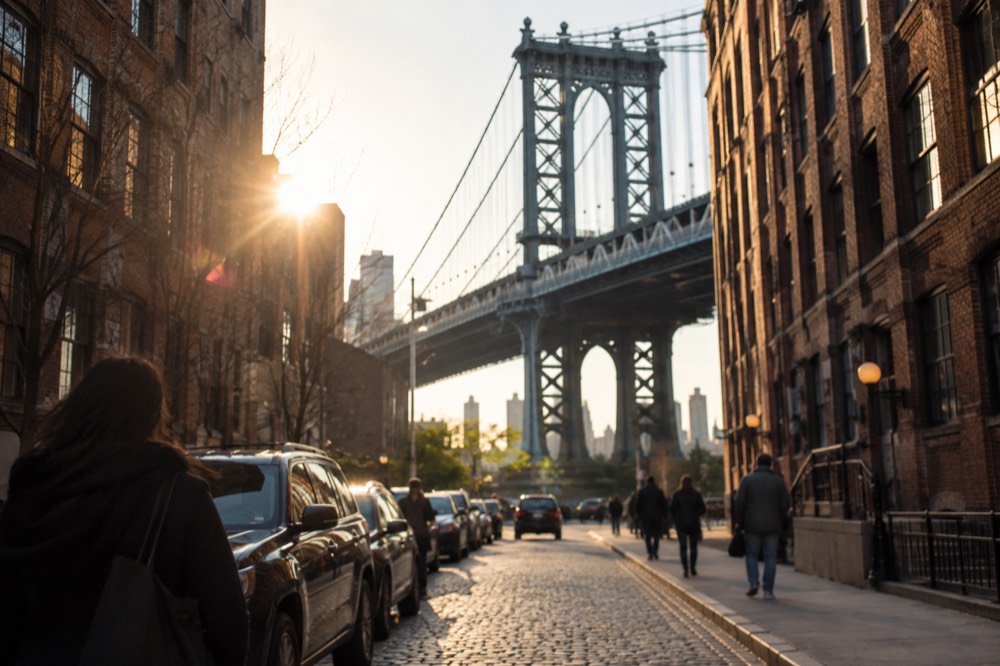
In the early afternoon, take the subway to City Hall and walk the Brooklyn Bridge on the pedestrian promenade. The crossing takes about 30 to 40 minutes at photo pace, and the view opens up over the harbor the whole way. On the Brooklyn side, drop into Dumbo for the famous Washington Street view of the Manhattan Bridge framed between brick buildings, then the waterfront promenade in Brooklyn Heights for the skyline panorama. A guided bridge-and-Dumbo tour from $49 covers the engineering history and the photo spots if you would rather not plan the route yourself.
End the trip in Brooklyn, not Manhattan. Dinner in Dumbo or Brooklyn Heights, with the lit skyline across the water, is the right closing image for four days, and it costs nothing extra to look at.
How Much Does 4 Days in NYC Cost?
A realistic mid-range four-day budget for one traveler runs roughly $1,000 to $1,600 excluding flights and hotel: about $150 to $300 for attractions, $200 to $400 for food at a mix of casual and sit-down places, under $50 for all subway travel, and the rest absorbed by a Broadway ticket or one splurge such as a helicopter flight or a dinner cruise.
Budget travelers can do it for meaningfully less by leaning on free sights, and the biggest single lever is the attraction bill, which a pass can cut sharply.
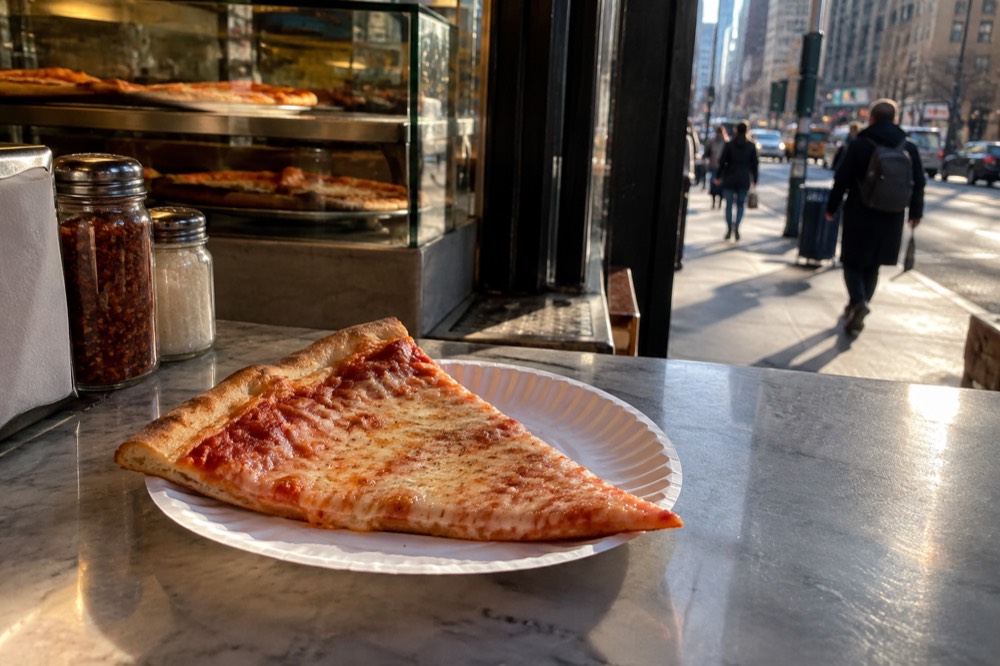
The attraction math is where a pass earns its keep. New York CityPASS costs $149.00 for adults and covers your choice of five attractions from a list of eleven, valid for nine consecutive days. The box-office prices of the headline five on this itinerary alone, the Empire State Building's AM/PM experience at $75.12, Top of the Rock at $71.86, the 9/11 Memorial and Museum at $36.00, the official Liberty ferry at $26.00 and the Intrepid Museum at $38.00, add up to well over $240. If your four days include five of the pass attractions, the arithmetic is not close.
| Budget line (per person, 4 days) | Frugal | Mid-range | Splurge |
|---|---|---|---|
| Attractions and decks | $80-$150 (free museums, one deck) | $150-$300 (deck, ferry, Met, museum) | $450+ (pass, Broadway, helicopter) |
| Food | $120-$200 (slices, bagels, delis) | $250-$400 (mix, one nice dinner) | $600+ (dinner cruise, tasting menus) |
| Subway | $35 (OMNY weekly cap) | $35 | $35 |
| Broadway or live show | $0 (free events) | $70-$150 | $250+ (premium seats) |
Two honest notes on the frugal column. New York's free layer is genuinely deep: the 9/11 Memorial plaza, the Staten Island Ferry, the Brooklyn Bridge, Central Park, MoMA's Friday evening free window for New York State residents, and the Whitney's free Friday nights, 17:00-22:00, open to everyone. And the subway line is a real number, not an estimate: tap the same card every ride and the $35 weekly cap applies automatically, after which the rest of your rides that week are free.
Getting Around During 4 Days in NYC
Getting around four days of New York costs $35 per person in total if you tap the same card or device on every subway and local bus ride, because the MTA's automatic weekly fare cap stops charging you once you hit that figure inside a rolling seven-day window. The 7-day unlimited MetroCard no longer exists: as of 1 January 2026 the MTA no longer sells or refills MetroCards at all.
There is no pass to buy and no decision to make, but you must tap the same physical card or phone every single time, because mixing them silently breaks the cap.
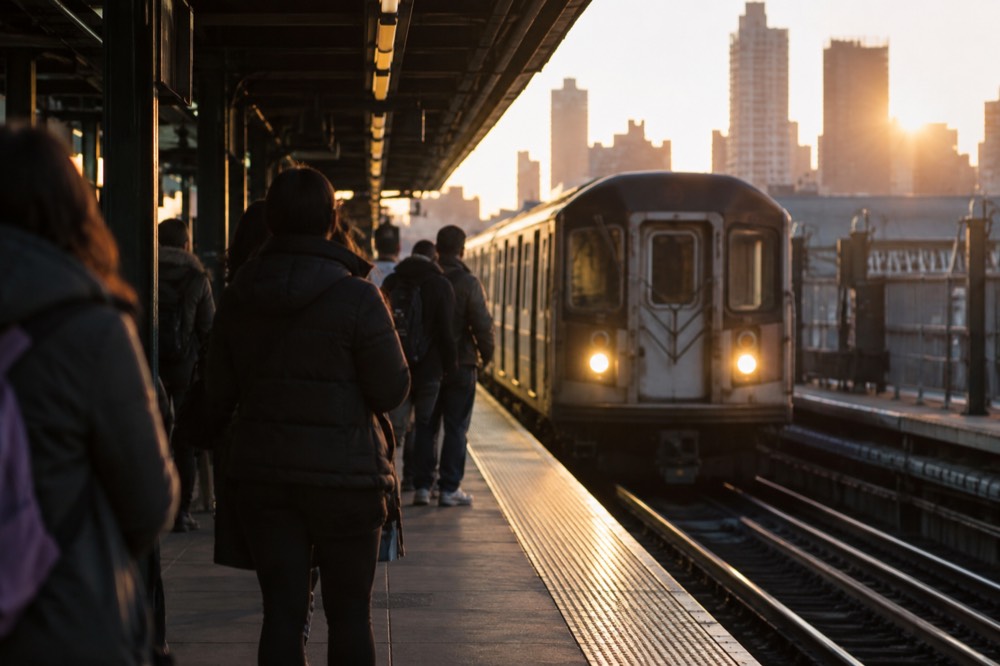
The single fare is $3.00 for the subway and local buses, with one free transfer within two hours between subway and bus. Twelve paid rides on the same card inside seven days reaches the cap, and a four-day sightseeing pace blows past twelve rides easily. Children under 44 inches tall, up to three per fare-paying adult, ride free. The MTA states the cap rules in full at its OMNY fares page.
Practical rules that save real time:
| Rule | What it means on the ground |
|---|---|
| Express vs local | Express trains skip stations; a local train is often faster for short hops. Check the sign, not the color. |
| Uptown and downtown | New Yorkers say uptown and downtown, not north and south. Platform signs follow the same logic. |
| Lines are letters and numbers | The 6, the A, the L. Nobody says "line 6." |
| Same card every tap | The $35 cap only counts rides on one card or device. Phone and plastic do not combine. |
| Airports | LaGuardia is the cheapest arrival: the Q70 bus is free, so subway plus bus is $3.00 total. JFK via AirTrain is $11.75. |
Do not rent a car for this itinerary. The honest answer for four days in New York is the subway, full stop, and a car would cost more in parking alone than the entire week of fares.
When to Book Each Part of a 4-Day Trip
Book three things before you fly: the official Liberty ferry, ideally weeks ahead, your observation deck slot, and any Broadway show, because those three sell out or price up with demand. Book the Met, MoMA and the 9/11 Museum as timed tickets a few days out.
Everything else, the walking neighborhoods, Central Park, the bridges and the Staten Island Ferry, needs no booking at all, and over-planning the walkable half of the trip is the classic first-timer error.
The booking calendar, in order of urgency:
| Book when | What | Why |
|---|---|---|
| Day your dates are fixed | Statue crown, if wanted | Sells out months ahead, name-bearing, ID checked |
| 2-4 weeks out | Official Liberty ferry, Broadway shows | Peak slots fill; show prices climb near the date |
| 1 week out | Observation deck, Met, MoMA, 9/11 Museum timed slots | Timed entry, best morning windows go first |
| On the day | Walking tours, food tours, harbor cruise | Flexible, but popular weekend slots can fill |
One seasonal note worth more than most packing advice: July is actually New York's wettest month, averaging 4.60 inches of rain against June's 4.54 and August's 4.56, and February out-snows January, 10.1 inches to 8.8. Summer visitors who assume they dodged the rain have not, and winter visitors braced for January often meet their biggest snow a month later. The month-by-month detail is in the best time to visit NYC guide.
Common Questions About 4 Days in NYC
The questions first-time visitors ask about a four-day New York trip cluster around pacing, cost and booking: whether four days is enough, which boroughs to skip, whether a pass pays off, how early to book the Statue of Liberty, and how to avoid wasting hours in transit.
The short answers are that four days covers the core well, Brooklyn is the one outer borough worth the crossing, a pass pays off only if you use all five tickets, the ferry should be booked weeks ahead, and clustering by neighborhood is the single biggest time-saver available to you.
Is 4 days in NYC enough?
Yes, for a first visit. Four days covers Midtown, the harbor and Lower Manhattan, Central Park and a major museum, and Brooklyn, with real meals and evening plans in between. It is not enough for deep exploration of Queens, the Bronx or Staten Island, and it is a mistake to try.
What should I skip if I only have 4 days in NYC?
Skip the second observation deck, the hop-on bus, and any day trip. Niagara Falls and Washington DC trips run 11 to 19 hours door to door and would consume a full day of a four-day trip for a single sight. Save them for a longer stay.
Is the New York CityPASS worth it for 4 days?
It depends on your list. CityPASS costs $149.00 for five attractions from a list of eleven, and the headline attractions on a classic itinerary carry box-office prices well above that combined. If you will genuinely use five of the listed sights, it wins clearly. If your four days lean on free sights and walking neighborhoods, skip it.
How far ahead should I book the Statue of Liberty ferry?
Book the general ferry two to four weeks out for a choice of sailing times, and the crown the day your dates are fixed. Crown tickets are limited, name-bearing and photo ID is checked, with a maximum of four per order, and they are reported to sell out months in advance.
Can I do Brooklyn in half a day?
Yes, and it is the right way to do it. Walk the Brooklyn Bridge in the late morning, spend the afternoon in Dumbo and Brooklyn Heights, and have dinner there before the subway back. That half-day gives you the bridge, the waterfront skyline view and a real Brooklyn neighborhood, which is more than most visitors manage.
How much should I budget per day in NYC?
Attractions and food together run roughly $100 to $250 per person per day at mid-range, with transport fixed at $35 for the whole trip thanks to the OMNY weekly cap. Free sights, from the 9/11 Memorial plaza to the Staten Island Ferry, pull the daily number down fast if you let them.
Four days done this way ends with the skyline from the Brooklyn side, a week of subway rides that cost you $35 total, and a short list of things you already know you missed. That last part is normal, and it is the best possible argument for a second trip. This New York City Travel Guide is built for exactly that follow-up visit.